You've found the plot Price feels fair. The seller seems genuine. Then you walk into the sub-registrar's office and get handed a bill that's lakhs more than what you'd mentally budgeted. Sound familiar? That extra chunk is stamp duty and registration. Nobody warns you about it upfront, mostly because sellers and brokers don't bring it up unless you ask. So if you're trying to buy land in Madhya Pradesh, do yourself a favor and work this number out before you get emotionally attached to a plot.
Okay, But What Actually Is Stamp Duty?
Simple version: it's a tax the state charges to make your land purchase legal. No stamp duty, no valid registration, and without registration, you don't legally own the land, even if you've paid the seller in full and shaken hands on it. Here's the part people get wrong. MP doesn't calculate stamp duty on whatever price you and the seller agreed on. It uses whichever is higher: your actual transaction value or the government's guideline value (also called the collector rate) for that specific area. Negotiated a great deal 20% below market? Doesn't matter. You're still paying duty based on the official rate if it's higher. This trips up a lot of buyers looking at agricultural land for sale in Madhya Pradesh specifically, because guideline rates for farmland can jump around a lot; sometimes, two villages five kilometers apart have wildly different collector rates for no obvious reason.
What Are the Actual Rates Right Now?
MP revises these numbers periodically, so treat what follows as a working estimate, not gospel. Always double-check with your local sub-registrar or the MP e-registration portal before you finalize anything.
| Charge Type | Roughly |
|---|---|
| Stamp Duty | 7.5% – 9.5% of property value |
| Registration Fee | 3% of property value |
| Rural Development Cess | Depends on the district |
| Total, all-in | ~10% – 12.5% of property value |
Urban and rural land get taxed a bit differently. So does agricultural versus non-agricultural land. Hunting for farm land for sale in Madhya Pradesh? Ask the seller, or better, a local revenue clerk, whether there's an extra panchayat cess floating around. These small add-ons rarely show up until the last minute.
Doing the Math Yourself
It's not complicated. Tedious, maybe, but not complicated.
- Look up the collector rate for the exact village or locality.
- Multiply that rate by your land area; this gives you the base valuation.
- Compare it against what you're actually paying. The higher number wins.
- Apply the stamp duty percentage to that higher figure.
- Tack on registration fees, usually around 3%.
- Check for any district-specific cess on top.
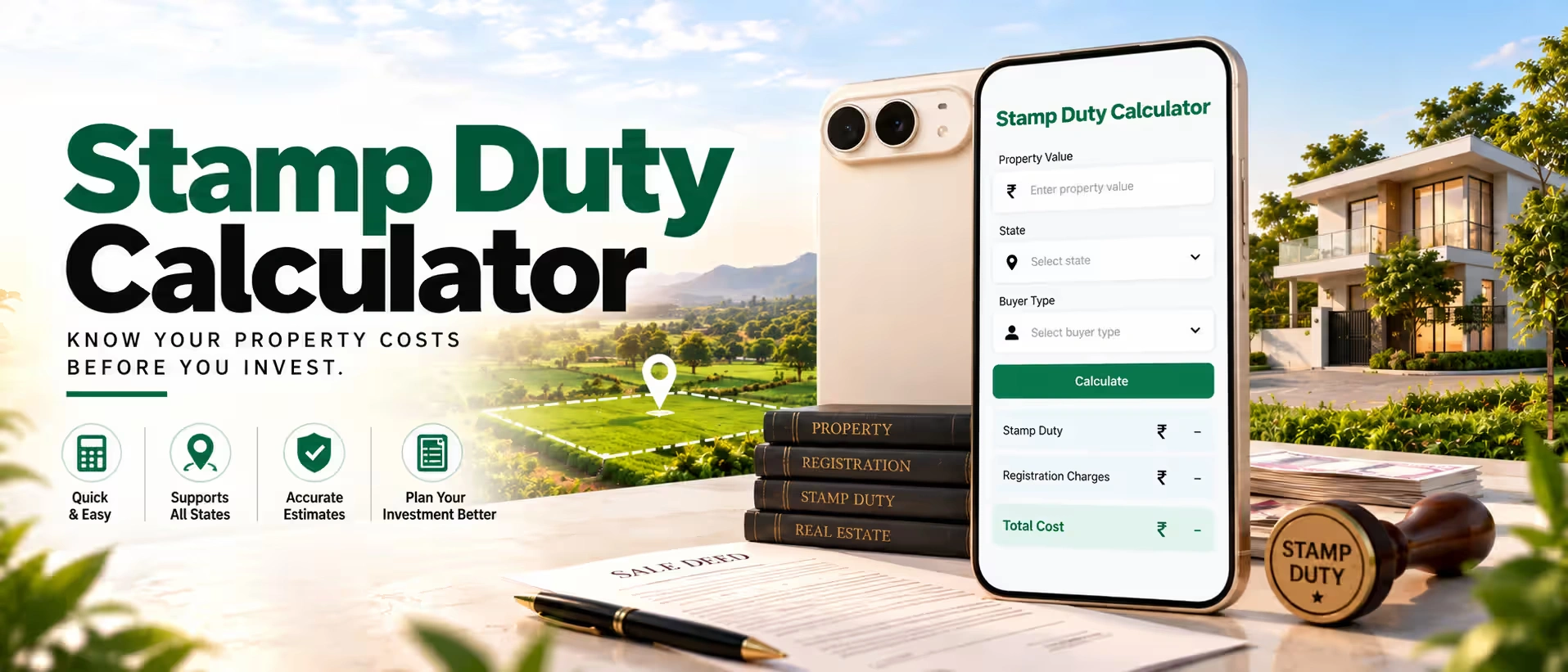
Quick example. Say you're buying an acre valued at ₹15 lakh per the collector rate, and stamp duty sits at 9%. That's ₹1.35 lakh in duty. Add ₹45,000 for registration. You're at nearly ₹1.8 lakh in government charges, before the land itself has cost you a single rupee. Honestly, just use an online calculator first. Plug in district, land type, and value. Most state portals and property sites have one. Takes two minutes and saves you from negotiating a price you can't actually afford once the charges land on top.
What Pushes This Number Up or Down?
- Where the land sits. Closer to a highway or a town that's growing fast? The collector rate goes up.
- What kind of land is it? Agricultural plots are taxed differently than residential ones.
- Who's buying? Women buyers in MP typically get a 1% rebate. On a big transaction, that's real money.
- How is it being transferred? Sale deed, gift deed, and inheritance each have their own duty math.
- Inside or outside municipal limits. Makes a difference, sometimes a big one.
Comparing a few districts before deciding? If your search is centered on agricultural land for sale in MP, shortlist two or three areas and actually compare their Madhya Pradesh Circle Rate 2026 or collector rates side by side. Don't assume one number applies everywhere; it doesn't.
The Costs Nobody Mentions
Stamp duty and registration are just the headline numbers. There's more sitting underneath:
- Legal fees for verifying documents and doing due diligence
- Mutation charges to get the land officially recorded in your name
- Survey or demarcation costs, if the boundaries aren't crystal clear
- Broker commission, if someone brokered the deal for you
None of this is optional padding. It's the real cost of walking away with a clean title instead of a headache three years down the line.
Why Does It Help to Buy Through a Verified Platform?
Most of the anxiety around this whole process comes down to one thing: not having clear numbers when you're actually evaluating a plot. That's the gap 2Bigha is built to close. Every listing on 2Bigha comes with verified land records and transparent pricing upfront—no surprise math at the registrar's window.
Looking to buy land in Madhya Pradesh for farming or as a long-term investment? 2Bigha's district-level data and background-verified listings let you compare collector rates and total costs before you're locked into a deal. And if you're on the flip side, trying to sell land in Madhya Pradesh, the platform puts you in front of genuine, pre-verified buyers instead of leaving you at the mercy of local brokers and endless back-and-forth.
A Few Ways to Legally Bring the Cost Down
- Register in a woman's name where it applies to claim the rebate.
- Watch for state amnesty schemes or temporary duty reductions; they pop up occasionally.
- Get the property valued properly. Under-declaring isn't a shortcut; it's a liability.
- Cross-check the guideline value on the official portal before you even start negotiating the price with the seller.
Disclaimer: This article is for informational purposes only and should not be considered investment, legal, financial, or property advice. Real estate regulations, infrastructure plans, market conditions, and government policies may change over time. Readers are advised to verify information with relevant authorities and consult qualified professionals before making any investment or property-related decisions.