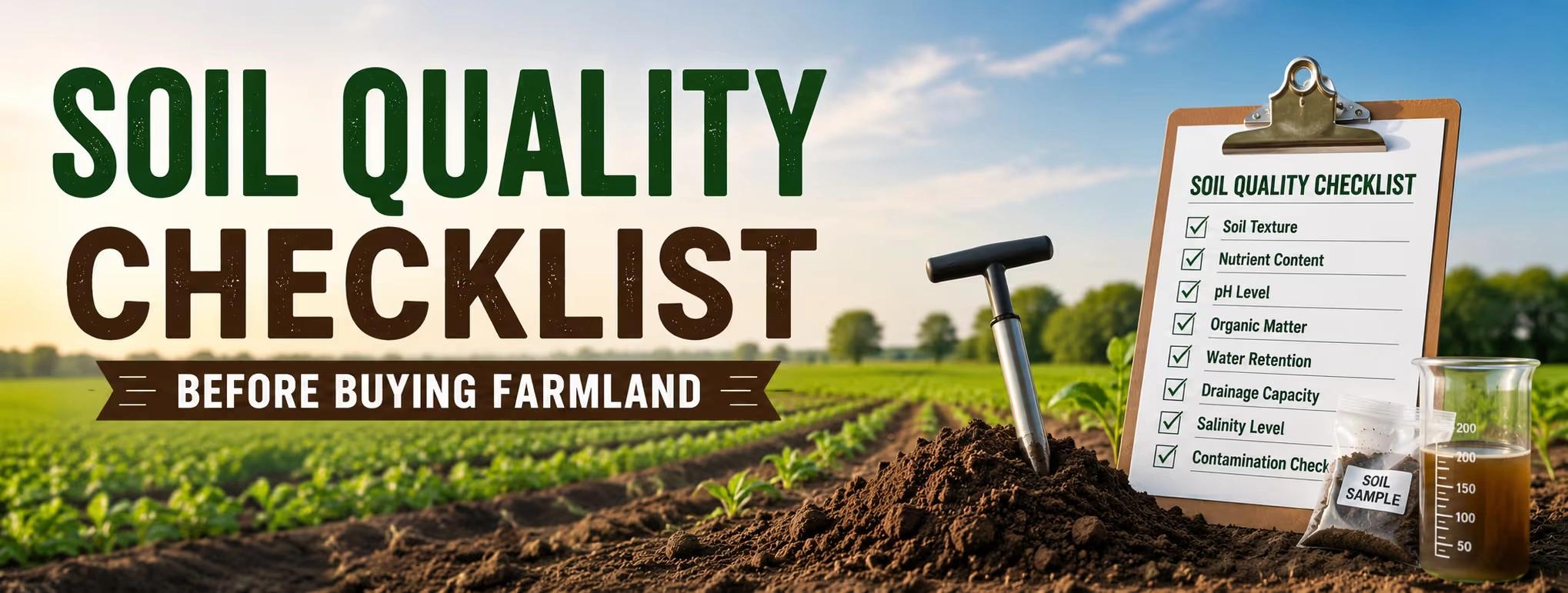
A friend of ours once bought eight acres near Karjat because the price was too good to pass up. Two seasons in, his cotton crop barely reached knee height while the neighboring plot, same rainfall, same sun, produced a full harvest. Turned out his land sat on a patch of heavy clay with drainage so poor that roots were basically drowning after every monsoon. Nobody had told him to check. He hadn't thought to ask. That's the trap with farmland: it looks the same to an untrained eye whether it's excellent or barely usable. Below is the checklist we'd hand anyone before they sign on for agricultural land.
Why Soil Testing Comes Before Everything Else
Location, road access, price per acre- these are the qualities that home-seekers usually discuss when buying farmland around me. But the state of the soil hardly ever comes up, probably because it cannot be assessed until excavation begins. Poor quality of soil may lead to a bad harvest, but it is not the only consequence. Amendments will have to be made regularly, which is a costly affair, or worse, the cropland may have to be abandoned altogether.
The Core Soil Tests to Run
| Test | What It Tells You | Why It Matters |
| pH level | Acidity or alkalinity of soil | Most crops need 6.0–7.5; outside this range, nutrient uptake suffers. |
| Organic matter content | Amount of decomposed organic material | Higher organic matter usually means better fertility and water retention. |
| Nitrogen, Phosphorus, Potassium (NPK) | Core nutrient availability | Low levels mean heavier fertilizer dependence from day one. |
| Soil texture | Sand, silt, clay ratio | Determines drainage, water retention, and root penetration. |
| Salinity | Salt concentration in soil | High salinity can stunt or kill many crop types entirely. |
| Micronutrients (zinc, iron, boron) | Trace element availability | Deficiencies show up as poor growth even when NPK looks fine. |
Most agricultural universities and several private labs offer these tests for a modest fee, and results usually come back within one to two weeks. It's a small cost compared to the value of an agricultural land purchase, and skipping it to save a few thousand rupees rarely makes sense. If you're selling property online, having a recent soil test report can also build buyer confidence and help your listing stand out.
On-Site Signs Worth Noticing Before You Even Test
Lab results are slow, but there's often some low-hanging fruit to be found before you get there.
- The color of the surface soil - dark brown or almost black is good; bad is grey or yellow.
- The presence of standing water - waterlogged soil is almost always bad, except for paddy fields.
- Existing vegetation - patches of unhealthy-looking plants are almost always bad, but the seller is likely to blame it on 'this year's growing season'.
- Formation of cracks in dry weather - deep cracks in the soil are typical of heavy clay.
- Erosion - gullies and exposed roots on slopes are often a sign that the more fertile topsoil has been eroded, leaving a harder-to-cultivate mix of sand and gravel.
- Salt 'on the surface of the ground' - a white crust on the surface almost always indicates salted land, especially where irrigation has occurred.
None of this replaces actual lab testing, but it's all free and quick, and will give you an answer that might save you the time and money of a lab test.
Questions to Ask the Seller Directly
| Question | Why You're Asking |
| What crops have been grown here in the last 5 years? | Reveals productivity history and possible soil fatigue. |
| Has the land ever flooded or waterlogged? | Flags long-term drainage issues. |
| Has any part of the land been treated with heavy chemical fertilizer or pesticide over-application? | Chemical residue can affect long-term fertility. |
| Is there an existing irrigation source, and what's its water quality? | Salinity and mineral content in irrigation water affect soil over time. |
| Has the land undergone any soil testing before? | Existing reports save you time and can be cross-verified. |
A seller who's genuinely confident in their land's condition usually answers these without hesitation. Vague or dismissive answers are worth treating as a soft warning sign, not proof of a problem, but a reason to dig a little further.
Matching Soil Type to Intended Use
| Soil Type | Best Suited For | Less Suited For |
| Sandy loam | Vegetables, groundnut, most root crops | Water-intensive crops without irrigation support |
| Clay soil | Paddy, wetland crops | Crops needing fast drainage |
| Black cotton soil | Cotton, soybean, wheat | Areas needing quick surface drainage |
| Red soil | Millets, pulses, groundnut | High-yield water-dependent crops without amendments |
| Alluvial soil | Wheat, sugarcane, rice | Generally versatile, fewer restrictions |
If you already know what you intend to grow, matching it against soil type before purchase saves a lot of trial-and-error later. Buying first and figuring out suitability afterward is, frankly, backward.
A Quick Pre-Purchase Checklist
- Get a formal soil test from an accredited lab, not just a verbal assessment.
- Walk the land after rainfall if possible, to check drainage firsthand.
- Ask for at least three years of cropping history from the seller.
- Check irrigation water quality separately from soil quality.
- Compare soil type against the crop you actually plan to grow.
- Get a second opinion from a local agronomist if the numbers seem inconsistent with the asking price.
What This Means for Sellers Too?
If you're on the other side, selling property online, having a recent soil test report ready actually works in your favor. Serious buyers increasingly expect this upfront, and land listed with verified soil data tends to move faster than land where buyers are left guessing. It signals you've got nothing to hide.
Where 2Bigha Fits In?
Finding farmlands near me through scattered local contacts often means relying entirely on the seller's word about soil condition, cropping history, and productivity. 2bigha.ai takes a different approach: listings on the platform are vetted before they go live, and where available, soil and land quality details are part of that verification, so buyers aren't starting from zero when comparing plots.
Disclaimer: This article is for informational purposes only and should not be considered investment, legal, financial, or property advice. Real estate regulations, infrastructure plans, market conditions, and government policies may change over time. Readers are advised to verify information with relevant authorities and consult qualified professionals before making any investment or property-related decisions.