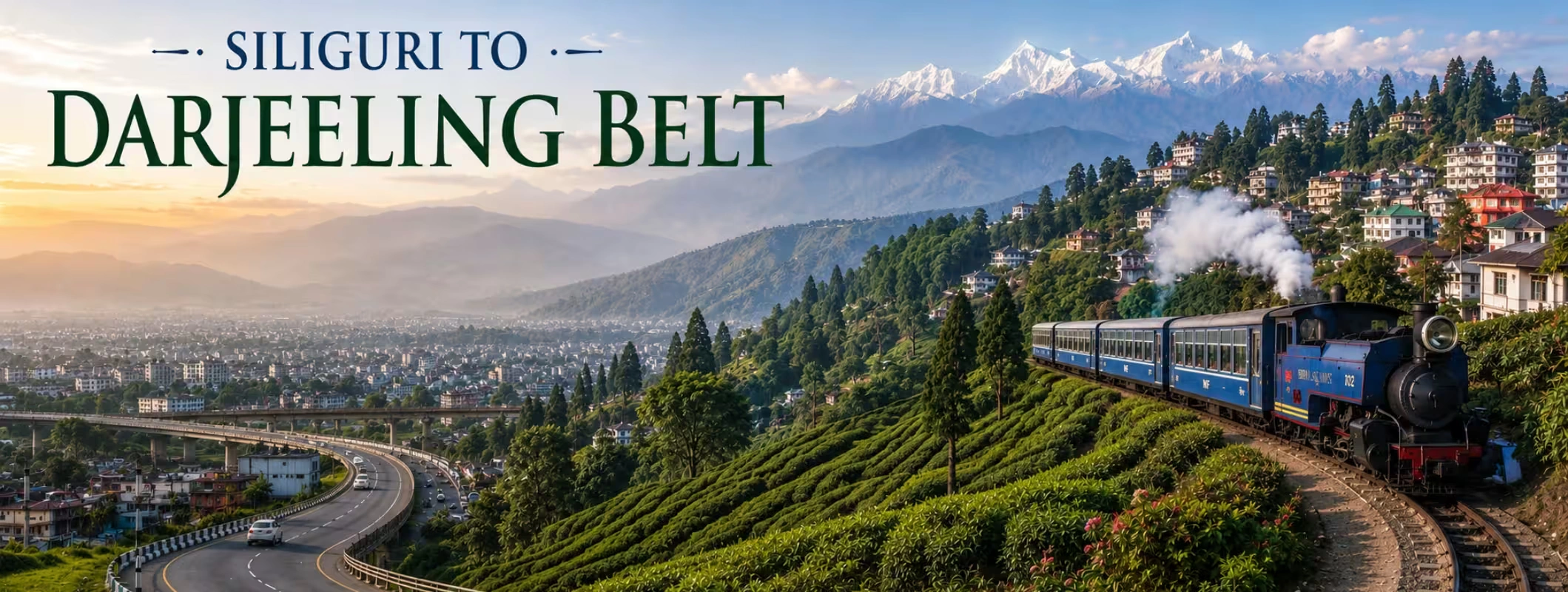
Key Takeaways
The Siliguri to Darjeeling belt is becoming one of North Bengal’s most watched land corridors because it combines tourism, airport connectivity, hill-station demand, tea garden appeal, and access to nearby Himalayan destinations.
Siliguri works as the commercial and transport base, while Darjeeling, Kurseong, Mirik, Sukna, Bagdogra, Matigara, and nearby hill-side locations create different types of land demand.
Tourism infrastructure can support long-term land growth potential, but buyers should not invest blindly. Road access, land classification, slope stability, water availability, legal title, local rules, and actual development permission matter more than hype.
The strongest demand is likely to come from hospitality, homestays, farm stays, weekend homes, retirement homes, eco-tourism projects, and commercial land near transit points.
For buyers comparing land for sale near Siliguri or investment land near Darjeeling, verified listings, local checks, and map-based discovery can reduce confusion. Platforms like 2Bigha can help buyers and sellers explore land opportunities more clearly with better location visibility, verified land information, subscription plan and property management service.
Introduction: Why the Siliguri to Darjeeling Belt Matters Now
Siliguri to Darjeeling region is not merely a tourist destination; it represents a vital combination of movement, business, hospitality, hilly-town life, and property investment. For years, tourists have come to Darjeeling for its tea gardens, toy train, mountains, colonial history, monasteries, restaurants, educational institutions, and cool climate. In contrast, Siliguri represents the functional city that serves as the gateway to North Bengal, Sikkim, Bhutan, Nepal, and the eastern part of the Himalayas.
This balance makes the corridor interesting for land buyers. Land investments in or around Siliguri will not be focused on agriculture alone by those interested. It could involve a weekend getaway, a farmhouse project, a commercial land investment in tandem with warehouse or manufacturing activity, or even a long-term holding in lands that will have a future infrastructural advantage. Likewise, when people hunt for land to buy in the Darjeeling area, it could be because of a tourism-based venture in the hills or a homestay venture in some quiet corners of the hills.
This potential is not uniform across all the land available in the region. Lands close to Siliguri have different possibilities than lands closer to the hills of Darjeeling. Matigara or Bagdogra lands are distinct from Kurseong or Sukna or Mirik lands, or even the road facing commercial lands near Sevoke Road.
That is why this belt needs a practical, ground-level reading. The question is not simply, “Will land prices rise?” The better question is, “Which locations can benefit from tourism infrastructure, which land types are legally usable, and which micro-markets can support real demand?”
Understanding the Siliguri to Darjeeling Corridor
The Siliguri-Darjeeling corridor links the plains of North Bengal to one of the most renowned hills in India. It serves as an entrance for visitors coming through the Bagdogra Airport, New Jalpaiguri railway station, and roads. Then tourists are redirected from Siliguri to Darjeeling, Kurseong, Mirik, Kalimpong, Sikkim, Dooars, and Nepal routes.
This gives Siliguri a strong advantage. It is not dependent on only one tourism destination. It serves tourists, traders, students, defence movement, tea businesses, logistics operators, medical travellers, and local residents from surrounding districts. This multi-use economy keeps Siliguri more active than a seasonal hill town.
Darjeeling, however, brings emotional and tourism value. People do not visit Darjeeling only for convenience. They visit for experience. The toy train, tea gardens, Tiger Hill, Mall Road, Ghoom, Batasia Loop, monasteries, local markets, and mountain views create a brand that has remained strong for generations.
When a corridor has one strong base city and one strong tourism destination, land demand naturally spreads into nearby nodes. This is what is slowly happening across the Siliguri to Darjeeling belt.
Why Tourism Infrastructure Drives Land Growth Potential
Tourism infrastructure does not increase land demand overnight. It builds demand layer by layer. First, better connectivity brings more visitors. Then hotels, homestays, cafés, rental homes, transport operators, local shops, guides, and small businesses start expanding. After that, investors begin looking for land near travel routes, scenic pockets, town edges, and upcoming service zones.
In the Siliguri to Darjeeling belt, this pattern is already visible in several ways. Bagdogra gives air access. NJP supports rail movement. Siliguri provides hotels, shopping, hospitals, schools, and transport. Darjeeling provides the tourism pull. Kurseong, Mirik, Sukna, and other smaller locations offer quieter alternatives for people who do not want the crowd of central Darjeeling.
This is why tourism land investment in North Bengal is attracting attention. Buyers are not only looking at traditional residential plots. They are also looking at resort development land, eco-tourism land, farmhouse land near Siliguri, and road-connected land near hill stations.
However, good tourism potential does not automatically make every plot a good investment. A beautiful location with poor road access, weak title, disputed boundaries, restricted land use, or landslide risk can become a liability. Smart investors focus on usable land, not just scenic land.
Bagdogra Airport Expansion: A Major Connectivity Trigger
Bagdogra Airport is one of the biggest infrastructure factors influencing the North Bengal land market. It acts as the main air gateway for Darjeeling, Siliguri, Sikkim, Kalimpong, Dooars, and nearby Himalayan destinations. Better airport capacity can support more tourist movement, business travel, and hospitality demand.
For land buyers, this matters because airports influence surrounding real estate in stages. The first impact is usually on hotels, rentals, transport, parking, food outlets, and commercial activity. The second impact reaches nearby residential and plotted land markets. The third impact can support warehousing, logistics, and service businesses if road connectivity and zoning allow.
This is why areas around Bagdogra, Matigara, Naxalbari-side pockets, and road-linked Siliguri suburbs can attract buyers who want commercial land near Siliguri or long-term land investment near Siliguri. These locations may not offer the hill views of Darjeeling, but they offer stronger access, flatter land, and easier service connectivity.
For many buyers, that combination is more practical than buying high-maintenance hill land.
Darjeeling’s Tourism Brand Still Supports Land Demand
Darjeeling has something that cannot be created quickly: legacy value. The name itself carries tourism memory. Generations of Indian families have visited Darjeeling for holidays, school trips, honeymoon travel, tea estate stays, and mountain views. This emotional connection supports hill station property demand.
The Darjeeling Himalayan Railway, tea gardens, Kanchenjunga views, colonial-era character, and local culture add depth to the tourism economy. This is why land near Darjeeling continues to interest buyers despite terrain challenges and limited availability.
But central Darjeeling is dense. Road width, parking, construction limitations, local rules, and high tourist pressure make land purchase complicated in the core town. That is why many buyers look beyond the main town and explore nearby belts such as Kurseong, Mirik, Ghoom-side areas, Sonada-side pockets, Sukhiapokhri-side locations, and other quieter routes.
For a buyer planning a homestay, boutique resort, café with stay facility, or retirement home, these surrounding locations may offer better practicality than the crowded centre.
Micro-Locations to Watch Along the Belt
The Siliguri to Darjeeling belt should not be treated as one uniform land market. Each location has its own buyer profile
| Location | Best Suited For | Growth Driver | Buyer Caution |
| Siliguri | Commercial plots, residential land, service businesses | Trade, rail, roads, city expansion | Check zoning, drainage, and title clarity |
| Bagdogra | Hospitality, rentals, airport-linked commercial use | Airport expansion and tourist inflow | Verify airport-area restrictions and road access |
| Matigara | Residential and mixed-use land | Urban spillover from Siliguri | Avoid overpaying in already heated pockets |
| Sukna | Farmhouse, nature-side retreats, weekend homes | Gateway towards hills and forest-side tourism | Check forest boundaries and land-use limits |
| Kurseong | Homestays, hill homes, tea tourism | Quieter hill-town appeal | Check slope safety, water, and road width |
| Mirik | Eco stays, lake tourism, leisure homes | Scenic tourism and alternative hill demand | Verify connectivity during monsoon |
| Darjeeling outskirts | Boutique hospitality and hill property | Strong tourism brand | Land availability, permits, and maintenance cost |
This comparison makes one thing clear: the “best” location depends on the buyer’s purpose. A resort investor, a farmer, a second-home buyer, and a commercial developer should not evaluate land in the same way.
Siliguri: The Practical Growth Base
Siliguri has a different investment character from Darjeeling. It is not only tourism-driven. It is a trade, education, healthcare, transport, logistics, and services hub. This makes its land market more stable in practical terms.
People looking to buy land in Siliguri often consider access to roads, schools, hospitals, markets, warehouses, and transport points. Buyers may look at land near Sevoke Road, Matigara, Bagdogra, NJP, or outer growth pockets depending on their use case.
For commercial buyers, Siliguri offers better operational convenience than hill areas. For long-term investors, the city’s role as a gateway to North Bengal and the eastern Himalayas gives it a wider demand base. For farmhouse buyers, the outskirts can offer better plot sizes and easier maintenance compared to steep hill land.
This is why land for sale near Siliguri can attract both end-users and investors.
Darjeeling and Nearby Hill Pockets: High Appeal, Higher Due Diligence
Land near Darjeeling carries lifestyle value. The view, climate, tourism charm, and brand recall are strong. But hill land also needs more careful checking.
A land may look attractive during a site visit, but buyers must ask practical questions. Is the access road motorable throughout the year? Is there proper drainage? Is the slope stable? Is water available? Are there any forest, tea estate, municipal, or local restrictions? Can the land be legally used for the buyer’s intended purpose? Is construction feasible without huge retaining-wall cost?
This is where many first-time buyers make mistakes. They compare land only by view and price. In hill areas, usable land is more important than beautiful land. A slightly less scenic land with clear title, safe access, stable slope, and legal permission is often better than a dramatic-view plot with uncertain usability.
Anyone exploring investment land near Darjeeling should treat due diligence as the first step, not the last step.
Tourism-Led Demand: What Buyers Are Actually Looking For
The land demand in this belt is not coming from one category. It is coming from different buyer motivations.
Some buyers want a farmhouse land near Siliguri where they can build a weekend home and maintain a small plantation or garden. Some want agricultural land for sale in West Bengal for long-term holding. Some want land near Darjeeling for resort or homestay use. Some want road-facing land near Bagdogra or Siliguri for commercial activity. Others want peaceful hill-side land for retirement or a second home.
The hospitality segment is especially important. Tourists today are not limited to standard hotels. Many prefer homestays, tea garden stays, boutique cottages, farm stays, wellness retreats, workation homes, and nature-led accommodation. This shift supports smaller land parcels in scenic but accessible locations.
Still, demand is strongest where tourism experience and practical access come together. A remote location may look beautiful, but if guests cannot reach it safely in monsoon, the business model becomes weak.
Land Growth Potential: Where the Real Upside Can Come From
The land growth potential across the Siliguri to Darjeeling belt can come from five main factors.
First, better air connectivity through Bagdogra can increase tourist movement and business travel. More passengers usually create more demand for hotels, transport, food, rentals, and services.
Second, Siliguri’s urban expansion can support residential and commercial land demand. As the city grows, surrounding areas may become more attractive for plotted development and service-led businesses.
Third, Darjeeling’s tourism brand can continue to support hospitality and hill property interest. This is especially relevant for buyers who want land near hill stations rather than crowded city plots.
Fourth, alternative hill destinations like Kurseong and Mirik can gain attention from travellers who want quieter stays. This can create demand for homestays, eco stays, cafés, and small resorts.
Fifth, map-based land discovery and verified listings can make land buying more transparent. Platforms like 2Bigha can help buyers compare location, access, and land options more clearly instead of depending only on scattered local references.
What Type of Land Can Work Best?
The right land type depends on the purpose.
For farmhouse or weekend use, buyers should look for peaceful land near Siliguri outskirts, Sukna-side areas, or other accessible rural pockets. Road access, water, electricity, and boundary clarity matter more than the tourist crowd.
For hospitality use, buyers should look at scenic but reachable locations near Darjeeling, Kurseong, Mirik, or routes with existing tourist movement. The plot should allow legal construction and have enough space for parking, utilities, waste management, and staff movement.
For commercial use, road-facing land near Bagdogra, Siliguri, Matigara, NJP, or major junctions may be more suitable. Visibility and access matter more than natural beauty.
For agriculture or plantation-linked use, buyers should check soil, water, land classification, local farming patterns, and legal restrictions. Agricultural land in West Bengal should not be purchased casually for non-agricultural construction without checking conversion rules.
For long-term holding, buyers should focus on clean title, location logic, road access, and future infrastructure direction rather than short-term price rumours.
Buyer Checklist Before Purchasing Land in the Siliguri-Darjeeling Belt
Before buying land in North Bengal, use this practical checklist:
- Verify ownership records, title history, mutation status, and seller authority.
- Check land classification and whether the intended use is legally allowed.
- Confirm road access on paper and on ground.
- Visit the site during or after rain if possible, especially in hill areas.
- Check slope stability, drainage, and landslide-prone surroundings.
- Confirm water source, electricity access, mobile network, and waste disposal options.
- Measure the land boundary with local survey support.
- Check whether the plot falls near forest, tea estate, railway, defence, airport, or restricted zones.
- Compare nearby transaction trends instead of relying only on asking prices.
- Avoid cash-heavy or document-light deals.
- Speak with local authorities or professionals before planning construction.
- Use verified listing platforms when comparing land for sale near Siliguri or land near Darjeeling.
This checklist is not just for safety. It also protects your future resale value.
Seller Opportunity: Why This Belt Can Attract Serious Buyers
Sellers in this region can benefit if they present land properly. Many landowners still market property through basic word-of-mouth, unclear photos, and incomplete location details. This reduces buyer confidence.
A serious buyer wants more than a plot size and price. They want to know the exact location, road access, nearby landmarks, land type, boundary condition, possible use, documents available, and local development context.
For sellers planning to sell land in Siliguri or sell land near Darjeeling, better presentation can make a major difference. Map-based visibility, clean documentation, updated photos, and honest land-use details can attract more qualified buyers.
This is where 2Bigha’s approach fits naturally. Land is a location-sensitive asset. A map-first experience helps buyers understand where the plot sits, what surrounds it, and whether it matches their purpose.
Risks Buyers Should Not Ignore
The Siliguri to Darjeeling belt has strong potential, but it is not risk-free.
Hill areas can face landslides, road damage, drainage problems, and high maintenance costs. Some scenic locations may become difficult during heavy rainfall. Construction on slopes can be expensive. Retaining walls, access roads, water storage, and structural safety can increase project costs.
Legal risk is another major issue. Land classification, conversion rules, ownership disputes, inheritance issues, and boundary mismatch can create problems after purchase. A low-priced plot may become expensive if the paperwork is weak.
Tourism risk also matters. Not every location can support a resort or homestay. Demand depends on access, safety, experience, service quality, online visibility, and seasonality. A plot should be evaluated as a business location, not just as a scenic asset.
The smartest investors take a balanced view. They look at growth potential, but they also respect local geography and legal process.
How 2Bigha Can Help Buyers and Sellers Explore This Belt
Land buying in India is still confusing for many people because information is scattered. Buyers often depend on local brokers, WhatsApp photos, unclear locations, and incomplete details. Sellers also struggle to reach the right audience.
2Bigha aims to make land discovery easier by helping users explore land options with better location clarity and a more organised buying journey. For a corridor like Siliguri to Darjeeling, this is especially useful because location changes everything. A plot near Bagdogra, a hill-side parcel near Kurseong, and a farmhouse land outside Siliguri cannot be judged with the same lens.
Buyers can use 2Bigha to explore verified land listings in West Bengal more confidently, compare locations, and understand whether a property fits their purpose. Sellers can use the platform to present their land better to people who are actively looking for land in North Bengal.
This kind of transparency is important in emerging land corridors where demand is rising but buyer awareness is still uneven.
Future Outlook: Is the Siliguri to Darjeeling Belt Worth Watching?
Yes, the Siliguri to Darjeeling belt is worth watching, but with a practical mindset.
Siliguri offers the stability of a growing base city. Bagdogra adds airport-led connectivity. Darjeeling adds tourism identity. Kurseong and Mirik add quieter hill alternatives. Sukna and surrounding rural pockets add farmhouse and nature-led potential. Together, these locations create a corridor where land demand can grow through tourism, lifestyle migration, hospitality, and infrastructure improvement.
But buyers should avoid emotional decisions. A good land investment near Siliguri or Darjeeling should be backed by clear documents, legal usability, road access, water availability, and realistic development potential.
For long-term buyers, the opportunity is not in chasing the cheapest plot. The opportunity is in finding the right land for the right purpose before the wider market fully understands the corridor’s value.
Conclusion
The Siliguri to Darjeeling belt is becoming a serious discussion point in North Bengal real estate because it connects tourism, infrastructure, hill living, and long-term land demand. The corridor has multiple investment stories: airport-linked growth near Bagdogra, commercial expansion in Siliguri, hill tourism near Darjeeling, quiet hospitality potential in Kurseong and Mirik, and farmhouse demand in accessible rural pockets.
For buyers, this is a market where patience and due diligence matter. Do not buy only because a location sounds famous. Buy because the land is legally clear, physically usable, well-connected, and aligned with your purpose.
For sellers, this is the right time to present land with better information, clear documentation, and map-based visibility. As more buyers search for land in North Bengal, verified and well-presented listings will stand out.
The future of this corridor looks promising, but the best opportunities will belong to people who understand both tourism potential and ground reality.