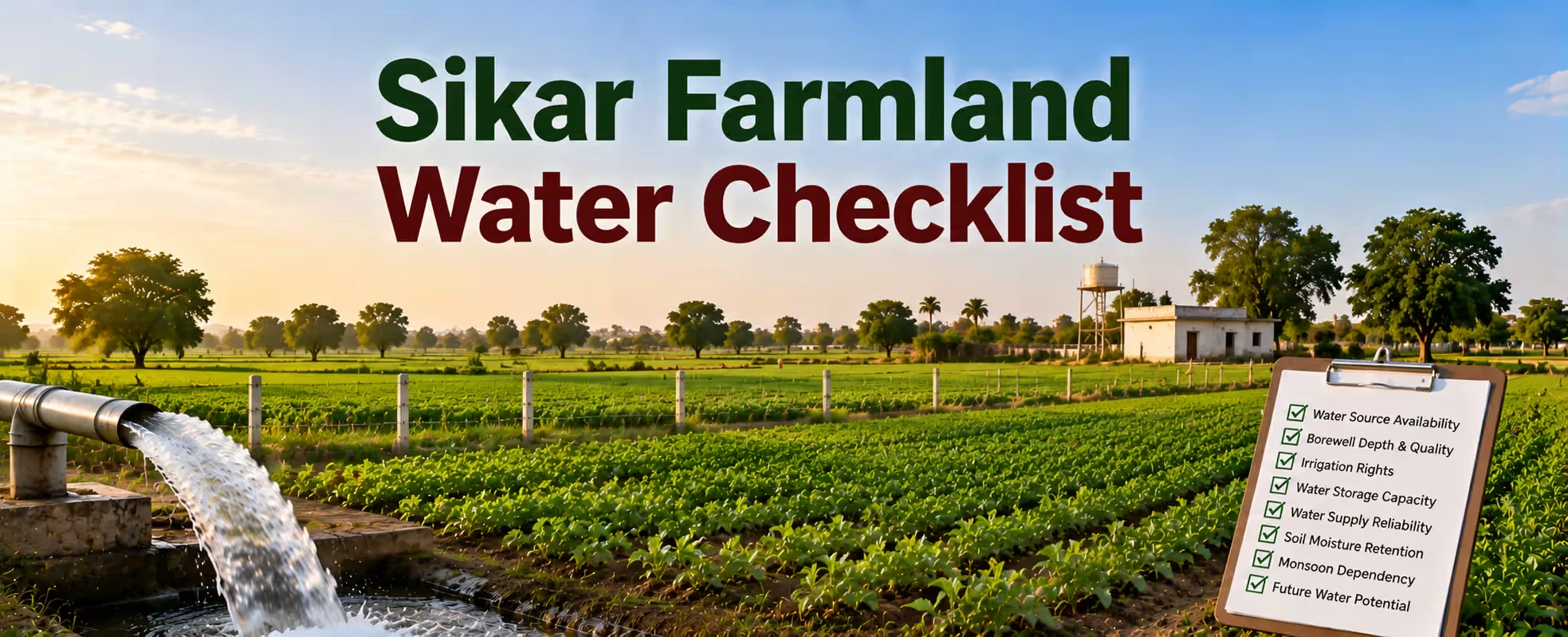
One of the most frequent errors made by novice purchasers is that of buying farmland in Sikar without looking into the water situation first. You may be impressed by the fertility of the soil and a seemingly attractive price; however, all that goes out the window in six months if there is no water source. This checklist is designed for those currently in the market for land in the Sikar belt.
Why Water Checks Matter More in Sikar Than Elsewhere?
Sikar sits in a part of Rajasthan where groundwater has been under real pressure for years. According to government assessments, Sikar is among the districts in Rajasthan with groundwater depletion of more than 10 metres, alongside Alwar, Jaipur, Jhunjhunu, and a handful of other districts. That's not meant to scare you off buying here; it just means water diligence isn't optional; it's the first thing to check before anything else. There's also a regional twist. Water in most blocks of Sikar district is fresh and usable, but Fatehpur and parts of the Lachhmangarh block have saline groundwater. So the "same district, same water quality" assumption doesn't hold; it genuinely depends on which pocket of land you're looking at.
The Core Checklist Before You Buy
Here's a simple table you can literally carry with you (or screenshot) when you go for a site visit.
| Check | What to Look For? | Why It Matters? |
|---|---|---|
| Existing Water Source | Tube well, dug well, or borewell already installed | Saves installation costs and confirms groundwater is physically accessible. |
| Water Depth | Depth of existing wells or borewells in the area | Deeper groundwater generally means higher drilling and long-term pumping costs. |
| Water Quality | Taste test or laboratory water analysis | Poor-quality or saline water can limit farming; some areas such as Fatehpur may have saline groundwater. |
| Irrigation Type Used by Neighbours | Drip, flood, or sprinkler irrigation systems | Shows which irrigation method is practical and effective under local conditions. |
| Rainfall Dependency | Ask whether crops fail during low-rainfall years | Indicates whether the land depends heavily on seasonal rainfall. |
| Government Canal Access | Nearby canal, watershed, or irrigation project | Can provide a more reliable water source; uncommon in Sikar but worth verifying. |
| Electricity Connection for Pumps | Availability of a 3-phase electricity connection | Essential for operating irrigation pumps efficiently and reducing dependence on diesel generators. |
Step 1: Ask About the Water Source Before Anything Else
Before discussing price, before checking the title, ask one question first: where does the water come from? Most Agricultural Land for Sale listings in Sikar rely entirely on tube wells and dug wells, simply because the district has no major irrigation project, with dug wells and tube wells acting as the primary source of irrigation. That single fact changes how you should evaluate any plot. If the seller can't point to an existing well or a functioning tube well nearby, you're essentially betting on your own drilling luck.
Step 2: Understand the District's Irrigation Reality
It also helps to know the bigger picture. Approximately 37.98% of the district's total geographical area currently falls under irrigated land. That means a large chunk of farmland in Sikar is still rain-fed, which is fine for certain crops but risky if you're planning intensive farming. If you're a rural land buyer coming from a canal-irrigated region, this is the single biggest mindset shift you'll need to make. Sikar farming runs on groundwater and monsoon timing, not river or canal systems.
Step 3: Know Which Crops the Land Currently Supports
Enquire with the seller himself or nearby farmers as to what is being cultivated. You get more information regarding availability of water through this rather than brochures. Some of the important crops cultivated in Sikar district during the Kharif season are bajra, jowar, pulses, maize, and groundnuts, whereas wheat, barley, gram, oilseeds, and cotton constitute the main Rabi crops. If there is cultivation of crops which do not require much water, such as bajra and gram, for many years, then it means there is a shortage of water.
Step 4: Check the Aquifer, Not Just the Surface
This part gets skipped by almost every first-time buyer. In the western basin area of Sikar, the aquifer is fairly thick, generally ranging between 30 and 80 metres, while the saturated zone thickness varies from 10 to 50 metres depending on the area. In the central and eastern parts, this thickness shifts a lot depending on the bedrock underneath, so a well that works great on one plot might run dry two fields away. If you're serious about a specific piece of Farmland for Sale, it's worth asking a local driller or the Central Ground Water Board's regional office for existing borewell data in that exact village. It takes a day, but it can save you from buying land that looks green today and turns dry in three years.
Step 5: Talk to Farmers Who Already Own Land Nearby
No report can tell you what your neighboring farmer knows. Take about 20 minutes and talk to your neighbor who is farming next to you. Ask him simple questions like:
- How deep is your well, and did it ever go dry in the last five years?
- Do you use drip, sprinkler, or flood irrigation?
- How does your crop perform during a poor monsoon season?
- Have there been any changes in the quality of water in the recent past?
This would be more helpful for you than any government publication and at no cost.
Step 6: Factor in Water Cost, Not Just Land Cost
A cheap plot with no water access isn't actually cheap. Drilling a new tube well, getting an electricity connection, and installing a pump can add a meaningful amount to your total investment. Before you purchase agricultural land, get a rough quote for well drilling in that specific area, since costs vary depending on how deep you'll need to go.
Buy With Confidence Through 2Bigha
Water diligence gets a lot easier when the listing itself is transparent from the start. 2Bigha, a platform built specifically for buying and selling agricultural land and farmland across India, works with verified land listings, so details like existing wells, irrigation source, and land classification are checked before a plot even goes live. For anyone trying to Buy Land in Sikar without relying purely on word-of-mouth from local brokers, that verification step matters. And if you're on the other side of the transaction and want to sell agricultural land online, listing your land with accurate water details tends to attract more serious buyers, not just casual browsers. Whether you're comparing a plot for sale in Sikar near Reengus or farmland closer to Fatehpur, having water information upfront saves everyone time.
Red Flags to Watch Out For
Some warning signs that should give you pause before signing on the dotted line:
- Seller does not respond directly to questions regarding the depth of the well or water quality.
- There are no other farms operating nearby.
- The property has been sold more than once in a very short time span.
- The existing borewell is re-drilled at a significantly deeper location.
- Water tastes salty or gives off an odor of minerals.
Conclusion
Water is the factor that determines whether farmland in Sikar turns out to be a true asset or an irritating liability. The state of underground water in the region is not homogeneous; the viability of the land is determined by its location within a particular block, village, and even on which side of the road. Go through this list, talk to the neighbors, and do not neglect the aquifer assessment because of the low price tag. If you prefer to begin your hunt from classified ads where water and title information are already verified, there are websites specifically tailored for this very purpose.
Disclaimer: This article is for informational purposes only and should not be considered investment, legal, financial, or property advice. Real estate regulations, infrastructure plans, market conditions, and government policies may change over time. Readers are advised to verify information with relevant authorities and consult qualified professionals before making any investment or property-related decisions.