Buying land is exciting, but it can also be confusing especially when documents come into the picture. If you are planning to buy land in Tamil Nadu, you will often hear two terms again and again: Patta and Chitta.
Many first-time buyers nod along without fully understanding what these documents mean. Later, this confusion becomes the reason for disputes, delays, or even bad purchases.
This guide breaks down Patta Chitta verification in simple language. Think of it as a friendly checklist from someone who has seen what usually goes wrong and how to avoid it.
What is Patta?
A Patta is a land ownership record maintained by the Tamil Nadu government.
In real-life terms, Patta answers this question:
“Whose land is this?”
It usually contains:
- Owner’s name
- Survey number
- Land area
- Type of land (wet or dry)
- Village and taluk details
If you are buying land, Patta is one of the first documents you should ask for. It shows who the government recognises as the landowner.
What is Chitta?
A Chitta is a land revenue document that describes how the land is classified.
It tells you:
- Whether the land is agricultural or non-agricultural
- Whether it is wet land (Nanjai) or dry land (Punjai)
Earlier, Patta and Chitta were separate documents. Today, they are often combined as a Patta Chitta extract in Tamil Nadu land records.
Why is Patta Chitta Verification So Important?
Many buyers think checking the sale deed is enough. That’s a common mistake.
Patta Chitta verification helps you:
- Confirm the seller is the real owner
- Understand land classification
- Avoid disputes with neighbours or relatives
- Prevent problems during resale or development
If Patta Chitta details are unclear or incorrect, you may face issues even after buying the land.
When Buyers Usually Get Into Trouble?
Here are some real situations buyers often face:
- Seller shows a Patta with an old owner’s name
- Survey number on Patta doesn’t match the sale deed
- Land shown as agricultural but sold for residential use
- Multiple family members claiming rights
All of these problems can be spotted early with a proper land document checklist.
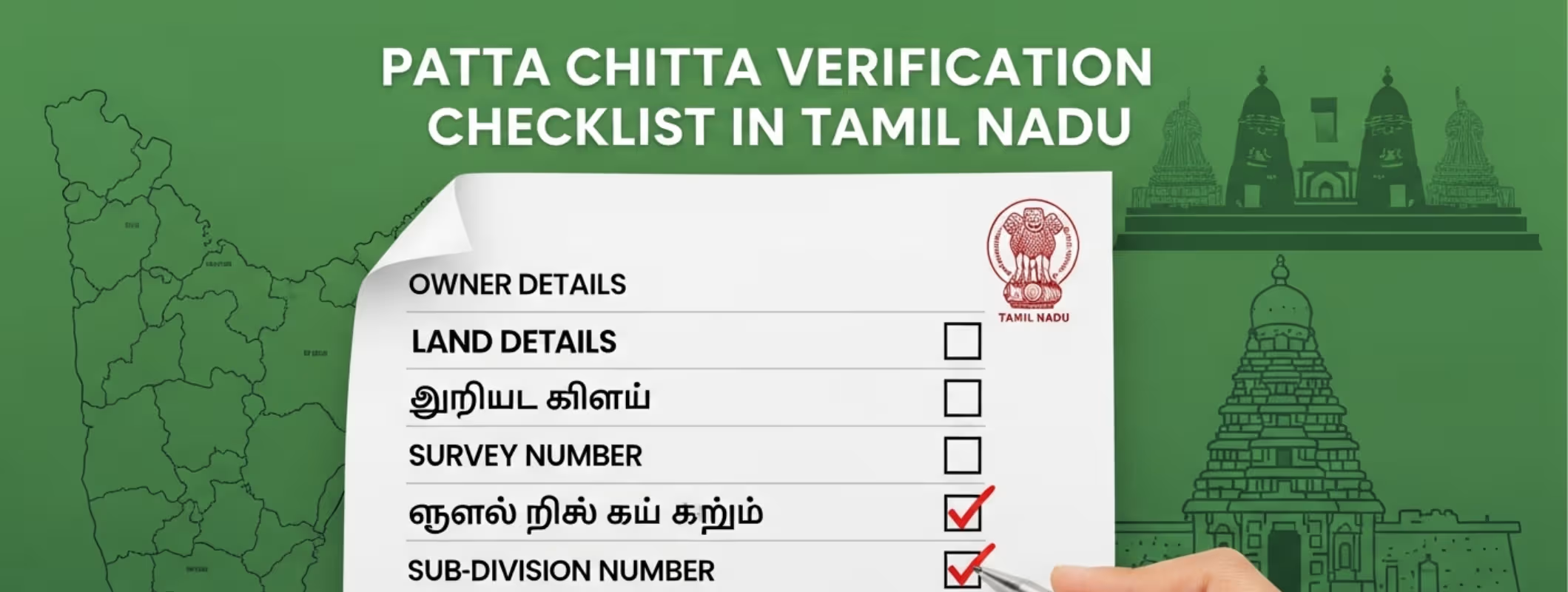
Patta Chitta Verification Checklist
Use this checklist before you move forward with any land deal in Tamil Nadu.
1. Check the Owner’s Name Carefully
The owner’s name on the Patta Chitta should match:
- The seller’s name
- The name on the sale deed
If the land was inherited, ensure the Patta has been transferred to the current owner.
Common Mistake: Buyers accept “Patta transfer is in process” without proof.
2. Verify the Survey Number and Sub-Division
Every land parcel has a survey number. This is like the land’s ID number.
Check that:
- Survey number matches the sale deed
- Sub-division number (if any) is correct
- No extra or missing digits
Even a small mismatch can create legal confusion later.
3. Match the Land Area
The land extent mentioned in Patta Chitta should match:
- Sale deed
- Physical measurements (on ground)
If Patta shows 2 acres but the sale deed mentions 1.8 acres, pause and ask why.
4. Check Land Classification (Wet or Dry)
Chitta shows whether the land is:
- Wet land (Nanjai)
- Dry land (Punjai)
This matters because:
- Construction rules differ
- Conversion permissions may be required
- Land value changes based on classification
Many buyers ignore this and regret it later.
5. Verify Village, Taluk, and District Details
These location details should be consistent across:
- Patta Chitta
- Sale deed
- Other land records
Mismatch here often indicates record errors or outdated documents.
6. Look for Government Remarks or Notes
Sometimes Patta Chitta includes remarks related to:
- Government land
- Assigned land
- Land under dispute
If you see unclear remarks, don’t ignore them. Ask for clarification.
How to Check Patta Chitta Online?
Tamil Nadu land records are available online through government portals. Buyers can check:
- Patta number
- Survey number
- Owner details
Online access has made verification easier, but buyers should still cross-check details with physical documents.
Common Mistakes Buyers Make During Patta Chitta Verification
Even careful buyers slip up. Here are mistakes to avoid:
- Relying only on photocopies
- Not matching Patta with sale deed
- Ignoring survey sub-divisions
- Trusting verbal explanations
- Skipping verification due to urgency
Land buying should never be rushed.
What if Patta Chitta Details Don’t Match?
Mismatch does not always mean fraud but it does mean stop and investigate.
What You Should Do:
- Ask the seller for clarification
- Check previous ownership records
- Verify whether Patta transfer is pending
- Avoid making payments until resolved
Walking away is sometimes better than buying land with unclear records.
Why Does This Matters Even More for First-Time Buyers?
First-time buyers often assume documents can be “fixed later.” In reality:
- Corrections take time
- Costs can rise
- Disputes can drag on for years
That’s why Patta Chitta verification should happen before finalising the deal.
How Digital Platforms Help Buyers Today?
Earlier, buyers depended entirely on brokers for land information. Today, digital platforms help buyers research before committing. This is where 2Bigha fits into the picture.
What is 2Bigha and How Does it Help?
2Bigha is a land marketplace platform that helps buyers explore land options across different states, including regions where Patta Chitta verification is essential.
For buyers, 2Bigha helps by:
- Listing land in an organised manner
- Helping users understand land categories
- Encouraging document awareness
- Supporting better shortlisting before site visits
Instead of starting blindly, buyers can approach land deals with more clarity.
How 2Bigha Supports Smarter Decisions?
2Bigha does not replace due diligence, but it helps buyers:
- Ask the right questions
- Focus on document clarity
- Avoid impulse buying
- Compare land options logically
This is especially helpful for outstation buyers and first-time investors.
Final Thoughts
Patta Chitta verification is not a technical step, it’s a safety step. Use this Patta Chitta verification checklist every time you think of purchasing farmland or land in Tamil Nadu. Awareness of documents combined with research will help you safeguard both your money and your peace of mind. When it comes to buying land, today’s clarity avoids tomorrow’s disputes and informed buyers always make better decisions.