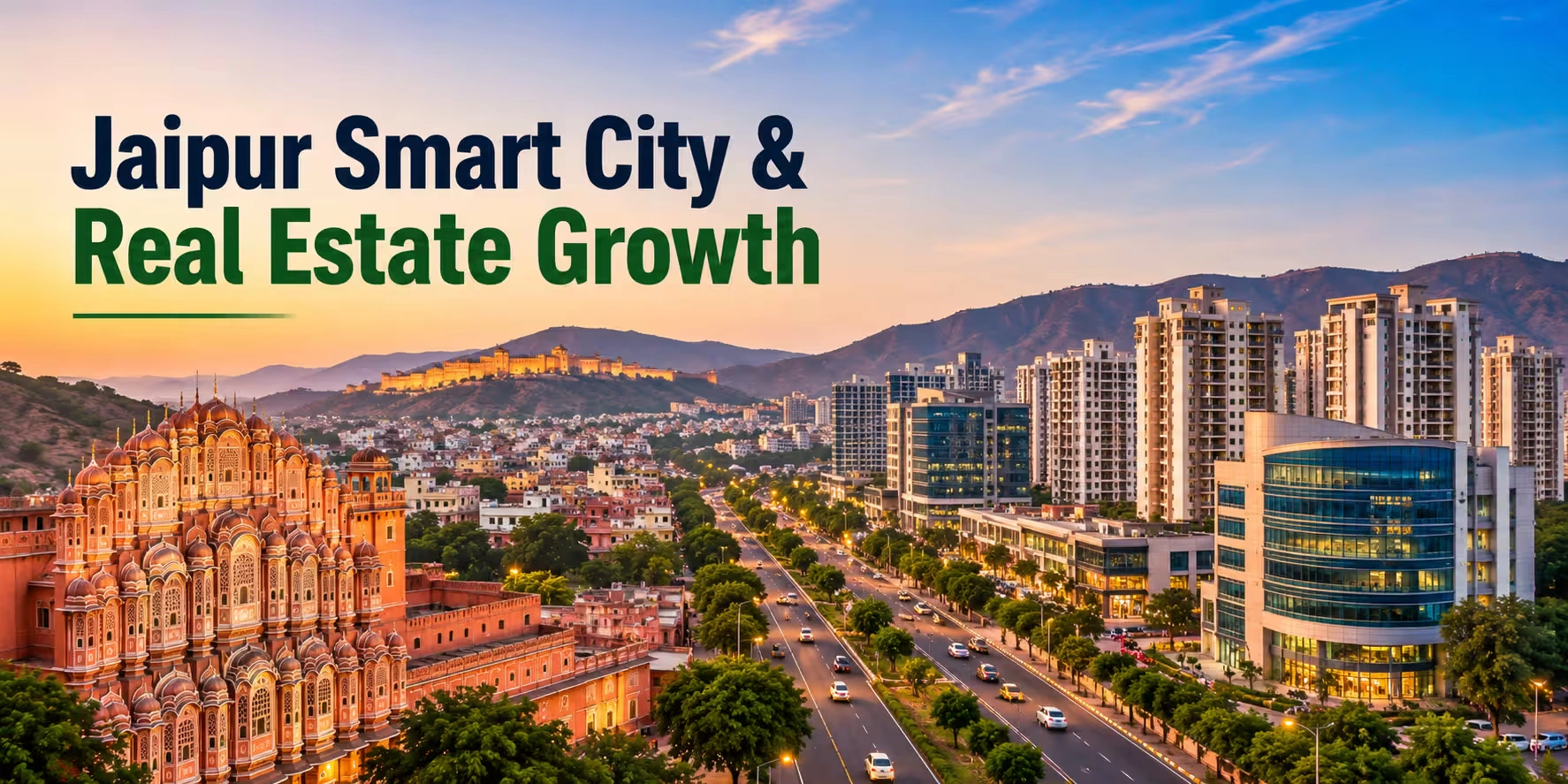
Drive down Tonk Road today, and you'll see it before anyone explains it to you. Metro pillars going up. New underpasses near Ajmer Road. Cranes where there used to be open fields. Jaipur isn't waiting around to become a modern city, it's already halfway there. A lot of people still think of Jaipur as the tourist city, forts, bazaars, that famous pink stone. Fair enough, that reputation isn't going anywhere. But underneath it, something bigger is happening. Smart city funding, metro expansion, a ring road that's finally taking shape- all of it is changing how people think about land here. If you've been doing any kind of land/plot searching around Jaipur lately, you've probably noticed prices behaving differently depending on which side of the city you're looking at. That's not random. There's a pattern, and it's worth understanding before you make a decision either way.
So What Actually Is the Jaipur Smart City Mission?
Back in 2015, Jaipur was selected under the Government of India's Smart City Mission, alongside Udaipur, Ajmer, and Kota. Since then, the city has witnessed significant improvements in infrastructure, connectivity, and urban planning, making it an increasingly attractive destination to buy land in Jaipur. With ongoing development aimed at reducing congestion, preserving the historic city, and enhancing the quality of life, land investments in Jaipur continue to benefit from strong long-term growth potential.
Jaipur Smart City Limited, the body running the show, has been chipping away at this in pieces. Heritage bazaar restoration in the walled city. Waste sorting centers. Rooftop solar installations. Adaptive reuse of old buildings like the Rajasthan School of Arts. None of this makes headlines the way a new expressway does, but it adds up. Here's roughly how the focus areas break down:
| What's Being Worked On | The Actual Goal | Why It Matters for Land Value |
|---|---|---|
| Walled City Heritage Zone | Restoring old bazaars and improving walkability | Enhances the value of commercial properties and tourism-linked real estate. |
| Smart Traffic Systems | Technology-based traffic and congestion management | Improves accessibility, reduces travel time, and supports higher property demand. |
| Waste Management Upgrades | Modern waste segregation and cleaner processing facilities | Improves cleanliness and livability, supporting residential land values. |
| Parking Infrastructure | Developing designated parking zones in busy areas | Increases convenience and attractiveness for commercial properties. |
| Water Supply Projects | Providing 24×7 water supply in developed localities | Reliable infrastructure typically strengthens residential land demand and pricing. |
None of these alone would move the needle much. Together, though, they're setting the stage for something bigger.
The Real Driver: Infrastructure, Not Just "Smart City" Branding
Here's the honest take. Smart city status gets Jaipur attention and funding. But it's the big infrastructure projects- metro, ring road, expressway- that are actually shifting how people buy and sell land here.
Metro Phase II
The second phase of Jaipur Metro is linking up areas like Sitapura and Ambabari that used to feel disconnected from the city core. Anywhere metro lines go in India, land near the stations tends to move first and move fastest. Jaipur is following the same script. If you're browsing verified land listings anywhere close to a proposed station, expect the pricing to already reflect some of that anticipation.
Ring Road
This is probably the single biggest game-changer for peripheral land. The ring road is opening up areas that used to be considered "too far", places like Jagatpura, parts of Mansarovar, and Sirsi Road. What used to be quiet, overlooked land is now some of the fastest-moving real estate in the city.
Delhi-Mumbai Expressway
This one's less about the city itself and more about what it connects to. Faster routes to Delhi NCR and Mumbai mean better logistics access, which is pulling industrial investment toward the Ajmer Road belt. Peripheral land near this corridor is increasingly attractive to rural land buyers and township developers alike, for very different reasons.
Where Is the Growth Actually Happening?
Not every part of Jaipur is moving at the same speed. Some areas are already priced in. Others are still catching up.
| Area | What's Pulling People There | Good Fit For |
|---|---|---|
| Ajmer Road | Expressway connectivity and SEZ-driven development | Long-term land investors |
| Jagatpura | Proximity to the airport, metro connectivity, and IT sector growth | Residential buyers and rental investors |
| Mansarovar Extension | Established infrastructure and metro access | Mid-income families |
| Tonk Road | Metro expansion and a growing commercial corridor | Mixed-use property buyers |
| Sikar Road | Early-stage growth with larger plots still available | Long-horizon investors |
| Sirsi Road | Ring Road connectivity and relatively lower entry prices | First-time land buyers |
Jagatpura's a good case study. A few years back it was a fairly ordinary suburb. Now, between the airport nearby, the Sitapura industrial belt, a cluster of colleges, and ring road access layered on top, it's become one of the busiest growth pockets in the city.
Why Buyers From Outside Jaipur Are Paying Attention?
There's a broader shift happening across India right now. Investors who spent the last decade chasing returns in Delhi-NCR or Bangalore are starting to look at Tier-2 cities where prices haven't caught up yet. Jaipur fits that gap well. A few reasons this is drawing interest beyond the city's own residents:
- Land here still costs a fraction of what similar plots go for near Delhi or Mumbai
- Multiple infrastructure projects are running at the same time, not spread across decades
- JDA-approved plots along growth corridors offer a wide enough price range for both small and large buyers
- Agricultural Land for Sale on the outskirts is still priced for its current use, not its future potential, which won't last forever.
That last point matters more than people realize. Once a corridor gets confirmed infrastructure, and not just a proposal on paper, pricing shifts fast. The buyers who move early are usually the ones who benefit most.
Before You Buy or Sell, Slow Down for a Minute
Growth in Jaipur is uneven, and it’s easy to get carried away. A piece of land located two kilometers away from an assured metro station will definitely behave differently than one that’s actually near a metro station. Worth verifying before closing a deal:
- Current land use zoning by JDA
- Is the infrastructure near it assured or proposed
- Clarity on the title, especially of a land converted from agriculture to residential
- If the seller can provide all documentation of the land; this will kill many deals midway
Where 2Bigha Fits Into This Picture?
Land deals in growing cities like Jaipur can get complicated fast, especially if you're not local. Title verification, conversion status, figuring out if a price is even fair for the area- most people underestimate how much time this eats up. This is exactly the gap 2Bigha is built to close. It's a marketplace focused specifically on agricultural land and farmland across India, connecting buyers directly with sellers through verified listings and clearer documentation from the start.
If you're looking at farmland for sale around Jaipur's outer belts, or trying to sell agricultural land online without going through five different local agents, the platform simplifies a process that's traditionally been slow and full of guesswork. For rural land buyers specifically, it also means access to listings outside the usual broker networks, land that might not show up anywhere else. And for sellers, it opens the door to a wider, more serious pool of buyers actively searching rather than just browsing.
Conclusion
The development in Jaipur is not happening through one big scheme. The clever planning of smart city money, the metro railways, the ring road now joining the outer belts, and the expressways luring investments from outside are changing the game in real estate here. The costs of property in Jaipur are still below that of India's main metros, but the difference is narrowing much faster than many people think. If you're considering buying or selling any piece of land in or around Jaipur, the next two years matter. Ajmer Road, Jagatpura, and the ring road belt will see the early developments. Just remember that as always, the planning should be done before, not after.
Disclaimer: This article is for informational purposes only and does not constitute legal, financial, investment, tax, or real estate advice. Information, including market trends, property prices, infrastructure developments, and government policies, may change over time. Readers should verify all details through official sources and consult qualified professionals before making any property-related decision.