List Your Land
Key Takeaways
- Industrial land in Palwal is attractive because the town sits on the Delhi-Agra route, inside the NCR, and close to major expressways and freight routes.
- Plots near highways usually cost more, but they also get better demand from warehouses, factories and logistics firms.
- Always check land use (agricultural, residential or industrial) before you pay any advance. Agricultural land needs a Change of Land Use (CLU) approval before industrial work can begin.
- Compare HSIIDC industrial sectors with private land. Developed sectors offer clear titles and services, while private land may offer lower prices but needs more checking.
- Verify ownership through Jamabandi, Khasra numbers and mutation records, and get a local lawyer to review the papers.
- Organic farmland and plots for sale in Palwal serve very different investors than industrial land. Pick the one that matches your goal and your holding period.
- Online platforms like 2Bigha can help you research listings and land information before you visit a site.
Introduction
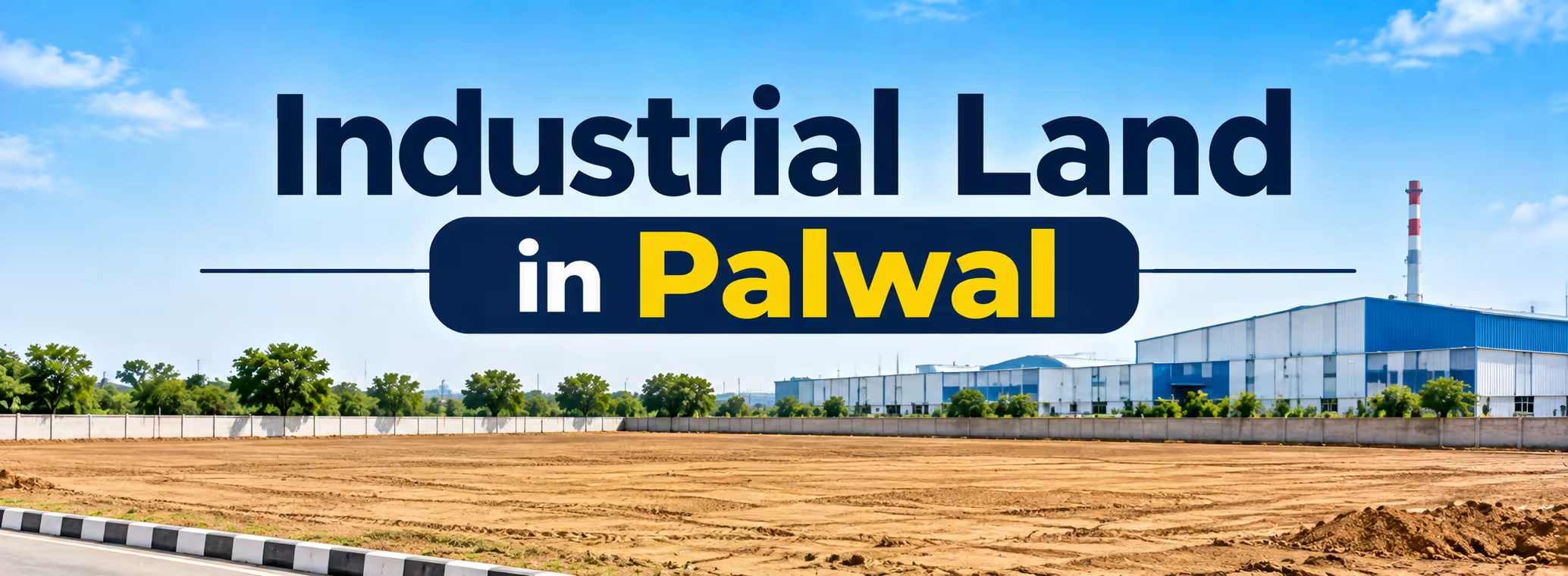
Ask any investor in the Delhi-NCR region where the next big warehouse and factory belt could come up, and Palwal keeps appearing in the answer. The reason is simple. Land in Gurugram, Faridabad and Manesar has become very costly, while Palwal still offers larger parcels at more reasonable rates. It also has strong road and rail links. Whether you are searching for a plot for sale in Palwal to hold for the long term or looking at industrial land in Palwal for a factory or warehouse, highway corridors are now shaping where the demand is strongest. This guide explains how corridor location affects land value, which approvals matter, what risks to avoid, and how you can make a safe decision. If you plan to buy land, read on
Why Palwal Is Getting Investor Attention
Palwal is a district in southern Haryana, about 60 km from Delhi. It lies on the Delhi-Agra route (National Highway 19) and is part of the National Capital Region (NCR). That location matters for one big reason: goods made or stored here can reach Delhi, Faridabad, Gurugram, Agra and Mathura within a few hours.
Three things make the district interesting:
- Connectivity: Highways, state roads and rail lines pass through or near the district.
- Land availability: Larger plots are still easier to find than in nearby cities.
- NCR planning: Being in the NCR means regional planning, and infrastructure projects often include the area.
Understanding Highway Corridors and Why They Matter
A highway corridor is the strip of land on either side of a major road. Industrial buyers care about it because transport is one of the biggest costs in any business. A factory or warehouse close to a highway saves time, fuel and money.
Corridor land usually gets:
- Easy truck movement
- Faster delivery to cities and ports
- Better access for workers
- Stronger resale demand
Think of a small packaging company. If its plot is 15 km inside a village, trucks lose time on narrow roads. If the plot is near the highway or service road, the same truck makes more trips in a day. That difference is why corridor plots often carry a higher price.
Major Connectivity Factors to Study
Before you choose a plot, understand which routes serve it.
National Highway 19 (Delhi-Agra): This is the main spine that connects Palwal to Faridabad, Delhi and Agra.
KMP Expressway (Kundli-Manesar-Palwal): Also called the Western Peripheral Expressway, it lets heavy vehicles bypass Delhi. That is a big benefit for goods moving between northern and western India.
Rail links: Palwal is a railway junction on the Delhi-Mumbai and Delhi-Agra routes. Freight and the planned Haryana Orbital Rail Corridor are important for logistics. You should check the latest status of each project with the relevant authority, because timelines change.
Airport access: Palwal’s closeness to upcoming and existing airport projects around the NCR, including the Jewar region near Noida, adds to its long-term logic. Always verify the current operational status yourself before relying on this in a business plan.
Types of Industrial Land You Can Find in Palwal
Not all land is the same. Knowing the types helps you avoid costly mistakes.
1. Government-Developed Industrial Sectors
The Haryana State Industrial and Infrastructure Development Corporation (HSIIDC) develops industrial areas and allots plots. In Palwal, the Industrial Model Township (IMT) is an example of a planned industrial zone. These plots generally come with roads, drainage, power and clear titles. The price is higher, but the paperwork is cleaner.
2. Private Industrial Land
Private owners and developers also sell land in industrial or logistics zones. Prices can be lower, but you must check that the land use is correct and approvals exist.
3. Agricultural Land Convertible to Industrial Use
Many investors buy farmland near highways hoping to convert it later. This needs CLU permission from the state’s Town and Country Planning Department. It is not automatic and can take time. The land must also fit the Development Plan of the area.
Quick Comparison Table
| Factor | HSIIDC Industrial Plot | Private Industrial Land | Agricultural Land (Needs CLU) |
| Land use status | Already industrial | Check carefully | Agricultural |
| Price level | Higher | Medium | Lower at purchase |
| Infrastructure | Usually developed | Varies | Often limited |
| Paperwork risk | Low | Medium | Higher |
| Best for | Factories, MSMEs | Warehouses, logistics | Long-term holding |
| Time to start work | Short | Medium | Long |
Key Terms Explained in Simple Words
New buyers often get confused by land terms. Here are the important ones.
Change of Land Use (CLU): Permission to change the use of land, for example from farming to industry. Without it, building a factory on farmland is illegal.
Jamabandi: A record of land ownership and rights maintained by the Haryana revenue department. It shows who owns the land and who cultivates it.
Khasra Number: A number given to each plot in revenue records. It helps you identify the exact piece of land.
Mutation (Intkal): The process of updating the revenue record after a sale or inheritance. A sale deed alone is not enough; mutation should follow.
Development Plan: A document made by the planning authorities that shows how each area may be used, such as residential, industrial, commercial or green.
Encumbrance: Any loan, dispute or legal claim attached to a property.
HRERA: The Haryana Real Estate Regulatory Authority. It regulates projects, but many plain land sales are outside its scope, so you still need your own checks.
Government Initiatives and Policy Backdrop
Haryana has worked to attract industry through its enterprise promotion policies and ease-of-doing-business efforts. Online services for land records, approvals and registration have also grown. The state has run portals such as Jamabandi records online, and the Town and Country Planning Department handles licences and zoning. At the national level, the PM Gati Shakti plan and the Dedicated Freight Corridor programme aim to improve logistics, which supports industrial demand in NCR districts.
Policies, subsidies and rules change from time to time. Check the latest notifications on the official websites or with a qualified consultant before you commit money.
Which Businesses Prefer Highway Corridor Land?
Understanding demand helps you judge exit options. Common users include:
- Warehousing and cold storage firms
- Logistics and transport companies
- Auto parts and engineering units
- Food processing and packaging units
- E-commerce fulfilment centres
If your plot suits many of these users, resale or leasing becomes easier.
How to Evaluate a Plot Step by Step
Step 1: Visit the Site
Photos and brokers can mislead you. Visit in person. Check road width, approach road, nearby units, water table and flooding signs during the rainy season.
Step 2: Check Land Use and Zoning
Match the land with the Development Plan. If the seller says “it will be converted soon,” treat that as a risk, not a fact.
Step 3: Verify Ownership
Get the latest Jamabandi, mutation record and registry. Confirm that the seller is the actual owner. For agricultural land, confirm that all co-owners agree to the sale.
Step 4: Check for Loans and Disputes
Ask for a search report and an encumbrance check. Look for pending court cases or acquisition notices, especially along highways, as land can be acquired for road widening.
Step 5: Understand the Costs
Budget for stamp duty, registration charges, legal fees, CLU charges if relevant, and development costs. Stamp duty rates and collector rates change, so confirm current figures with the sub-registrar office.
Step 6: Take Legal Help
Hire a local property lawyer. The fee is small compared with the cost of a bad deal.
Practical Example: A Warehouse Investor
Imagine an investor named Rakesh who wants a storage facility for an e-commerce client. He compares two plots. Plot A is near the highway but costs more. Plot B is cheaper but sits 6 km inside on a narrow village road. Trucks of the client cannot turn easily on that road. Rakesh chooses Plot A, pays more up front, and signs a long lease at a better rate. In the end, the extra price was recovered through stronger rent and lower transport delays. This type of thinking, which puts access before the headline price, is common among experienced industrial buyers.
Risks You Should Not Ignore
- Wrong land use: The most frequent and costly mistake.
- Highway acquisition: Roads get widened, and part of your plot may be taken.
- Slow approvals: CLU and building permissions can take longer than promised.
- Overpricing by brokers: Compare rates in the same sector and nearby villages.
- Liquidity: Industrial land may take longer to resell than a small residential plot.
- Hype-based buying: Do not buy only because of a news headline about a future project.
Industrial Land vs. Other Land Options in Palwal
Many buyers searching for a plot for sale in Palwal are looking for homes or small investments, not factories. Residential plots in approved colonies are easier to finance and sell. Industrial land suits businesses and larger investors.
Some people also look at organic farmland near Palwal for farming, farm stays or lifestyle use. Such land can be a good long-term asset if you want to grow crops, but it is not the same as industrial land. Agricultural land in Haryana also has rules about who can buy it and how it can be used, so check the current regulations carefully.
Before you decide, ask yourself:
- Do I want income, appreciation or personal use?
- How long can I hold the land?
- Can I manage approvals and construction?
Using Online Platforms Wisely
Today, you can research a lot from your phone before you ever visit a site. Platforms like 2Bigha help users explore property insights, land records, investment opportunities and real estate information in one place. Some platforms also let owners sell land online, which can save time compared with relying only on local brokers. If a platform offers a subscription plan, read what it includes, such as verified listings, owner contact access or market data, so you pay only for features you will use.
Whatever platform you use, treat listings as a starting point. Confirm every claim yourself with official records and a physical visit.
If You Plan to Sell Later
Exit planning matters from day one. Keep your registry, mutation proof, tax receipts and approvals in an organised file. Clean papers help you sell faster and at a better price. If you decide to sell land online, include clear photos, the exact location, Khasra details, access road width and zoning status. Honest listings attract serious buyers and reduce back-and-forth.
Tax and Legal Notes
Profits from selling land are generally subject to capital gains tax in India. The rate depends on how long you held the property and the rules in force at the time of sale. Rural agricultural land may be treated differently from urban land under tax rules. Since tax laws change, speak to a chartered accountant before buying or selling.
Smart Tips from the Ground
- Walk the area at different times of day to see real traffic and access.
- Talk to nearby factory owners about power supply, labour and water.
- Ask about the cost of electricity connection and the distance of the nearest sub-station.
- Do not pay large cash amounts. Use banking channels and keep receipts.
- Start with a smaller plot if you are new to industrial investing.
Internal linking suggestions for your website: link “Jamabandi” to a guide on reading land records, “CLU” to a page on land use conversion, “plot for sale in Palwal” to your Palwal listings page, “organic farmland” to your farmland category, and “sell land online” to your seller listing page.
Conclusion
Industrial land in Palwal offers a real opportunity for investors who respect the basics: location, legal clarity and patience. Highway corridors, expressway links and rail connectivity make the district a logical choice for warehouses and manufacturing, while prices are still lower than in older NCR hubs. But strong demand does not remove risk. Check the land use, verify records, understand approvals and compare options such as HSIIDC plots, private land and a regular plot for sale in Palwal before you commit.
Take your time, do your research, and use trusted tools like 2Bigha to learn more about land records and market insights. An informed buyer is almost always a successful one.
Disclaimer: This article is for informational purposes only and should not be considered investment, legal, financial, or property advice. Real estate regulations, infrastructure plans, market conditions, and government policies may change over time. Readers are advised to verify information with relevant authorities and consult qualified professionals before making any investment or property-related decisions.