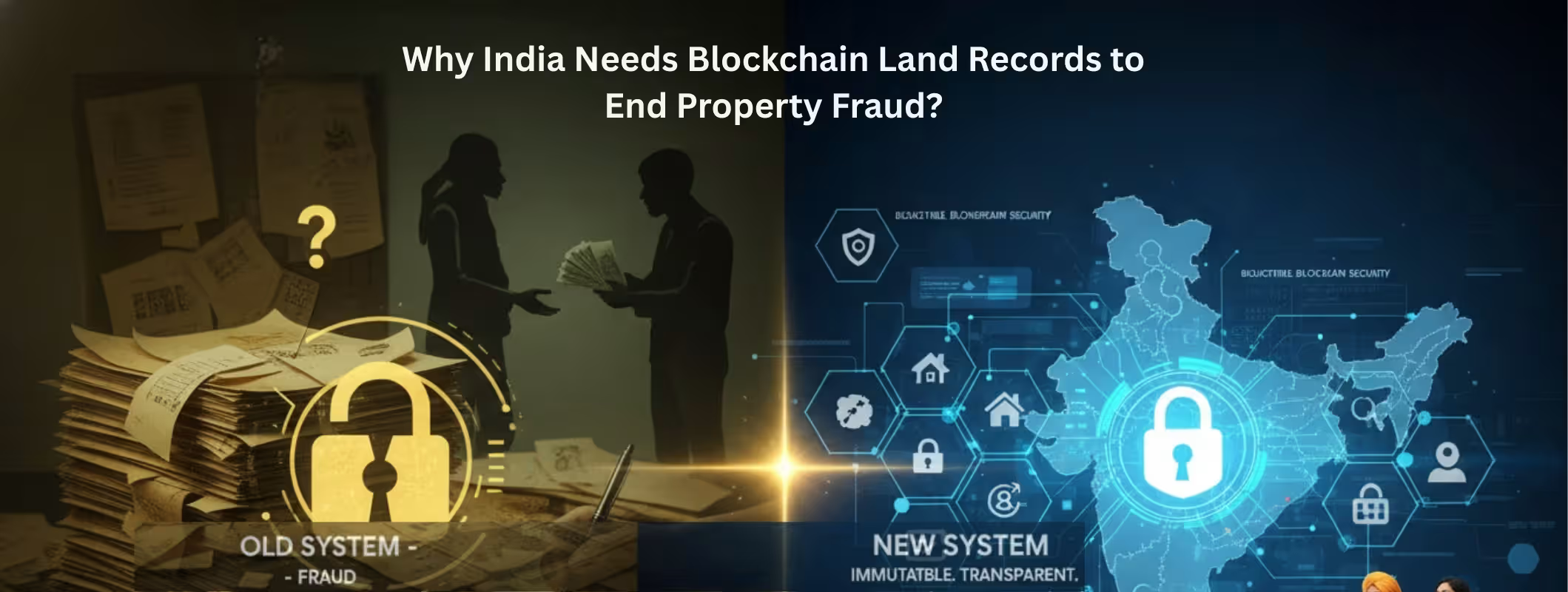
Buying land in India is still not as simple as it should be.
Many buyers worry about duplicate sales. Some fear fake documents. Others discover that the same land has been promised to two different people. In rural areas, unclear inheritance records create confusion. In cities, title chains are sometimes incomplete. These problems are not rare. They are the reason why property fraud in India continues to make headlines.
For anyone planning to buy land online, invest in agricultural farmland, or explore long-term farmland investment, document clarity is everything. Without trust in land records, no property deal feels fully secure.
This is where the discussion around blockchain land records India becomes important.
The Real Problems in Indian Land Ownership
Let’s start with ground reality.
- Duplicate Sales: In some cases, one land parcel is sold to multiple buyers. Each buyer may receive documents that look genuine. The dispute only surfaces later.
- Fake or Manipulated Documents: Forged sale deeds and altered ownership records are a serious issue, especially in high-demand areas.
- Unclear Title Chains: Land often passes through generations without proper updates in official records. When heirs sell the land, questions arise about who had the legal right.
- Mismatch Between Physical and Digital Records: Some states have digitised records. But digitisation does not automatically mean accuracy. Old manual entries may have been incorrectly transferred.
These issues create stress. Buyers hesitate. Investors slow down. Even genuine sellers face suspicion when trying to sell land online.
How India’s Current Land Record System Works?
India’s land records are managed at the state level. Most states maintain:
- Record of Rights (RoR)
- Registration records
- Survey and settlement maps
- Mutation records
When a property is sold, a sale deed is registered at the local sub-registrar office. After registration, the mutation process updates ownership in revenue records.
On paper, the system looks complete. In practice, problems occur because:
- Registration and revenue records are often separate systems
- Updates can be delayed
- Manual errors happen
- Records may not reflect ground reality
Digitisation efforts have improved accessibility. Buyers can check land records online in many states. But the underlying system is still centralised and vulnerable to manipulation.
Simply put, the current system stores information. It does not always guarantee that the information cannot be altered.
Why is Digitisation Alone not Enough?
Many people assume that putting land records online solves fraud, It helps. But it does not eliminate risk. If a central database is hacked or manipulated, changes can be made. If officials misuse authority, records can be altered. If old data was incorrect, digitisation only preserves that mistake.
As more people use online property listing sites and browse farm listings, the need for trustworthy backend records becomes stronger.
That is where blockchain enters the conversation.
What is Blockchain?
Blockchain is like a digital record book that:
- Cannot be easily changed once updated
- Is shared across multiple systems
- Keeps a transparent history of every transaction
Think of it as a chain of blocks. Each block contains information. Once added, it cannot be edited without affecting the entire chain. That makes tampering extremely difficult.
In the context of blockchain land records India, it means ownership data would be recorded in a system where changes are transparent and permanent.
How Blockchain Could Reduce Property Fraud?
Let’s connect it directly to buyer concerns.
- Tamper-Proof Ownership History: Every ownership transfer would be recorded permanently. No hidden edits. No silent changes. This helps buyers verify the full title chain before investing in farmland or urban plots.
- Transparency Across Departments: If registration and revenue records are linked through blockchain, inconsistencies can reduce. The same information reflects across systems.
- Reduced Duplicate Sales: Once a property is recorded as sold, it cannot be secretly sold again without being detected.
- Better Trust for Online Transactions: As more people prefer to buy land online, backend transparency becomes essential. Blockchain-backed records could increase buyer confidence in digital land transactions.
- Stronger Protection for Agricultural Land: In rural areas, disputes over agricultural farmland are common. Blockchain can create a clear, permanent ownership trail. That reduces future inheritance confusion.
Why Does This Matters for Land Investors?
When you invest in land, especially for appreciation or farming, you need clarity not just today, but 10–20 years later.
Unclear ownership affects:
- Resale value
- Bank financing
- Development permissions
- Future transfers
Blockchain-based records would strengthen investor confidence. It would make farm listings and land deals more reliable over time.
But is Blockchain a Magic Solution?
There are challenges.
- Legacy Data Issues: If existing land records are incorrect, blockchain will only store that incorrect data permanently. Cleaning old records is the first step.
- State-Level Differences: Land is a state subject in India. Each state has different systems. Implementing one standard blockchain framework nationwide is complex.
- Cost and Infrastructure: Technology implementation requires funding, training, and digital infrastructure.
- Legal Framework: Clear laws must define how blockchain records are recognised legally in disputes. Blockchain is powerful. But without proper groundwork, it cannot fix everything overnight.
The Growing Digital Land Ecosystem
India is already moving toward digital property systems. More buyers are using:
- Online property listing sites
- Digital land marketplaces
- Virtual land exploration tools
In this evolving space, platforms like 2Bigha play a role in the discovery and awareness stage. 2Bigha is a land marketplace platform where users can explore land opportunities across India. It brings together structured land listings, including agricultural farmland and investment-ready plots, making it easier for buyers and investors to compare options.
For sellers, it offers a way to sell land online and reach interested buyers through organised listings.
While blockchain reforms depend on government policy, platforms like 2Bigha contribute to the broader shift toward more transparent, accessible land information.
The more structured and visible the ecosystem becomes, the harder it is for fraud to hide.
What Buyers Can Do Today?
Blockchain land records may take time to become widespread. Until then, buyers must stay cautious.
Verify Ownership History
Check previous ownership records carefully.
- Match Registration and Revenue Records: Ensure both systems reflect the same owner.
- Be Careful with Inherited Land: Inheritance disputes are common in rural areas.
- Do Not Rely Only on Online Listings: Online platforms help discovery. Document verification is still essential.
- Ask Questions: If something feels unclear, pause. Clarity is more important than speed.
The Bigger Picture
Ending property fraud in India requires more than technology. It requires:
- Clean legacy records
- Strong governance
- Transparent systems
- Buyer awareness
Blockchain offers a promising direction. It creates a system where ownership records are harder to manipulate and easier to trace.
For a country with millions of land transactions every year, that shift could be transformative.
As digital adoption grows and more people choose to buy land online or invest in farmland, secure land records become even more important.
And in India’s land ecosystem, building that trust at the record level could change everything.
FAQs - Blockchain Land Records
1. What is blockchain in land records, and how would it work in India?
What blockchain in land records means is that land ownership information would be recorded in a digital system that is resistant to tampering. This means that instead of having one central database, the information about ownership would be stored in a digital ledger. Every time a piece of property changes hands, the information would be added to the chain.
2. How can blockchain help reduce property fraud in India?
Property fraud in India is common because of duplicate sales, forged documents, and unclear title chains. Blockchain technology will be of great help in this regard because it will enable the creation of a transparent and immutable record of ownership. After a property transaction has been recorded, it cannot be altered without leaving a trace. This will make it difficult to forge documents or sell the same property multiple times.
3. Is blockchain land record implementation already happening in India?
Certain Indian states have also considered pilot projects regarding blockchain-based land records. However, large-scale implementation in the country has not yet taken place. As land is a state subject, implementation is subject to the readiness of state governments and legal acceptance of blockchain records.
4. Will blockchain make farmland investment safer?
Blockchain technology can greatly enhance the transparency of investment in farmland. The ownership history of agricultural land is complex, and there are many inheritance issues involved. The entire ownership history will be recorded on the blockchain platform, and it will be easy for the investor to check the ownership history before buying agricultural farmland.
5. How is blockchain different from simple digitisation of land records?
Digitisation refers to the process of turning physical documents into digital documents. However, digital documents stored in a central system can still be modified or manipulated. Blockchain, on the other hand, enables the creation of a system where documents are stored in a way that they cannot be altered without being detected.