List Your Land
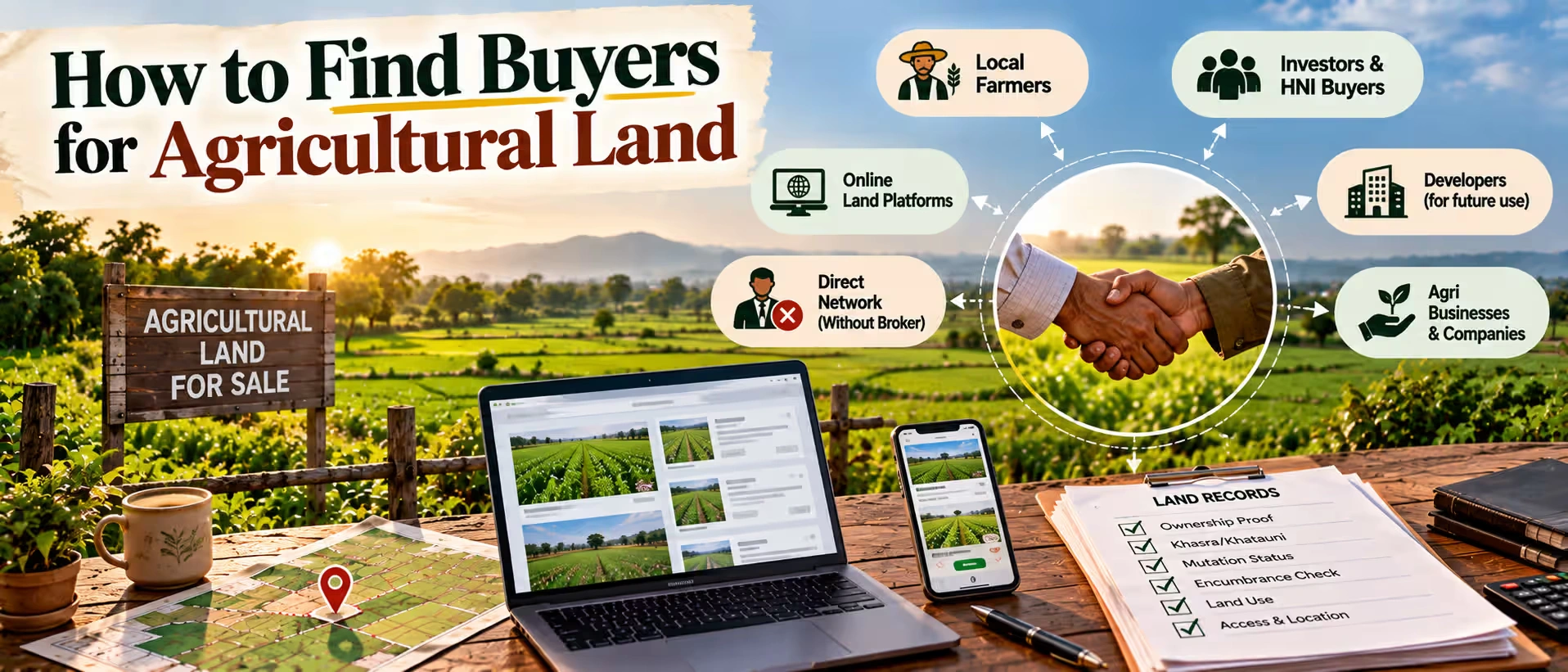
If you have ever attempted selling a flat, you may think that selling agricultural land is similar. However, it is not. The number of buyers is smaller, every piece has its unique qualities, and those who come want to have a look at the documentation, walk on the land, and see the road before saying a word. Those who simply wait for someone to call usually wait for a long time. Those who have everything prepared, price their land reasonably, and advertise it through multiple channels manage to sell much faster and without too many difficulties. And here are the steps on how to do it, beginning with the buyer's type.
Who Buys Agricultural Land?
It helps to picture your buyer before you pick a channel, because a retired couple looking for a weekend farm cares about very different things from a company that needs ten acres near a highway.
| Safeguard | How It Helps |
|---|---|
| Seller's declaration of clear title | Creates accountability if the title turns out defective |
| Part payment held back until mutation | Gives the seller a reason to finish the process |
| Seller's duty to cooperate with mutation | Requires signing papers and appearing before the revenue officer |
| Deadline for completion | Prevents indefinite delay |
| Indemnity clause | Makes the seller responsible for losses from title defects |
| Refund terms if mutation fails | Protects the advance payment |
| Escrow or staged payment | Keeps funds secure until key conditions are met |
Once you know who you are talking to, the listing practically writes itself. Mention water, road width, and soil for the first-time farmer, and size, location, and legal clarity for the investor.
Get the Land Ready Before You Go Looking
If you ask any serious buyer what they require following price quotes, their answer will almost always be papers. If they are ready, you appear credible, and the negotiation process gets easier. If they are not, you miss out on potential buyers who will never bother telling you.
The first step would be compiling all the registered sale deeds, as well as previous deeds, if available. If you do not have these, compile the papers related to the inheritance and court orders, which gave you ownership of the land. Secondly, download the most recent revenue extract with details about your name, the plot area, survey number, and land category. Thirdly, ensure that the mutation is completed; if not, sort out the reasons for it being so. Pay off all the land revenue and local tax dues, and acquire the encumbrance certificate.
Two more things get forgotten surprisingly often. One is the boundary: if the edges aren't marked clearly, arrange a demarcation or survey. The other is the family. Every co-owner or legal heir has to agree to the sale, and it is far better to find out now than when a buyer has already paid an advance.
Finally, take proper photos and a short video, ideally in good light, covering the road, the water source, and the boundary markers. A drone clip helps a lot if your buyer lives in another city.
Setting a Price That Works
Probably, overpricing comes at number one in the reasons that keep the land unsold in a year. The first step is finding out the circle rate or the guide price for the land within your village, because that is the lowest amount that is required for paying stamp duty. After that, find out what price other similar plots around there have really been sold for, and not the asking price, as this gives an indication of people’s expectations while the sale price is a reality check. Then compare yourself – on the basis of road availability, water availability, quality of the soil, plot shape, and legality. Your plot may be regularly shaped with an accessible road and working borewell, which sells more than a weirdly shaped plot without any legal access. But that is alright, as long as the figure isn’t kept too high.
9 Ways to Find Buyers
1. List on Online Marketplaces
Online selling of property has become one of the quickest ways of reaching out to people beyond your own locality. A large number of buyers start their search for a farm online, screen based on state, size, and price, and make a list even before making any contacts. An effective listing includes information regarding the location, size of the area, type of soil, source of water, accessibility of roads, pictures, and price or price range. Online marketplaces where the listings are authenticated earn more buyer confidence, and that translates into quick responses.
2. Talk to Neighbouring Landowners
The person next door is often your most motivated buyer, because your plot might let them join two parcels or finally get road access. Approach them politely and directly. Even if they can't afford it, they may know a relative or friend who keeps searching for farmlands near me in that area.
3. Work With Local Brokers
Brokers know what buyers there are in your area and will be able to produce solid leads rapidly. Agree on the commission, preferably in writing (from 1% to 2% is a typical rate in many places, but it may differ). Whether one or more brokers work on your site, state clearly that you would like to have an interview with any buyer personally before signing papers.
4. Use Village and Community Networks
In rural settings, nothing beats word of mouth. Talk about it to the sarpanch, the village elders, the cooperative society, the seeds and fertilizers supplier, and the owner of the tractor showroom, since that is where information travels fast whenever someone decides to scale up.
5. Post on Social Media and Messaging Groups
Local community pages, farming groups and messaging channels can carry your listing a long way for free. Put up clear photos, the location, area, expected price and your contact number, and say that documents are ready. Hold back on sharing full survey numbers in public posts, and send documents only to buyers who seem genuine.
6. Newspaper Ads and Boards on the Plot
Regional papers still reach older and rural buyers, and a simple board on the land with your number can catch someone driving by who happens to be looking for a plot for sale near me in that stretch. Keep the wording short: location, size, contact.
7. Approach Companies and Institutions
Firms in agro-processing industries, cold storage companies, solar firms, educational institutions, trust firms, and logistical companies require land in certain regions at times. If your piece of land is large, adjacent to the highway, power lines, or market, prepare a brief proposal with the relevant information and request a meeting.
8. Reach Out to Farmer Groups and Cooperatives
Farmer producer organisations, cooperatives and self-help groups sometimes look for land to expand production or build shared facilities. Even when they aren't buying themselves, their members tend to know who is.
9. Target NRIs and Out-of-State Buyers
Many individuals living outside their own regions wish to have land ownership in their native place. They are quite familiar with online procedures but still seek more security, so provide them with the necessary documents, video demonstration, and an opportunity for a person in their native place to guide them around the property. Always be prepared to discuss how registration can be done through power of attorney.
Writing a Listing That Gets Calls
The best listings answer a buyer's first ten questions before they have to ask. Include the village, tehsil and district, the total area with a unit conversion (bigha and acre are not the same everywhere), the land type and current use, water and electricity, the road and distance to the nearest town, the soil and what was grown recently, the legal status, including mutation; your price expectation and whether it is negotiable; plus a line saying documents are ready.
A listing for agriculture land for sale that leaves out basics like location or area gets fewer serious replies, since buyers usually assume something is being hidden.
Handling Inquiries and Negotiation
Once calls begin, ask each person about their purpose, budget, and timeline, which filters out casual browsers quickly. Arrange visits in daylight and go along if you can. Share documents once you are sure the buyer is serious, keep notes on who offered what, and don't jump at the first offer, though a genuine one deserves a prompt answer.
After you agree on a price, put it in a written agreement covering the advance, the payment schedule, the handover date, and the cancellation terms. Then register the sale deed at the sub-registrar's office, because a stamp paper agreement alone does not transfer ownership.
Tax and Payment Points
Land selling has tax implications, and they depend on the kind of land. Under the Income Tax Act, rural agricultural land, meaning land beyond specified distances from a municipality or cantonment board (the distance depends on the population of the area), is generally not treated as a capital asset, so selling it usually doesn't attract capital gains tax. Agricultural land inside those limits is a capital asset, and the gains may be taxable, though some exemptions exist if you reinvest in other agricultural land. Rules and rates change, so check with a chartered accountant before you sign anything.
On payment, stick to bank transfers. Cash dealings in property transfers are restricted under income tax rules, and a clean payment trail protects you as much as the buyer.
Mistakes and Scams Worth Knowing
Mistake or Scam | How to Avoid It |
|---|---|
Overpricing based on a neighbour's wish price | Check registered deals, not asking prices |
Listing without documents ready | Prepare records first |
"Buyer" asking for a processing or verification fee | Never pay money to receive an offer |
Handing over originals too early | Share copies until the sale is registered |
Accepting large cash advances | Use bank transfers and written receipts |
Signing a power of attorney casually | Take legal advice before giving anyone authority over your land |
Skipping co-owner consent | Get every owner and heir to sign |
Selling Through 2Bigha
If you'd rather not depend on one local contact, 2Bigha is a land and farmland marketplace in India where owners can list agricultural land and reach buyers across regions. Buyers can browse listings, order a Land Report that reviews key records,s and use Book a Visit to inspect a plot with guidance. Owners who show up with organised documents and clear details usually get more serious inquiries, simply because buyers can evaluate the land without endless back and forth.
Disclaimer: This article is for informational purposes only and should not be considered investment, legal, financial, or property advice. Real estate regulations, infrastructure plans, market conditions, and government policies may change over time. Readers are advised to verify information with relevant authorities and consult qualified professionals before making any investment or property-related decisions.