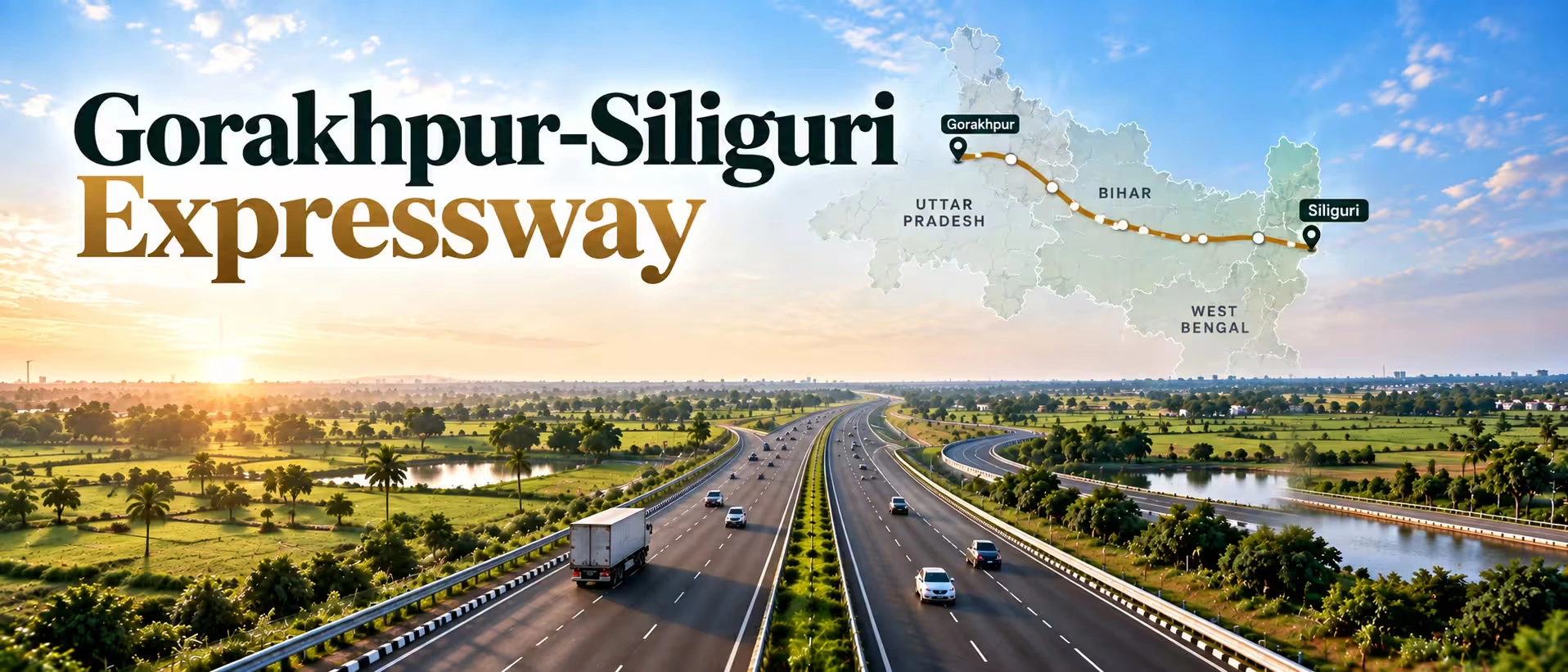
There's a particular kind of excitement that hits a region right before a big expressway lands on it. Land agents start talking faster, prices creep up in fits and starts, and suddenly everyone's cousin claims to know someone who bought a plot for cheap five years ago. That's roughly where things stand along the proposed Gorakhpur-Siliguri Expressway corridor right now, not fully built, but close enough that the ripple effects are already visible in land conversations across eastern Uttar Pradesh, Bihar, and into North Bengal. If you've been sitting on farmland near either end of this corridor, or you're hunting for a plot to invest in early, this is the moment to actually understand what's happening, not just react to whatever a broker tells you over the phone.
Why Is This Expressway a Big Deal?
Connecting Gorakhpur to Siliguri isn't just about shaving travel time off a long, tedious road trip. It links two regions that have historically been underserved by fast, reliable connectivity, despite both sitting in economically important zones. Gorakhpur anchors a good chunk of eastern UP's trade and agriculture, while Siliguri functions almost like a gateway city, connecting the northeast to the rest of India. Once this corridor is functional, freight movement gets faster, travel times shrink dramatically, and this is the part that matters most for our purposes: land along the route becomes noticeably more attractive to both individual buyers and larger developers.
The Gorakhpur Side of the Story
Gorakhpur has been quietly building momentum for a while now, well before this expressway entered public conversation. Improved rail connectivity, a growing educational hub status, and steady urban expansion had already pushed it onto investors' radars. Add an expressway into that mix, and you get what a lot of local agents are now calling the Gorakhpur Infrastructure Boom, a phrase that's popping up in everything from real estate seminars to WhatsApp forwards. Here's what's actually shifting on the ground:
- Peripheral areas that were purely agricultural five years back are now seeing residential and commercial interest
- Land for sale in Gorakhpur near proposed interchange points is commanding a noticeable premium over plots even a few kilometres away
- Investors from Lucknow and Delhi have started scouting the region, not just local buyers
Snapshot: What's driving demand in Gorakhpur?
| Driver | Impact on Land Value |
|---|---|
| Expressway connectivity | Higher demand near interchange zones |
| Rail and air connectivity upgrades | Broader investor interest beyond locals |
| Educational institutions expanding | Rising demand for residential plots |
| Agricultural land near the highway route | Increasing conversion interest |
Buying a Plot in Gorakhpur: What to Actually Check?
If you're looking at a plot in Gorakhpur right now, resist the urge to buy purely on the "expressway is coming" pitch. That phrase alone has convinced more people to overpay than almost anything else in Indian real estate. The same applies if you're planning to buy farm land in Siliguri; don't let future connectivity alone decide what you pay. Instead:
- Confirm the exact alignment of the expressway, not the rumoured route, but the officially notified one.
- Check the land's classification. Agricultural land close to the route may still need conversion before you can build.
- Verify ownership and title documents through the local revenue office or online land record portals.
- Compare prices across at least three to four nearby plots before settling — prices in boom zones fluctuate more than people admit.
- Ask about pending litigation or inheritance disputes, which are unfortunately common in older agricultural holdings.
Thinking of Selling Agricultural Land in Gorakhpur?
On the flip side, a fair number of long-time landowners are weighing whether now's the right time to sell agricultural land in Gorakhpur, especially plots sitting close to the expressway's proposed path. And honestly, there's a reasonable case for it. Prices near infrastructure corridors tend to spike early, during the construction and pre-completion phase, sometimes more than they do once the road is fully operational and "priced in." That said, timing a sale perfectly is close to impossible. A few practical things help:
- Get land classification and conversion status clarified before listing, since buyers increasingly ask upfront
- Keep encumbrance certificates and mutation records ready; this alone speeds up serious negotiations
- Price based on recent comparable sales, not on inflated numbers floating around in local gossip
Selling checklist at a glance:
| Document/Step | Why It Matters |
|---|---|
| Updated mutation record | Confirms current legal ownership |
| Encumbrance Certificate | Assures the buyer of no pending claims |
| Land classification proof | Clarifies agricultural vs convertible status |
| Recent comparable sale data | Helps set a realistic, defensible price |
Now, Over on the Siliguri End
Siliguri's story is a little different, but the underlying pattern rhymes. It's already a well-established transit and commercial hub for North Bengal, sitting close to Sikkim, Bhutan, and the northeastern states. What the expressway does here is tighten its connection southward, into the Gorakhpur-Bihar-UP belt, opening up trade and travel routes that were previously slower or more indirect.
For anyone eyeing land for sale in Siliguri, the interest right now is split fairly evenly between two groups: people wanting to buy land in Siliguri for residential or small commercial use, and those specifically looking to buy farmland in Siliguri, drawn by the region's fertile belt and proximity to hill-station tourism routes.
Siliguri land demand — quick breakdown:
| Buyer Type | Primary Motivation |
|---|---|
| Residential buyers | Growing urban spread, connectivity |
| Small commercial investors | Transit hub status, trade routes |
| Farmland buyers | Fertile land, tourism-adjacent value |
| Long-term investors | Betting on corridor-driven appreciation |
What Makes Siliguri Land Attractive Right Now?
A few things are working in Siliguri's favour simultaneously, and it's worth laying them out plainly rather than lumping them together:
- It already has strong connectivity to the northeast, so the expressway adds to an existing strength rather than creating one from scratch
- Tourism traffic toward Darjeeling, Sikkim, and Bhutan passes right through, which supports commercial land value near the city
- Agricultural land in the surrounding belt remains relatively affordable compared to more saturated markets further south
If you're specifically hunting for land in Siliguri suited to farming, it's worth spending time in the outer belts rather than chasing plots too close to the city core, where prices have already climbed steeply.
A Word of Caution for Both Sides of the Corridor
Expressway-driven land booms attract genuine opportunity, but they also attract a fair amount of noise, inflated claims, unverified "insider" route information, and sellers pricing land based on hope rather than fact. Whether you're buying near Gorakhpur or Siliguri, a few habits go a long way:
- Always verify official project timelines through government notifications, not local rumours
- Don't rush a purchase just because someone claims prices will "double next month"
- Get a local lawyer or land consultant to review documents independently, even if it costs a bit extra upfront
Final Thoughts
The Gorakhpur-Siliguri Expressway is shaping up to be one of those infrastructure projects that quietly reshape land value across two very different regions, one an inland trade and education hub, the other a northeastern gateway city. If you're weighing a plot in Gorakhpur, thinking about whether to sell agricultural land in Gorakhpur while demand is hot, or scouting land for sale in Siliguri to buy farmland or build residential property, the fundamentals stay the same: verify the route, check the paperwork, and don't let excitement override due diligence. The Gorakhpur Infrastructure Boom is real, but like most booms, it rewards the buyers and sellers who move carefully, not the ones who move fastest.
Disclaimer: This article is for informational purposes only and should not be considered investment, legal, financial, or property advice. Real estate regulations, infrastructure plans, market conditions, and government policies may change over time. Readers are advised to verify information with relevant authorities and consult qualified professionals before making any investment or property-related decisions.