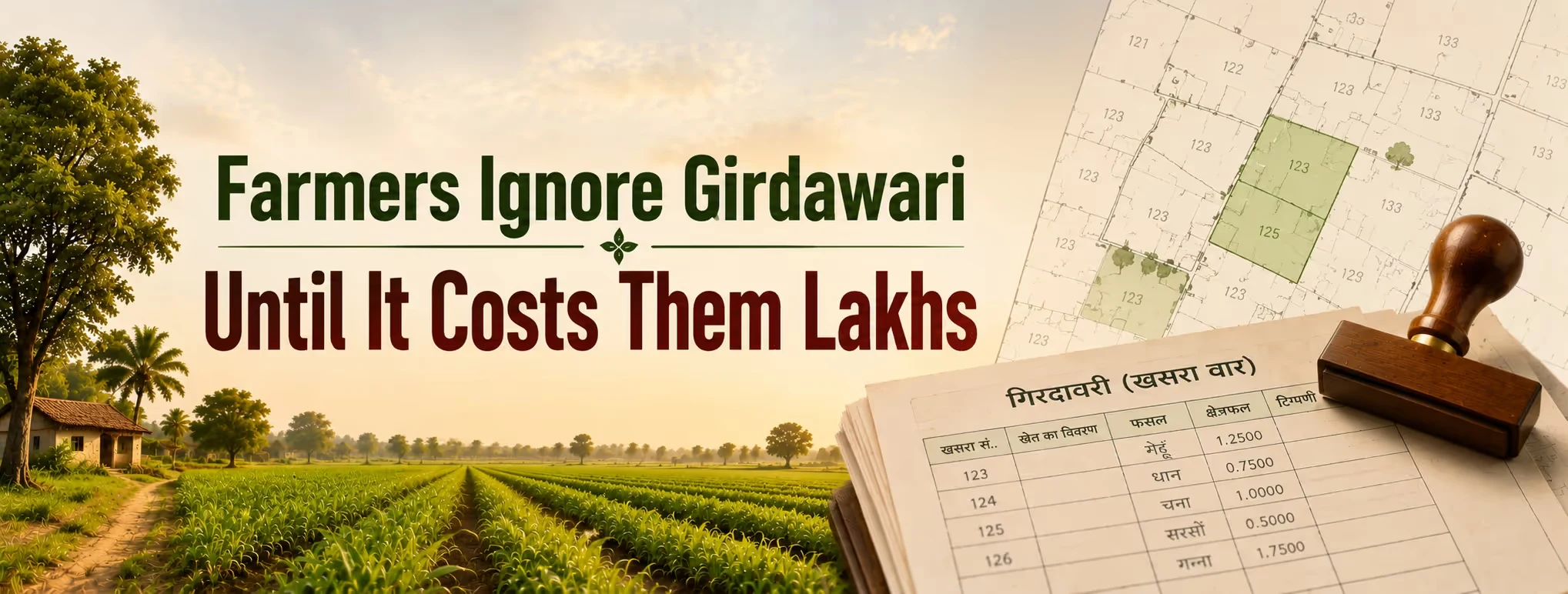
Ask ten farmers what is girdawari and only three would give a confident answer (if any). The rest will either dismiss it as government formalities or guess that this is something their father or grandfather did decades ago. That’s the guess which ultimately costs them lakhs of rupees when a dispute erupts, or a claim is rejected, or a bank loan goes wrong because of a wrong entry in girdawari. This Complete Guide to Girdawari in India explains what girdawari is, why it is important, how to check online girdawari, how to complete a girdawari download, and why every buyer, seller, and farmer should check these records.
What Is Girdawari, and Why Does It Actually Matter?
Girdawari is the government record of who is cultivating what on a given parcel of land, and what crop is growing there. Revenue officials (Patwaris in many states) go on inspection tours of agricultural lands in both the Kharif and Rabi seasons, and this information gets updated. Apart from being a box-ticking exercise, this exercise has immense value in:
| What Girdawari Affects | Why It Matters |
| Crop insurance claims (PMFBY) | Claims are verified against girdawari crop entries |
| Minimum Support Price (MSP) procurement | Many states require updated girdawari records |
| Bank loans | Banks verify active cultivation before approving agricultural loans |
| Land acquisition compensation | Compensation often depends on the recorded cultivator |
| Tenancy disputes | Girdawari serves as evidence of cultivation and possession |
Missing even one seasonal update can delay subsidies, insurance payouts, or compensation, while incorrect entries can create legal disputes over ownership and cultivation rights.
The Real Cost of Ignoring This Record
The financial consequences are often discovered only after something goes wrong. A farmer may lose an insurance claim because the latest crop was never recorded. A family selling property online or selling ancestral agricultural land may discover that another person's name appears as the cultivator in the records, causing buyers to hesitate or the transaction to get delayed. Banks may also refuse agricultural loans if cultivation details are outdated. These situations rarely begin with major legal disputes. They usually start with a small mistake—an outdated girdawari record—that gradually turns into a costly problem.
Types of Girdawari Records Across India
Different states use different names for the same type of cultivation record.
| State/System | Local Term Used | Access Point |
| Rajasthan | Dhara Girdawari | apnakhata.rajasthan.gov.in |
| Uttar Pradesh | Khasra Girdawari | upbhulekh.gov.in |
| Madhya Pradesh | Girdawari (MP Bhulekh) | mpbhulekh.gov.in |
| Punjab | Girdawari (Fard) | plrs.org.in |
| Haryana | E Girdawari | jamabandi.nic.in |
For example:
- Dhara Girdawari is the digitized cultivation record maintained in Rajasthan.
- Khasra Girdawari links crop details with the khasra number in states like Uttar Pradesh.
- Haryana operates through the E Girdawari system, making seasonal updates available online.
Knowing your state's system is the first step toward checking the correct land record.
How to Check Online Girdawari Step by Step?
Most states now provide online girdawari services, making it easier for farmers and landowners to verify records without visiting the revenue office. Follow these steps:
- Visit your state's revenue department website.
- Select your district, tehsil, and village.
- Enter the khasra or survey number.
- View the latest cultivation record.
- Use the girdawari download option to save or print the record for future reference.
If your state has an E Girdawari system, the entire process usually takes only a few minutes. Checking online girdawari once every season helps identify errors before they affect insurance claims, subsidies, or future land transactions.
Why Buyers and Sellers Should Never Skip Girdawari Verification?
Girdawari is just as important for buyers as it is for farmers. Before purchasing agricultural land, buyers should compare:
- Sale deed
- Mutation records
- Ownership documents
- Khasra Girdawari or cultivation records
If the cultivator's name doesn't match the owner's name, it could indicate an ongoing tenancy issue, inheritance dispute, or unresolved possession claim. A simple verification today can prevent months of legal complications later.
Searching for Farmlands Near Me or Plots for Sale Near Me? Check Girdawari First
Many people begin their property search by typing farmlands near me or plots for sale near me into Google. That's a great way to discover available properties, but finding land is only the first step. Before paying any advance or signing an agreement, verify the latest girdawari record. It confirms who is cultivating the land and can reveal issues that may not appear in the sale documents. Whether you're searching for farmlands near me or plots for sale near me, checking girdawari should always be part of your due diligence.
Selling Property Online? Update Your Girdawari First
If you're selling property online, updated land records help build buyer confidence.
Today's buyers often ask for:
- Recent girdawari records
- Mutation records
- Ownership documents
- Encumbrance details
Keeping your girdawari updated before selling property online reduces delays, answers buyer questions quickly, and improves the chances of closing the deal faster.
How 2Bigha Helps You Avoid Costly Land Mistakes?
This is exactly the problem 2Bigha was built to solve. Every property listed on 2Bigha.ai goes through a background verification process that checks ownership records, land classification, and encumbrance status before being published. Whether you're searching for farmlands near me, looking for plots for sale near me, or selling property online, verified listings reduce uncertainty and make land transactions more transparent. Instead of relying solely on paperwork shared by sellers, buyers get access to verified information that helps them make better decisions.
Disclaimer: This article is for informational purposes only and should not be considered investment, legal, financial, or property advice. Real estate regulations, infrastructure plans, market conditions, and government policies may change over time. Readers are advised to verify information with relevant authorities and consult qualified professionals before making any investment or property-related decisions.