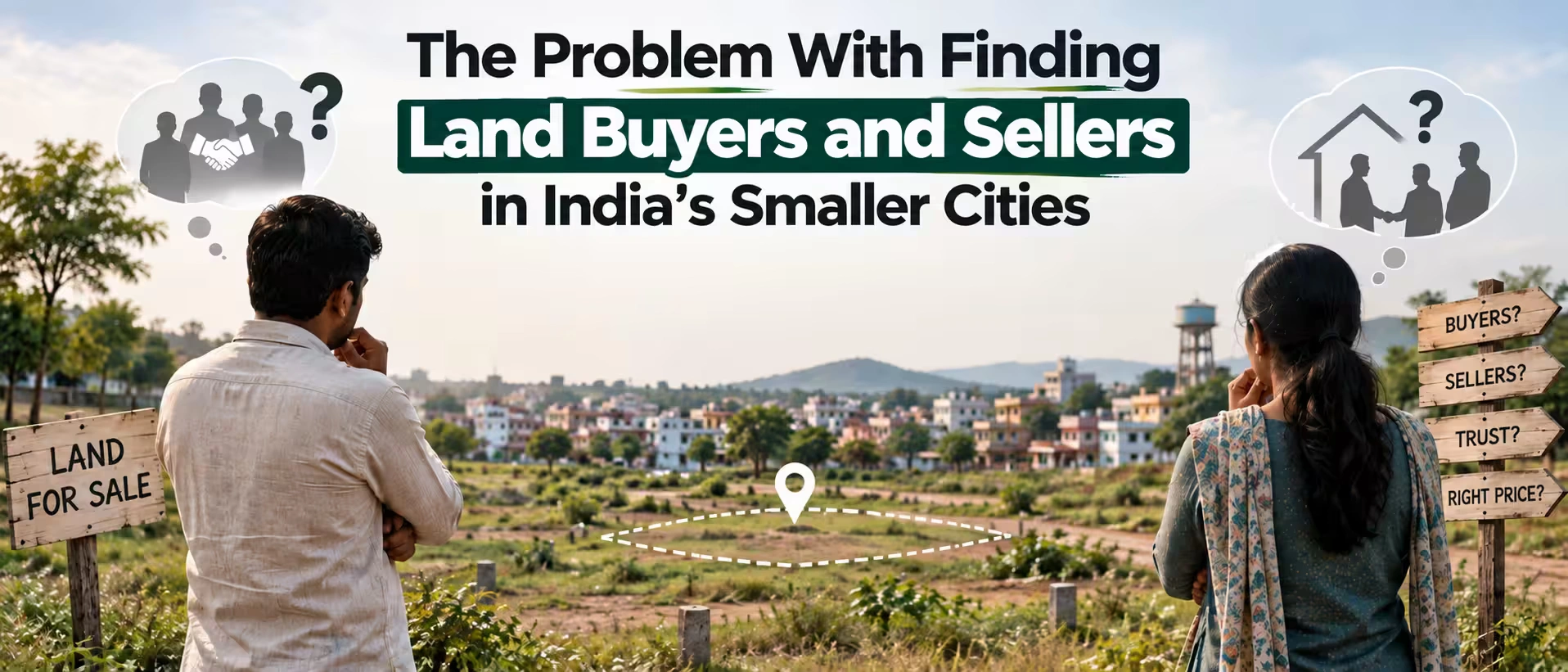
If you have been through the experience of buying or selling land in a non-metro town, you know the level of difficulty. A person based in Delhi or Bangalore is able to search for several options on apps within minutes and make comparisons about prices before making their choice. The same individual in a tier two or tier three city may have to call five real estate agents, visit three different offices, and still be unsure about whether he is being shown the right plot.
This gap is not small. It affects lakhs of families every year who want to buy a plot near their hometown, invest in organic farmland, or simply sell a piece of ancestral property to fund something important. The problem is not that land is unavailable. The problem is that the systems around buying and selling land in smaller cities have not caught up with how people actually search and transact today. This is where land-focused platforms such as 2Bigha can help make the process more organised and accessible.
Why Do Smaller Cities Face a Different Kind of Land Market?
In metropolitan cities, the real estate system has evolved. There are listing websites, registered agents, authentic documentation, and reasonable price transparency. In secondary cities, the system is based largely on networking. A farmer is looking to sell his plot of two acres, and he passes the message to the owner of the tea shop, who passes the message to his relative, who is a realtor. When a legitimate buyer receives this message, it would be either wrong or exaggerated.
This system of informal communication was effective when land transactions were few and communities were small. However, demand has shifted. Now, people are searching online for land for sale near me and plots for sale in their native districts, even if they work in another city. However, the supply side is yet to evolve to match these demands.
The Core Issues Buyers and Sellers Face
Below are a few common problems that come up again and again in smaller Indian cities.
- Lack of verified listings. Most land available in these cities is never listed anywhere online. It exists only in a broker's notebook or a family's private conversation. Buyers searching for farmlands near me often find outdated classified ads or no results at all.
- Trust issues on both sides. Sellers worry about handing over documents to strangers. Buyers worry about hidden disputes, fake ownership claims, or land that is tied up in family litigation. Without a neutral, verified platform, both sides are taking a risk based on trust alone.
- Price confusion. In a metro city, you can check the market rate for a locality within minutes. In a smaller town, the same plot might be quoted at three different prices by three different people, depending on who they think you are and how badly they think you need it.
- Limited digital presence. Platforms such as 2Bigha are making it easier for small-city landowners to explore selling property online, but many sellers are still unfamiliar with the process. They do not know how to write a proper listing, take useful photos, or verify documents digitally.
- Broker dependency. Because there is no reliable alternative, both buyers and sellers end up depending heavily on local brokers. This is not always a bad thing, but it does mean higher costs, slower timelines, and less control over the deal for both parties.
A Quick Comparison: Metro Cities vs Smaller Cities
Factor | Metro Cities | Smaller Cities |
Listing visibility | High, mostly online | Low, mostly offline |
Document verification | Often built into platforms | Manual, inconsistent |
Price transparency | Easier to check market rates | Varies by source, less reliable |
Buyer reach | Wide, through portals and ads | Limited, mostly local network |
Time to close a deal | Weeks | Often months |
What Sellers Struggle With Specifically?
Sellers in smaller cities are not lazy or careless. They simply do not have the tools that urban sellers take for granted. A farmer trying to complete land selling for a portion of his farm may not know how to reach a buyer beyond his immediate village or town. He may not have a smartphone comfortable enough for uploading documents, or he may not trust an unfamiliar website with his personal details. This means genuine sellers with clean, well-located land often go unnoticed simply because they never appear where buyers are actually searching.
What Buyers Struggle With Specifically?
On the other side, buyers face a different kind of frustration. Someone looking for organic farmland to start a small agricultural project might travel to three or four villages before finding something suitable, only to discover the land papers are incomplete or the boundaries are disputed. Without a central, reliable source of listings, buyers are forced to rely on guesswork and local reputation, which is time-consuming and often inaccurate.
Why Does This Gap Matter More Now?
There is an increase in people either returning to their hometowns or buying land close to the land owned by members of their families. Remote working has enabled this trend for many individuals. There has been a rise in the price of urban land, which has caused many individuals to consider the smaller towns or rural belts as potential places to acquire land, especially those that can be used for growing organic produce and investments. With such trends, there will definitely be an increased need for organized land platforms in smaller towns.
What Actually Helps Fix This Problem?
There is no single fix, but a few things make a real difference when they come together.
- Verified listings with proper documentation checks
- Clear location tagging so buyers searching for plots for sale near me actually find relevant results
- Simple tools for sellers to list land without needing technical knowledge
- Transparent pricing based on recent comparable sales
- A safe way to communicate between buyers and sellers without immediately involving multiple middlemen
For sellers and buyers who want a more organised starting point, 2Bigha brings land listings into a digital space where people can explore available properties without relying entirely on word of mouth or multiple local contacts.
Platforms that focus on organized, verified land selling are slowly starting to bridge this gap in smaller cities. They are not replacing local knowledge entirely, but they are giving both buyers and sellers a starting point that is more reliable than a random phone call.
Steps Buyers Can Take Right Now
- Make sure you always request original documents rather than just copies before you make a decision.
- Check the land ownership details from the revenue office in your area.
- Go to the location physically and verify its boundaries with the help of a local.
- Always compare prices among at least three people before settling on one.
- Go for platforms that deal with land for sale in your city or district.
Steps Sellers Can Take Right Now
- Have all ownership papers well sorted for quick presentation
- Take good pictures and videos from various angles of the property
- Tell them truthfully if there are any conflicts of interest in the property
- List the property on relevant online platforms such as 2Bigha, particularly platforms that specialise in land selling and can help you reach buyers beyond your immediate local network.
- Price the property in a realistic manner based on market prices
Closing Thoughts
However, the central problem for small Indian cities lies not in the lack of either availability of land or interested parties to purchase it. The central issue is a lack of a reliable connection between these two. Until listings become better organized and verified, the two sides will continue to depend upon informal channels, which still give way to some misunderstanding.
With the appearance of more and more platforms dedicated specifically to tier two and tier three cities, this problem will gradually be resolved. However, until then, any person looking for farmland near me, organic farmland, or a simple piece of land around his hometown should make use of both online research and verification. As more people begin searching for land online, platforms like 2Bigha can play an important role in connecting genuine buyers and sellers, particularly in smaller cities where the right property or buyer may otherwise remain difficult to find.
Disclaimer: This article is for informational purposes only and should not be considered investment, legal, financial, or property advice. Real estate regulations, infrastructure plans, market conditions, and government policies may change over time. Readers are advised to verify information with relevant authorities and consult qualified professionals before making any investment or property-related decisions.