List Your Land
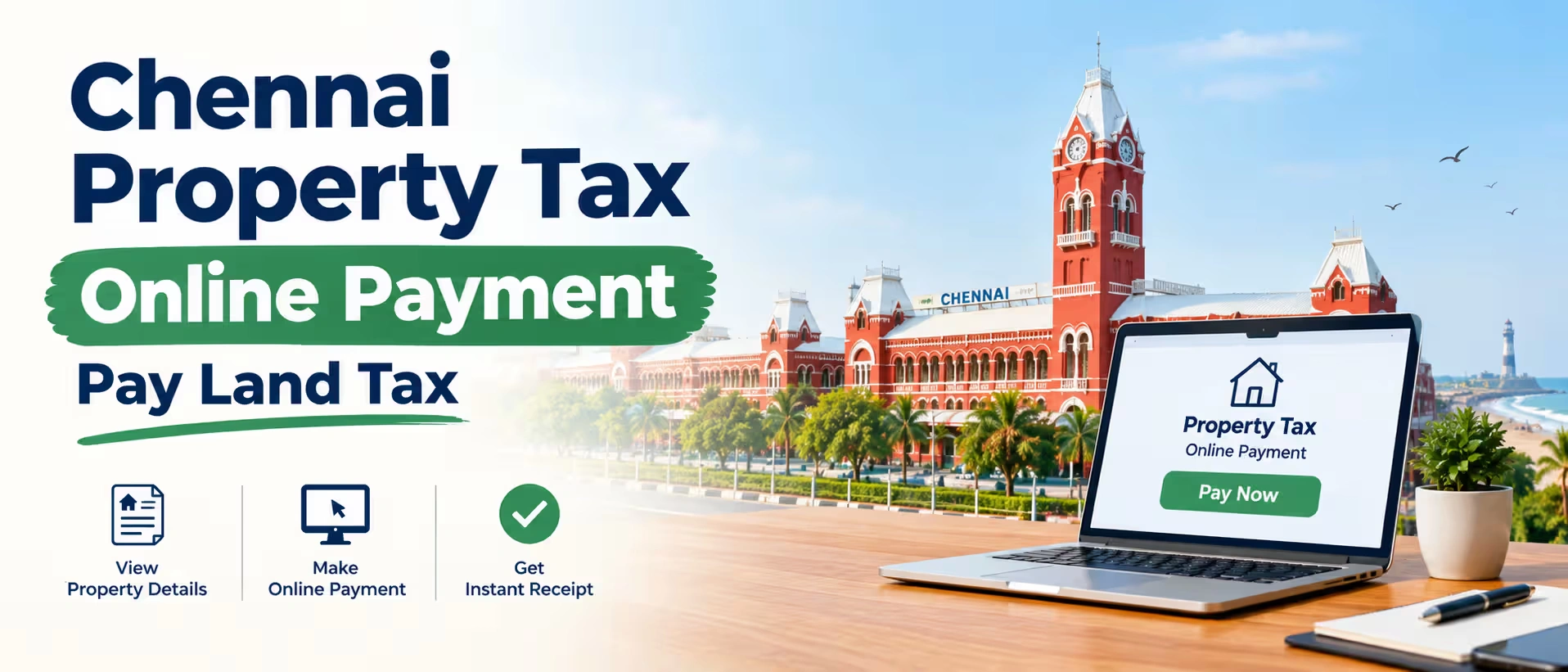
The days when you had to stand in a queue to pay the property tax at the zonal office are gone. In Chennai, it can be paid from your phone within about five minutes, provided that you have the necessary information handy. The "provided that" is where most people falter. They do not know their assessment number, or they are not sure of the half-year they are paying for, or there is an outstanding amount that they are not aware of.
Who Collects the Tax and What You're Paying For?
Within the municipal limits, property tax is levied by the Greater Chennai Corporation. Roads, drains, street lights, and garbage collection are some of the functions that require funds; hence the reason why the property tax bill comes through regardless of whether the property is occupied or not. Property tax can also be levied on vacant lands within the city limits.
Outside the corporation limits, there are different arrangements. In this case, town panchayats and municipalities collect their taxes, while farmlands in villages are subject to land revenue and village accounts. If your plot is located close to the city limit, then you need to know which institution the plot belongs to before searching for the portal.
What You Need Before You Start?
Keep these ready, and the whole thing takes minutes.
| Detail | Where to find it |
| Assessment number | Old tax receipt or demand notice |
| Ward and street number | Same receipt, or the corporation's search tool |
| Zone | Printed on the property tax bill |
| Mobile number | Needed for the payment confirmation |
| Payment method | Net banking, debit or credit card, or UPI |
Lost your old receipt? Don't panic. The portal lets you search by owner name, street, or door number, so you can usually dig the assessment number up from there.
How to Pay Property Tax Online in Chennai?
- Navigate to the Greater Chennai Corporation website or Tamil Nadu urban e-services site and proceed to the property tax payment tab.
- Click on Pay or Check Outstanding Taxes and provide details of the ward, street, and assessment number.
- Make sure that there is no mismatch with the name of the owner, address, and amount due.
- Pick the period you want to pay. It’s important not to make a payment without reviewing all the charges.
- Choose net banking, card payment, or Unified Payment Interface (UPI).
- Download the receipt in PDF format and print one copy for yourself.
The receipt will be of utmost importance in several years because it may be asked for by a buyer, bank, and revenue official.
Read More: Farm Land for Sale Chennai: Areas, Costs and Buying Guide
Dates, Rebates and Penalties
Chennai collects property tax twice a year. Missing the dates costs money.
| Half-year | Period | Usual due date |
| First half | April to September | Around the end of September |
| Second half | October to March | Around the end of March |
- Early payment, during the first week or two in a half-year period, has been known to result in a rebate, up to a certain fixed amount.
- Late payment results in a late fee of about 2% per month on the remaining balance.
- The old dues just keep building up and appear in your portal until paid.
The tax rates and rebate policies change periodically, and the company has increased tax rates recently. Please refer to the latest rates on their official website before you pay.
Common Problems and Quick Fixes
- Owner's name is incorrect: File a request for a name change at the zonal office along with your sale deed and an identity proof.
- The amount appears to be too high: The assessment might be done incorrectly in terms of the area or type of building. Request a re-assessment.
- The payment was made by another person previously: Ask for the old receipts. The fact that another person paid does not affect the ownership.
- The property is not appearing in the database: Try a different search technique, such as searching through the street name or door number, or visit the zonal office.
Why Buyers Should Check Property Tax Before Paying Anything?
Here's where this stops being just a household chore. If you're thinking about plots for sale in Chennai, the tax record tells you more than most brokers will. Unpaid tax can sit on a property and surface after you buy. In many cases, the new owner ends up facing the dues. Before you buy plots in Chennai, do these checks:
- Request tax receipts from the past few years and check whether they match the records on the website.
- Check the assessment number and ensure that there are no arrears outstanding.
- Ensure that the owner name mentioned in the tax document matches the seller’s identity.
- Ensure that the property belongs to an approved layout and not to an unapproved layout.
- Get the patta, the encumbrance certificate, and the sale deed history verified by a lawyer.
After completing the sale process, get the name changed in the assessment register. Unless you get it done, the demand notice will continue to arrive in the old owner’s name. It may seem trivial until a dispute arises.
What Land Sellers Should Do First?
Selling is easier when the file is clean. Clear all dues, download the latest receipts, and make sure the name on the tax record is yours. A buyer who finds a pending balance will either ask for a discount or walk away.
If you want to sell agricultural land in Chennai or on its outskirts, remember that farmland follows a different paper trail. Keep your patta, chitta, adangal, and latest land revenue receipts ready. These are what a serious buyer will ask for first.
Farmland Near Chennai: A Different Set of Taxes
Many people who wish to invest outside of the city will be interested in purchasing farm lands in the Chennai vicinity, such as Chengalpattu, Kanchipuram, or Tiruvallur. The tax system in these areas differs from that in the city. Instead of a corporation bill, one needs to pay the tax to the village administration. The ownership and usage of the lands are documented in the patta, chitta, and adangal documents.
Item | City plot | Village farmland |
Who collects | Greater Chennai Corporation or local body | Village administration and revenue department |
Key record | Property tax assessment | Patta, chitta, adangal |
Typical use | Housing, commercial | Farming, orchards |
Payment | Online portal | Land revenue, partly online |
One more thing. If you plan to convert farmland into plots or a farmhouse, get the land use confirmed first. Farmland that has been converted or plotted without approval can cause trouble when you try to resell it.
Buy and Sell with Less Guesswork on 2Bigha
Finding land that's actually clean is the hard part. 2Bigha is a marketplace for agricultural land and farmland across India. You can browse plots, compare options, and use Background Verification Reports to see what sits behind a listing. When something fits, Book a Visit lets you walk the land yourself. Whether you're looking to buy farmland in Chennai's outskirts or list your own plot, you'll reach people who already want farmland. To see what gets checked on a property, have a look at the 2Bigha Land Report.
Disclaimer: This article is for informational purposes only and should not be considered investment, legal, financial, or property advice. Real estate regulations, infrastructure plans, market conditions, and government policies may change over time. Readers are advised to verify information with relevant authorities and consult qualified professionals before making any investment or property-related decisions.