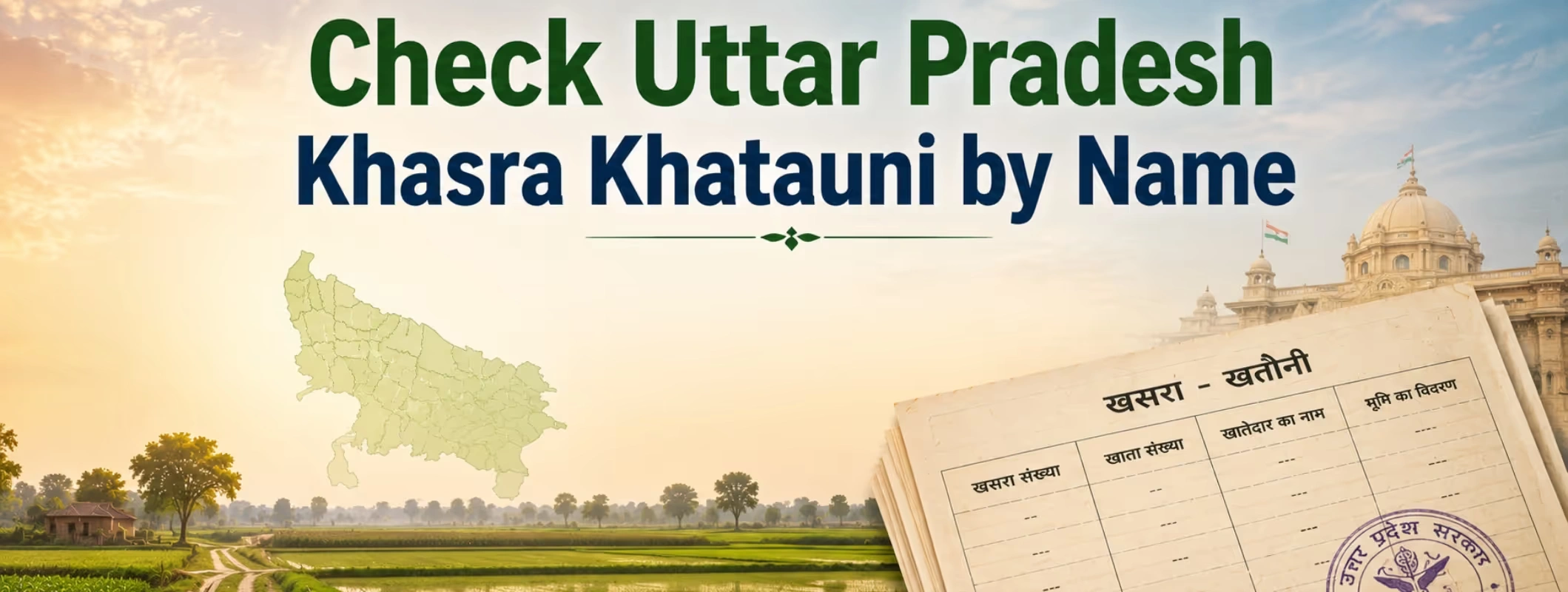
If you've ever tried to buy or sell farmland in Uttar Pradesh, you have mostly heard about the words "khasra" and "khatauni" within the first five minutes of any conversation. Most people nod along without fully knowing what these terms mean or why they matter so much. That's a problem, because these two documents are the backbone of proving who actually owns a piece of rural land in the state. This article will help you understand what khasra and khatauni actually are, how to check khatauni in UP by the owner's name instead of hunting for a plot number, and what else you should verify before any money changes hands.
What Exactly Are Khasra and Khatauni?
Imagine them as two separate spectacles visualizing the same area of land. A khasra is a register containing the survey number, area, boundaries, nature of soil, and cultivation of a particular land. It is maintained by the village Lekhpal and gets updated at the time of crop survey. On the other hand, a khatauni is a list of khasra numbers of lands owned by an individual or joint owners in a village. If Suresh Yadav possesses three different fields, all the survey numbers of these fields will be mentioned under one entry of Suresh Yadav’s khatauni.
| Term | What it tracks | Maintained by | Updates on |
| Khasra | Individual plot details (size, crop, boundary) | Village Lekhpal | Crop season/survey |
| Khatauni | Ownership summary across all plots held by a person | Tehsil revenue records | Sale, inheritance, mutation |
| Bhu Naksha | Visual map of the plot | UP Revenue Department | Survey updates |
Both documents work together. The khasra tells you what the land is; the khatauni tells you who owns it.
Checking Khatauni by Name on UP Bhulekh
If you're exploring agricultural land for sale in Uttar Pradesh, don't assume you need the khasra number to verify ownership. The UP Bhulekh portal also lets you search land records using the owner's name, making it easier to cross-check a seller's ownership claim before moving ahead with the deal. Here's the process, step by step:
- Go to the official portal at upbhulekh.gov.in
- Select View Copy of Khatauni
- Choose your district, tehsil, and village from the dropdown menus
- Pick the option to search by “by owner's name”
- Enter the owner's name (partial names often bring up a matching list)
- Solve the captcha and hit search
- Select the correct match from the list of results
The system will then show you the full khatauni, including all khasra numbers linked to that name, the total area owned, and the type of land. It's worth noting that this online copy is for reference only; for anything legal, like a bank loan or a court matter, you'll need a certified copy issued through the tehsil or the "Real Time Khatauni" option on the same portal.
How to Check Khatauni Using the Khasra Number?
If you already have a khasra number, say, from an old family document or a previous sale deed, the search becomes even more direct:
- Visit upbhulekh.gov.in and select the khatauni option
- Choose district, tehsil, and village as before
- Select “Search by Khasra/Gata Number”
- Type in the khasra or gata number
- Submit and view the record
This route is faster when you already know the plot identity and just want to confirm current ownership or check the khatauni status before drafting a sale agreement or selling property online, helping ensure the land records match the details you're presenting to buyers.
Why This Matters Before You Buy or Sell Farmland?
A large number of disputes in rural UP occur due to a simple reason: while purchasing any land, it is not checked if the seller is the current owner of the land or not. Mutation, i.e., dakhil kharij, after purchase, sale, or gift leads to a change in Khatauni records. It, therefore, becomes imperative to match the name of a person from whose name the land is purchased against the latest khatauni and not against any old paper trail. Here are the points that must be checked before purchasing agricultural land for sale in Uttar Pradesh:
- Cross-check the name of the seller with khatauni records
- Check for the khasra number and area with the sale deed
- Confirm if the land is not under any disputed or restricted category
- Ask for a girdawari (inspection report of crops) to verify the use of land
- Confirm that there is no mutation case pending at the Tehsil where the land is located
The above checks are crucial as many buyers have suffered financial losses running into lakhs of rupees due to incomplete or incorrect checks
Encumbrance Certificate: The Document People Forget
Khasra and khatauni tell you who owns the land today, but they don't tell you if the land is mortgaged, under litigation, or tied up in unpaid loans. That's where the Encumbrance Certificate in Uttar Pradesh comes in. An EC lists every registered transaction on a property, sale deeds, mortgages, court attachments, over a chosen period, usually 13 or 30 years for home or agricultural loans. You can apply for it through the IGRSUP portal (igrsup.gov.in) under the "Bharmukt Pramanpatra" or Encumbrance Certificate section. Banks almost always insist on one before sanctioning a loan against the land, and it's a smart habit for private buyers too, even when no loan is involved.
A Quick Look at Stamp Duty in UP
Once ownership and clearance are confirmed, the next cost to plan for is registration. Stamp Duty in Uttar Pradesh 2026 currently works out like this:
| Buyer category | Stamp duty rate | Registration charge |
| Male buyer | 7% of market value/circle rate, whichever is higher | 1% |
| Female buyer (sole ownership) | 6% | 1% |
| Joint (male + female) | 6.5% | 1% |
| Blood relative transfer (gift deed) | Flat ₹5,000 + ₹1,000 processing fee | Capped separately |
stamp duty in Uttar Pradesh 2026 is calculated on whichever value is higher—the actual transaction price or the government's notified circle rate for that area. Before finalizing a deal, check the latest circle rate on the IGRS UP portal to estimate your stamp duty and registration charges accurately and avoid last-minute surprises.
Buying Land the Safer Way
Manually chasing down khasra numbers, khatauni copies, and encumbrance certificates across different tehsils is doable, but it eats up weeks that most buyers don't have to spare. This is exactly the gap platforms built for selling property online are meant to close. If you're exploring farm land for sale in Uttar Pradesh, Bigha is worth a look. Unlike generic real estate websites that list a plot and leave the verification entirely on you, Bigha runs background checks on land records, khasra, khatauni, and encumbrance status before a listing goes live. That means less time spent running between tehsil offices and fewer surprises after you've already paid a token amount. Whether you're a first-time farmland buyer or someone expanding an existing holding, having verified records upfront makes the whole process a lot less stressful.
Disclaimer: This article is for informational purposes only and should not be considered investment, legal, financial, or property advice. Real estate regulations, infrastructure plans, market conditions, and government policies may change over time. Readers are advised to verify information with relevant authorities and consult qualified professionals before making any investment or property-related decisions.