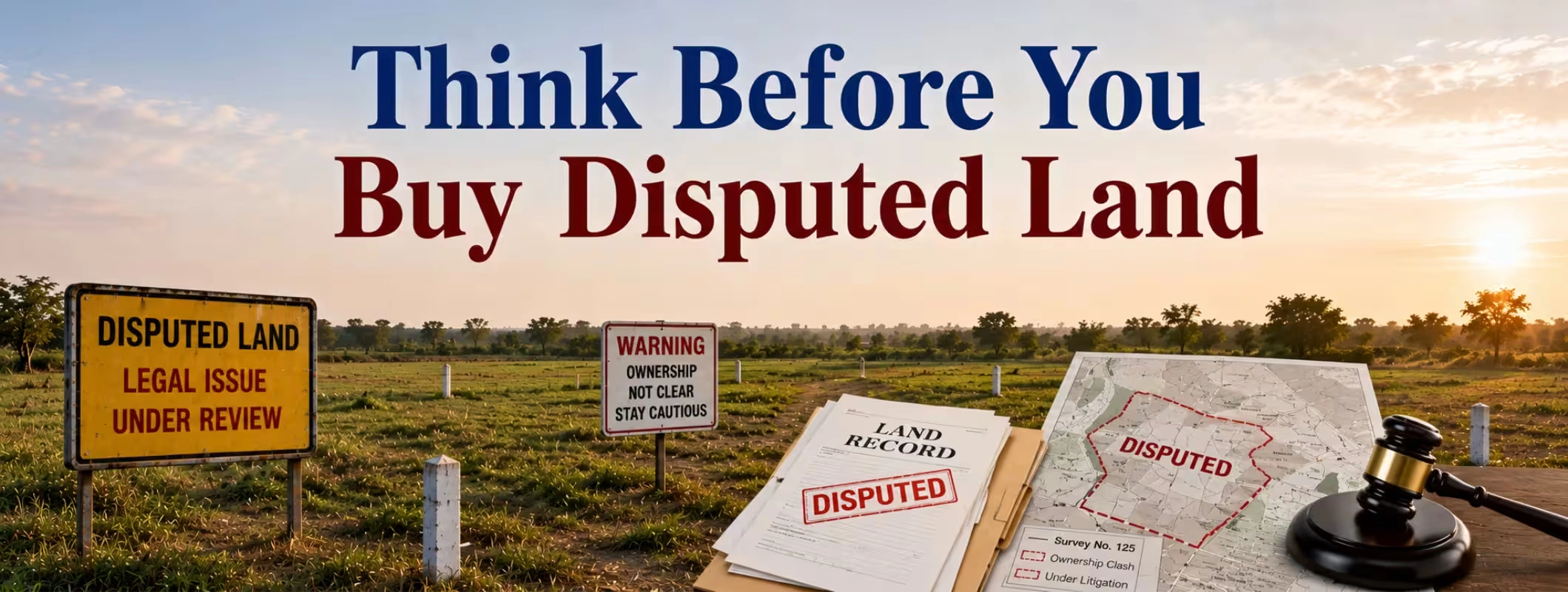
A friend of mine almost bought a plot last year. Good price, decent land location, road access, everything looked fine on paper. Then, two days before payment, his lawyer found a pending court case on the property. Some cousin of the seller's family had filed a claim over inheritance rights nearly a decade earlier. Nobody had mentioned it. Not the seller, not the broker, not even the online land listings where the plot first showed up. He walked away. Smart move. But not everyone can get that lucky, and a lot of buyers might sign before they find out anything wrong. So what actually happens if you go to the next step of purchase and buy land that is stuck up in a legal dispute? Let's discuss this briefly.
First, Why Do Disputed Plots Even Get Listed?
This happens more often than people assume. Sometimes the seller genuinely doesn't know about an old case. Sometimes they know and just hope it won't come up. And sometimes, frankly, they're trying to offload the problem onto someone else before the issue resurfaces. You'll find disputed land mixed in with regular listings everywhere, on online listings, with local brokers, even at auctions. The plot for sale might look completely normal until someone actually checks the records. This is exactly why double-checking is really important before you purchase land, no matter how good the deal looks.
What Happens Immediately After You Buy?
Let's say that you have purchased the land. You've paid, registered the property, maybe even started construction plans. Then the dispute surfaces, or it was already there, and you just missed it. Here's roughly what unfolds.
1. Your Ownership Becomes Questionable
Even if your name is on the registry, that doesn't mean your title is clean. If a court eventually rules against the seller you bought from, your ownership can be challenged too. You're not automatically protected just because you paid in good faith.
2. You Get Pulled Into the Case
In many conflicts, the new buyer becomes a party to the ongoing court procedure. That means you, someone who had nothing to do with the original conflict, now has to attend court hearings, hire a lawyer, and defend a purchase you thought was very simple.
3. Banks Won't Touch It
Try getting a loan against disputed land, or selling it to someone who wants bank financing, and you'll hit a wall almost immediately. Financial institutions run their own checks, and a flagged title kills the deal fast.
4. Resale Becomes Nearly Impossible
Want to sell land later? Good luck finding a buyer once the dispute is public record. Most serious buyers today check land records carefully, especially with how easy it is to verify documents through government portals and online listings that show ownership history.
5. You Might Lose the Land Entirely
This is the worst-case outcome, and it does happen. If the court rules in favor of the opposing party, you could lose the property altogether, sometimes without getting your money back, especially if the original seller has disappeared or has no assets left to recover damages from.
Common Types of Land Disputes in India
| Zone Type | Dispute Type | What It Involves |
| Legal Ownership | Inheritance disputes | Multiple heirs claiming rights over the same land |
| Property Boundaries | Boundary disputes | Disagreement over where one plot ends and another begins |
| Ownership Records | Title disputes | Conflicting ownership documents or forged paperwork |
| Government Matters | Government acquisition disputes | Land marked for acquisition or under litigation with authorities |
| Occupancy Rights | Tenancy disputes | Old tenant or lease rights not properly cleared before sale |
| Authority & Documentation | Power of attorney misuse | Land sold by someone without full legal authority to do so |
Knowing these categories will help your understanding level and will make you ask sharper questions before you buy land, instead of just trusting whatever the seller tells you.
How to Spot a Disputed Plot Before You Buy?
You don't need to be a lawyer to catch most red flags. A bit of patience and the right checks go a long way.
- Make sure to have the land records (often called a 7/12 extract, mutation records, or jamabandi depending on the state) and check for any conflict remarks.
- Visit the local sub-registrar office and ask for an encumbrance certificate covering a minimum of 15-20 years.
- Talk to neighbors. Seriously, people nearby usually know if a plot has a history of conflict.
- Check court websites for the land location and seller's name; many district courts now have searchable online listings of pending cases.
- Make sure to ask whether the seller has full ownership or just a share, especially in family-owned Agricultural Land.
A little effort here can save years of stress later.
What If You've Already Bought Disputed Land?
If you're past the buying stage and just found out there's a problem, don't panic, but don't ignore it either.
- Get a property lawyer involved immediately; don't try to handle court matters alone.
- Collect every document related to the sale, the title deed, payment proof, registration papers, everything.
- File to prosecute if you haven't already been added to the case, so you have a legal voice in proceedings.
- Explore settlement options; sometimes disputes resolve faster through negotiation than through the court procedure.
- If fraud is involved, consider filing a separate case against the seller for damages.
It's not a fun process, but there are a lot of buyers who do recover their position with the right legal support.
Why Verified Online Listings Matter?
This is where a lot of buyers go wrong. They heavily rely on the outdated classifieds or word-of-mouth deals instead of checking properly verified online listings that actually screen for clean titles. When you're searching for land for sale or trying to purchase land in a new location, using a platform that verifies ownership before listing saves you from a lot of this trouble. It's not foolproof-, nothing is-, but it filters out a huge chunk of risky deals before they even reach you.
Buy and Sell Verified Land with 2Bigha.ai.
This is exactly the gap 2Bigha tries to fill. It's a platform focused on helping people buy land, sell land, and explore Farmland for Sale and agricultural land across different parts of India, without the usual guesswork around legal disputes.
Instead of scrolling through random online listings with little background information, 2Bigha gives buyers more clarity on land location, documentation, and ownership details upfront. That doesn't replace your own double-checking; you should still verify records independently, but it does mean you're starting from a more trustworthy point.
For sellers, listing on a platform like this also helps. Genuine buyers take dispute-free, well-documented plots more seriously, and that usually means faster, smoother deals when you sell land. If you're actively looking to purchase land for farming, investment, or future construction, checking platforms like 2Bigha alongside your own legal verification is a reasonable way to reduce risk.
Conclusion
Buying land with a legal dispute attached isn't just a paperwork headache; it can cost you money, time, and in the worst cases, the property itself. The scary part is how often it happens simply because buyers skip the verification step in their excitement to close a good deal. Before you sign anything, check the records, talk to people who know the land location, and don't rely purely on what a seller or broker tells you. Whether you're checking online listings or working with a verified platform, a little caution upfront beats years of court battles later.
Disclaimer: This article is for informational purposes only and should not be considered investment, legal, financial, or property advice. Real estate regulations, infrastructure plans, market conditions, and government policies may change over time. Readers are advised to verify information with relevant authorities and consult qualified professionals before making any investment or property-related decisions.