Key Takeaways
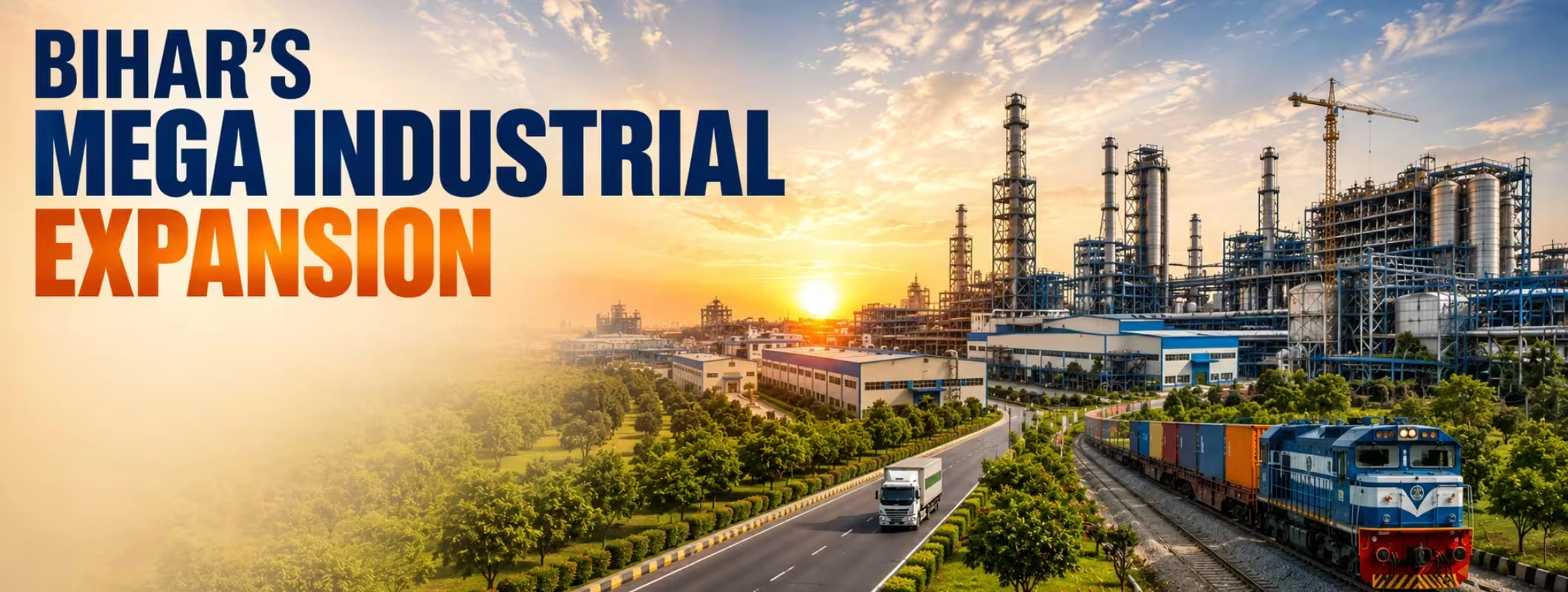
Bihar’s plan to develop 11 mega industrial parks and create a 50,000-acre land bank can become one of the state’s biggest industrial development moves in recent years.
The proposed land bank is important because land availability is one of the first things investors check before setting up factories, warehouses, logistics hubs, food processing units or MSME clusters.
Food parks across all 38 districts can give Bihar’s agriculture-linked economy a stronger industrial direction, especially in processing, storage, packaging and value-added products.
For land buyers, sellers and long-term investors, this development can increase attention around industrial land in Bihar, especially near transport corridors, BIADA areas, district-level growth zones and upcoming manufacturing clusters.
However, buyers should not treat every land parcel as an automatic investment opportunity. Land title, zoning, road access, conversion rules, power supply, water availability, environmental restrictions and local demand must be checked properly before making a decision.
For people exploring verified land opportunities, 2Bigha can be a useful platform to study land options with better clarity, especially when buyers want structured discovery, local understanding, and support through its subscription plan and property management service.
Introduction: Bihar’s Industrial Push Is Now Becoming Land-Centric
Bihar has always had strong human capital, agricultural depth, river-based geography, cultural strength and a large consumer base. What the state has often lacked is large-scale industrial infrastructure that can convert these strengths into manufacturing-led growth. The latest plan to develop 11 mega industrial parks and build a 50,000-acre land bank shows that Bihar is now trying to solve one of the biggest practical problems in industrial growth: ready land.
For any serious investor, land is not just a physical asset. It is the starting point of business execution. A company may have funding, machines, manpower and product demand, but without suitable land, the project remains stuck on paper. That is why Bihar’s 50,000-acre land bank matters. It can give the state a more structured way to attract investors who need factory land, warehousing space, food processing zones, logistics access and industrial plots.
This plan also comes at a time when many businesses are looking beyond traditional industrial states. High land prices, congestion, labour costs and infrastructure pressure in mature markets have pushed companies to look at newer growth regions. Bihar, with its population base, agricultural supply chain, improving roads, railway links and policy focus, can become a serious contender if execution remains strong.
For the real estate market, this is not just an industry story. It is a land story. Wherever industrial activity moves, land demand follows. First comes government planning, then infrastructure, then investor interest, then worker movement, then housing, shops, storage, transport and support services. This is how industrial growth slowly changes the value of surrounding land.
What Is Bihar’s 11 Mega Industrial Parks and 50,000-Acre Land Bank Plan?
Bihar’s plan focuses on developing 11 mega industrial parks across the state and creating a 50,000-acre land bank to support future industrial projects. The idea is simple but powerful: instead of waiting for investors to struggle with scattered land availability, the state wants to prepare a large pool of land that can be used for industries, business parks, manufacturing zones, food parks and related infrastructure.
A land bank is a planned collection of land parcels that are identified, recorded, and made available for specific development purposes. In industrial planning, a land bank helps the government and investors move faster because land-related uncertainty reduces.
The 11 mega industrial parks are expected to support Bihar’s larger industrial development strategy. These parks may create space for sectors such as food processing, textiles, pharmaceuticals, engineering, MSMEs, logistics, warehousing, packaging, green energy support units and manufacturing-linked services.
The proposed food parks in all 38 districts are especially important for Bihar because agriculture is deeply connected to the state’s economy. Bihar produces fruits, vegetables, grains and other agricultural products, but value addition has remained limited in many regions. Food parks can help bridge this gap by creating local facilities for grading, processing, cold storage, packaging and distribution.
In simple words, this plan is not only about building factories. It is about creating a stronger industrial ecosystem where land, roads, power, logistics, employment and local entrepreneurship can work together.
Why the 50,000-Acre Land Bank Matters for Bihar
Land is one of the biggest bottlenecks in Indian real estate and industrial development. In many states, industries face delays because land parcels are either unavailable, disputed, poorly connected, wrongly zoned or difficult to aggregate. Bihar’s proposed 50,000-acre land bank can reduce some of these challenges if it is implemented with transparency and proper planning.
A large industrial land bank can help Bihar in five major ways.
First, it can improve investor confidence. Companies prefer locations where land is clearly identified and supported by government planning.
Second, it can reduce project delays. When land is pre-identified, investors can move faster from proposal to execution.
Third, it can support balanced regional development. Instead of concentrating everything around Patna or a few major towns, industrial parks and food parks can push activity into multiple districts.
Fourth, it can create better land-use planning. Industrial growth works best when land is linked with roads, railway access, power, drainage, labour availability and nearby markets.
Fifth, it can increase the value of surrounding land over time. Areas near industrial parks often see demand for housing, shops, transport yards, warehouses, hostels, service apartments and small commercial spaces.
This is why the Bihar 50000-acre land bank is not only a government planning update. It can become a major signal for long-term land investment in Bihar.
Why Bihar Is Looking More Attractive for Industrial Investment
Bihar’s industrial story cannot be understood only through one announcement. The state is located in a strategic part of eastern India, close to large consumer markets and neighbouring states. It has access to a young workforce, strong agricultural production and improving connectivity. These factors matter for manufacturing and logistics.
For industries, Bihar offers three broad advantages.
The first is market access. Bihar itself has a large population, and businesses operating from the state can serve eastern India, north India and parts of Nepal-facing trade routes depending on location and product category.
The second is labour availability. Many workers from Bihar already support industrial activity across India. If industries grow within the state, more people may find jobs closer to home.
The third is raw material potential, especially for food processing and agro-based industries. District-level food parks can help farmers, traders and processors capture more value from local produce.
However, Bihar also has to solve practical problems. Investors will look for reliable power, proper approach roads, drainage, skilled manpower, fast approvals, clean land titles and transparent allotment processes. The success of Bihar mega industrial parks will depend on how these ground-level issues are handled.
Bihar Industrial Parks 2026: Real Estate Impact Explained
Industrial parks do not only create factory space. They reshape nearby real estate markets. When a large industrial park becomes active, the surrounding area starts seeing demand from different users.
Factory owners need land and sheds. Transporters need parking and logistics space. Workers need rental housing. Small businesses need shops and service units. Suppliers need storage. Staff and managers need residential options. Banks, repair workshops, eateries, packaging vendors and local service providers also come in gradually.
This is why industrial land in Bihar can become more important in the coming years. The strongest impact may not happen overnight, but early planning can help investors understand where future demand may develop.
For example, industrial areas near Patna may attract investors due to administrative access, airport connectivity and market depth. Muzaffarpur can benefit from north Bihar connectivity and agro-based trade. Gaya already has industrial corridor relevance and airport presence. Bhagalpur has traditional industry identity and regional trade potential. Darbhanga has growing connectivity and north Bihar relevance. Begusarai has industrial and energy-linked importance.
This does not mean every land parcel in these regions will appreciate. Land value depends on exact location, access road, legal status, permitted use, nearby infrastructure and buyer demand. But the direction is clear: planned industrial infrastructure can make land around selected locations more attractive.
Summary Table: How Bihar’s Industrial Park Plan Can Impact Different Stakeholders
| Stakeholder | What This Plan Means | Practical Opportunity |
| Industrial investors | More planned land availability for factories and units | Explore industrial plots, sheds and district-level growth zones |
| Landowners | Higher attention on land near proposed industrial clusters | Evaluate whether land is suitable for industrial, warehouse or commercial use |
| Farmers | Better demand for agro-processing and food park-linked supply chains | Connect with processing units, storage providers and buyers |
| MSMEs | More space for small manufacturing and support services | Set up units near larger industrial ecosystems |
| Real estate investors | Growing interest in land near corridors and industrial areas | Study location, title, zoning and infrastructure before buying |
| Local youth | More employment possibilities near home districts | Jobs in manufacturing, logistics, packaging, food processing and services |
| Buyers using digital platforms | Easier land discovery and comparison | Use platforms like 2Bigha for structured land exploration |
Food Parks in All 38 Districts: Why This Is a Big Signal
Bihar’s food park plan deserves special attention because it connects industry with the state’s rural economy. Bihar has strong agricultural production, but many farmers still lose value due to weak storage, limited processing and dependence on traditional mandi routes.
Food parks can change this equation. A well-planned food park may include cold storage, grading units, packaging facilities, processing units, testing labs, warehouses, logistics support and space for small food businesses. This can help farmers, traders, startups and manufacturers.
For example, a district known for fruits may attract juice, pulp, jam, dehydration or packaging units. A grain-producing belt may attract flour, snacks, animal feed or processed food units. Areas with vegetable output may support frozen food, pickling, dehydration and cold chain businesses.
This is where Bihar food parks can create real local impact. They can reduce wastage, improve farmer income, create jobs and increase demand for warehouse land in Bihar. If implemented well, they can also bring smaller towns into the industrial map instead of keeping development limited to major cities.
For land investors, food parks can open new micro-markets. Land near food processing zones may see demand for transport yards, small warehouses, packaging units, worker accommodation and roadside commercial activity. But again, location selection must be practical. A parcel far from roads, power or local supply chains may not perform well even if it is in a popular district.
Which Locations in Bihar May Attract More Industrial Land Demand?
Bihar’s final industrial park locations and exact land bank details will decide the actual market movement. Still, certain locations naturally attract attention because of their existing connectivity, industrial base or regional importance.
Patna and Nearby Areas
Industrial land in Patna and nearby zones may remain attractive because Patna is the administrative and commercial centre of Bihar. Investors often prefer locations where government access, airport connectivity, banking support, skilled services and business networks are available.
However, land near Patna can be expensive compared to emerging districts. Buyers should check whether the price already includes future expectations. Overpaying based only on news can reduce long-term returns.
Muzaffarpur
Industrial plots in Muzaffarpur can gain attention because the district serves as a major north Bihar hub. It has strong trade movement and agro-linked potential. Food processing, warehousing and distribution-related land may become more relevant if industrial planning improves.
Gaya
Factory land in Gaya can be important because of its location, airport presence and industrial corridor relevance. Gaya’s industrial future may become stronger if planned clusters connect well with roads, rail and manufacturing demand.
Bhagalpur
Industrial land in Bhagalpur has relevance because the region has a known identity in silk, trade and eastern Bihar connectivity. If industrial corridors and land bank planning support the district, it may attract renewed attention.
Darbhanga
Industrial land in Darbhanga can gain value from north Bihar connectivity, airport-led visibility and growing urban demand. Food processing and MSME activity can become strong themes here.
Begusarai
Industrial land in Begusarai already has a stronger industrial base compared to many districts. Energy, manufacturing and support services can create opportunities around industrial planning.
These locations are examples, not investment advice. Serious buyers should compare land price, road width, distance from highways, land use, flood risk, ownership records and development timeline before taking a call.
How the Plan Can Support Bihar as a Manufacturing Hub
The phrase “Bihar manufacturing hub” has been used many times in policy discussions, but land availability is the foundation that can make it more practical. Manufacturing units need large, usable and legally clear land. They also need power, water, labour, road access, waste management and logistics.
Mega industrial parks can help by clustering industries in planned zones. This reduces random development and gives businesses access to shared infrastructure. When industries operate in clusters, suppliers and service providers also benefit. For example, a textile unit may attract dyeing, packaging, logistics and labour housing nearby. A food processing unit may attract cold chain providers, transporters, packaging companies and storage facilities.
Bihar’s opportunity lies in building industry around its natural strengths. Food processing, textiles, leather, small engineering, packaging, warehousing, agro-based manufacturing, pharmaceuticals and MSME-led production can create a practical industrial base.
The state does not need to copy another state blindly. Bihar needs a model that fits its land, labour, agriculture, transport routes and district-level economy.
What This Means for Buying Industrial Land in Bihar
Many buyers may now search for industrial land for sale in Bihar, factory land for sale in Bihar or commercial land for sale in Bihar. This interest is natural, but buyers need patience and due diligence.
Industrial land buying is different from buying residential or agricultural land. A good industrial parcel must support business use. It should have road access for trucks, legal permission for industrial activity, power availability, water access, drainage possibility and safe distance from sensitive zones where required.
Before buying land near an industrial park or proposed growth area, ask these questions:
- Is the land title clear?
- Is the land free from dispute?
- Is the land agricultural, commercial, industrial or mixed-use?
- Can the land be converted legally for industrial use?
- Is there proper road access for heavy vehicles?
- Is the area flood-prone or waterlogged during monsoon?
- How far is the nearest highway, railway point, market or industrial area?
- Is power supply available nearby?
- Are there any government notifications affecting the land?
- Is the asking price based on real demand or only speculation?
This checklist can protect buyers from emotional decisions. Government announcements can create excitement, but land investment should always be based on documents, location and realistic demand.
What This Means for Selling Land in Bihar
For landowners, the industrial park plan can create new possibilities. If a land parcel is located near a proposed industrial cluster, highway, food park, logistics route or district growth zone, it may attract stronger buyer interest.
However, sellers should not assume that every buyer will pay a premium without checking records. Serious industrial buyers look for clean documents, proper access, correct land classification and realistic pricing. If a parcel has boundary confusion, family dispute, unclear mutation or poor approach road, it becomes harder to sell.
Landowners who want to sell industrial land in Bihar should prepare basic documents in advance. These may include title records, mutation papers, maps, tax receipts, ownership proof, land-use details and clear boundary information. If the land is suitable for warehouse, factory, roadside commercial or food processing use, that should be explained clearly.
Digital visibility also matters. Buyers today do not want vague descriptions. They want location clarity, road access, nearby landmarks, parcel size, soil and terrain understanding, ownership confidence and price transparency. Platforms like 2Bigha can help serious landowners present land opportunities in a more structured way, especially when the buyer wants to understand the land before making a site visit.
Industrial Land vs Agricultural Land: What Buyers Must Understand
In Bihar, many land opportunities are agricultural in nature. But industrial use requires different permissions and conditions. A buyer cannot simply purchase farmland and start a factory without checking land conversion, zoning, local approvals and environmental norms.
Agricultural land may be attractive because it is often larger and more affordable than developed industrial plots. But it may also involve conversion procedures, road development costs, power connection issues and approval delays.
Industrial plots inside planned areas may cost more, but they often offer better suitability for business use. They may already have road access, drainage, electricity planning and industrial permissions.
So the better option depends on the buyer’s purpose.
- If someone wants to set up a factory quickly, a planned industrial plot may be more practical.
- If someone wants long-term land investment near a growth corridor, agricultural land with future conversion potential may be considered after proper legal advice.
- If someone wants warehousing, road access and truck movement become more important than just low price.
- If someone wants food processing, proximity to raw material supply and cold chain infrastructure matters.
This is where local knowledge becomes important. A low-priced land parcel may look attractive online, but if it lacks access or approval potential, it may become a dead investment.
Role of BIADA and Industrial Land Allotment
Bihar Industrial Area Development Authority, commonly known as BIADA, plays an important role in planned industrial land and infrastructure in the state. For businesses, BIADA areas can offer a more formal route to industrial land allotment, sheds and related facilities.
Many investors prefer planned industrial areas because they reduce uncertainty. However, availability can vary by location. Some areas may have limited land, while others may offer larger parcels. Buyers should keep checking official updates, allotment notices and land bank information.
Private land near industrial areas can also become attractive, but it carries a different risk profile. A private parcel may offer flexibility, but the buyer must verify title, access, land use and development permission independently.
A smart investor usually compares both options: official industrial land allotment and private land near growth zones. The final decision depends on budget, business type, project timeline and risk appetite.
Bihar Industrial Growth and Employment: The Local Impact
The biggest promise of Bihar industrial development is employment. For decades, many people from Bihar have travelled to other states for work. If industrial parks, food parks and MSME clusters grow within Bihar, they can create local jobs and reduce migration pressure.
Industrial parks can create direct and indirect employment. Direct jobs may come from factories, processing units, logistics companies, textile units, pharma units and packaging units. Indirect jobs may come from transport, food stalls, rental housing, repair shops, local services, construction work and supply chains.
This is important for smaller towns. When a district gets a food park or industrial cluster, the local economy can become more active. Farmers may find better buyers. Youth may find jobs closer to home. Local entrepreneurs may start transport, canteen, packaging or maintenance businesses.
Real estate also changes. Rental housing demand may rise near active industrial zones. Small shops may open around the worker movement. Land near approach roads may become useful for commercial activity.
But this depends on execution. Industrial parks must not remain only announcements. They need roads, electricity, approvals, drainage, security, business facilitation and actual investor participation.
Practical Checklist Before Investing in Land Near Bihar Industrial Parks
Before investing in land near Bihar industrial parks or upcoming industrial zones, use this practical checklist:
- Check the exact location and distance from the proposed industrial park or corridor.
- Verify land ownership through official records.
- Confirm mutation, title chain and any pending dispute.
- Check whether the land falls under agricultural, residential, commercial or industrial use.
- Ask whether conversion is possible and what process applies.
- Visit the site during normal days and after rainfall to check waterlogging.
- Check road width and truck access.
- Review distance from highways, railway stations, markets and towns.
- Understand nearby development activity instead of relying only on future promises.
- Compare prices with similar nearby parcels.
- Avoid paying a premium only because of rumours.
- Speak with local revenue officials, legal advisors and land professionals.
- Use digital platforms to shortlist land, but complete legal verification before payment.
- Keep long-term holding capacity if buying for appreciation.
For serious investors, this checklist is not optional. It is the difference between a smart investment and a risky purchase.
How 2Bigha Can Support Land Buyers and Sellers in This Changing Market
As Bihar’s industrial development story grows, more people will start exploring land near future corridors, food parks, industrial estates and district-level growth areas. But land search in India can still be confusing. Buyers often face unclear listings, missing documents, wrong location details and unrealistic pricing.
This is where 2Bigha can add value. It gives land buyers and sellers a more organized way to explore land opportunities. For buyers, it can help compare available land options with better location understanding. For sellers, it can improve visibility among serious land seekers instead of depending only on local word-of-mouth.
For investors looking at Bihar’s changing land market, 2Bigha’s subscription plan and property management service can be useful for ongoing support, especially when the buyer is not located near the land or wants a more structured way to manage land-related decisions.
The platform should not replace legal due diligence, but it can make the discovery process smoother. In a market where industrial land demand may increase, better information can save time, reduce confusion and help users make more confident decisions.
Risks Investors Should Not Ignore
Bihar’s industrial park plan is promising, but investors should avoid blind optimism. Every government-backed development takes time. Some projects move fast, while others face delays due to land acquisition, funding, approvals, local resistance or infrastructure gaps.
- Here are the risks buyers should keep in mind.
- The exact industrial park locations may not benefit every nearby parcel.
- Land prices may rise before actual development begins.
- Some sellers may use the news to demand unrealistic rates.
- Agricultural land may require conversion before industrial or commercial use.
- Flood-prone land can become difficult to develop.
- Poor road access can reduce industrial usability.
- Legal disputes can delay resale or development.
- Industrial demand may vary from district to district.
- Policy announcements need execution, not just publicity.
This does not mean buyers should avoid Bihar. It means they should invest with discipline. The best land investments are made when excitement is balanced with verification.
Future Outlook: Can Bihar Become a Strong Industrial and Land Investment Destination?
Bihar has the ingredients for industrial growth, but the next few years will decide how strong the outcome becomes. The 11 mega industrial parks and 50,000-acre land bank plan can improve Bihar’s image among investors if the government delivers land, infrastructure and approvals on time.
Food parks can create local value in rural and semi-urban areas. Mega industrial parks can attract manufacturing and MSME activity. Better logistics can connect Bihar with larger domestic and export markets. If these pieces come together, Bihar can move from being seen mainly as a labour-supplying state to becoming a production and processing destination.
For land buyers, this is the time to study the market carefully. The opportunity is not just in buying any land. The opportunity is in identifying land that matches future demand. Parcels near industrial access roads, food processing zones, logistics nodes, BIADA areas and growing towns may deserve closer attention.
For land sellers, this is the time to organize documents and present land clearly. Better transparency can attract better buyers.
For local entrepreneurs, this is the time to think beyond traditional business. Industrial growth creates demand for transport, packaging, storage, labour supply, repair, food services, construction material, rental housing and many support activities.
Bihar’s industrial development journey is still unfolding. The plan is ambitious, and the market will watch execution closely. But one thing is clear: land will remain at the centre of this transformation.
Conclusion
Bihar’s plan to create 11 mega industrial parks and a 50,000-acre land bank is more than an industrial announcement. It is a signal that the state wants to compete for investment, jobs and manufacturing-led growth. If implemented properly, it can improve land availability, support food parks, attract MSMEs, strengthen logistics and create new opportunities for landowners, investors and local communities.
For real estate investors, the biggest opportunity lies in informed decision-making. Do not buy land only because a location is trending. Study the corridor, check documents, understand land use, visit the site, compare prices and think long term.
Bihar’s industrial future may open strong land investment possibilities, but the smartest investors will be those who combine optimism with proper verification. Platforms like 2Bigha can support this journey by making land discovery more structured and accessible, especially for buyers and sellers who want clarity in a fast-changing market.