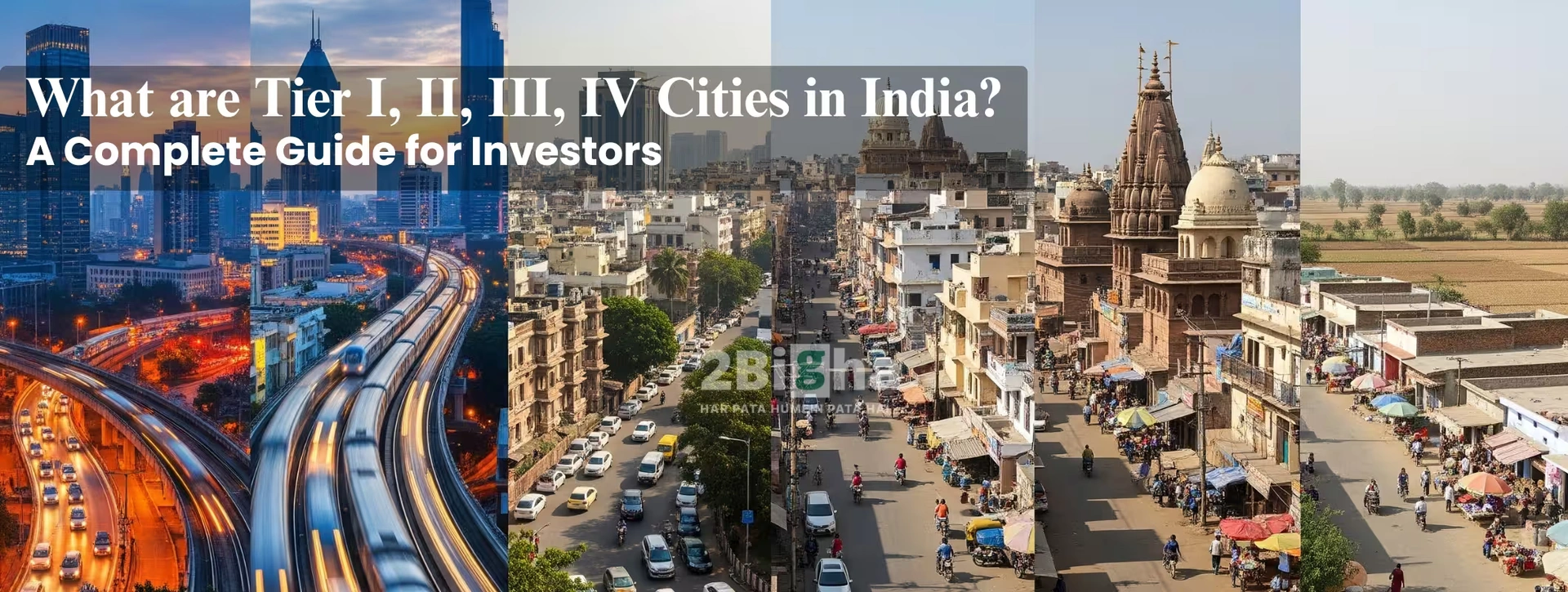
India is growing rapidly and so is the real estate market. When you're considering investing in land or searching property for sale or scouting for new real estate hotspots, understanding classification of cities according to tiers will aid you in making better decisions. These tiers assist developers, investors and homeowners assess the potential for growth and infrastructure, lifestyle and the long-term value.
In this article we will explain the meaning behind Tier I and Tier II, as well as Tier III as well as Tier IV cities of India and their significance in the land and property market.
What Are Tier I Cities in India?
Tier I cities comprise among India's biggest and the most advanced urban cities and regions. They have modern infrastructure with international connectivity, robust employment markets and better standard of living.
Key Features of Tier I Cities
- Urbanization with a high density and population growth
- The presence of multinational corporations and technology hubs
- Excellent connectivity (metro airport, expressways, metro)
- Premium property prices and high land rates
Examples of Tier I Cities
- Delhi
- Mumbai
- Bengaluru
- Chennai
- Hyderabad
- Kolkata
- Pune
Investment Insight:
The land investment available in the Tier I cities provides stability, however it is expensive to acquire. Due to the lack of land available and the high cost of land, investors tend to prefer to locate near expressways that are upcoming and outskirts locations. mix-use development areas.
What Are Tier II Cities in India?
Tier II cities have grown rapidly as urban areas which are seeing rapid development of real estate along with infrastructure upgrades and a rise in commercial activity. They are popular with investors because of their low property prices as well as high appreciation potential.
Key Features of Tier II Cities
- A moderate population, with improved infrastructure
- In-demand industries, IT park and business centers
- A growing demand for commercial and residential properties
- Real estate at a reasonable price in comparison to metros
Examples of Tier II Cities
- Jaipur
- Lucknow
- Indore
- Surat
- Nagpur
- Coimbatore
- Visakhapatnam
- Kochi
Investment Insight:
Tier II cities can be thought of as top destinations for land investment due to their affordability while allowing for high growth. A lot of investors choose plots for agricultural land, investment land as well as commercial parcels of land due the upcoming industrial projects and smart-city strategies.
What are Tier III Cities in India?
Tier III cities comprise tinier cities with moderate growth, new infrastructure, low-cost land plots. They often have an excellent ROI since land prices are less expensive and appreciation is fueled by new connectivity initiatives.
Key Features of Tier III Cities
- Populations smaller and growing urban infrastructure
- A growing interest from investors and builders
- Improved road infrastructure and economic activity
- Living costs are lower and property prices
Examples of Tier III Cities
- Ajmer
- Alwar
- Kota
- Udaipur
- Guntur
- Dharwad
- Tirupati
Investment Insight:
Tier III cities provide excellent opportunities for long-term land bank and farmhouse investments and industrial land acquisition and even affordable residential plotting. Many investors select these cities for their high potential appreciation.
What Are Tier IV Cities in India?
Tier IV cities comprise affluent cities or semi-urban zones with basic infrastructure and huge potential for growth. These cities are popular with investors seeking low-cost land investment, specifically in the residential or agricultural plotting areas.
Key Features of Tier IV Cities
- Low density of population
- Early-stage infrastructure development
- Very reasonable land price
- Potential high due to plans of the government and new highways
Examples of Tier IV Cities
- Small towns located in Rajasthan, Madhya Pradesh, Uttar Pradesh, and Gujarat
- District headquarters and towns at Tehsil level
- Rural belts are being developed and connected with new expressways
Investment Insight:
The Tier IV cities in the United States are perfect for land-owners who want to buy farm plots, as well as high-acreage land investments. With the introduction of roads, highways and industrial corridors and tourism initiatives These areas are evolving into the future hubs for real estate.
Difference Between Tier I, II, III, IV Cities in India
| Tier | Development Level | Infrastructure | Land Price | Investment Potential |
|---|---|---|---|---|
| Tier I | Highly developed | Advanced | High | Costly, but stable |
| Tier II | Rapidly advancing | Strong | Moderate | High growth |
| Tier III | Growing | Improving | Affordable | High potential ROI |
| Tier IV | Emerging | Basic | Very inexpensive | Ideal for long-term |
Why Are Tiers Important for Land Investors?
Understanding city tiers will help you:
- Find land markets that are growing rapidly.
- Forecast future appreciation trends
- Assess the readiness of infrastructure
- Pick between stable and high-growth investment zones
- The forecast will predict the the demand for agricultural, residential or commercial land
With the rapid growth of India's expressways and intelligent cities, corridors for industrial development as well as urban development projects Tier III, II and cities of the IV are now major locations for land-investment.
Conclusion
The Indian city classification system based on tiers is a key element in land and real estate investment plans. In contrast to Tier I cities are stable and stable, Tier II III, IV cities provide incredible growth possibilities and are affordable. When you're looking to invest in agricultural land, residential plots, land, or commercial property, understanding these tiers can help to select the best area to reap the maximum benefits.