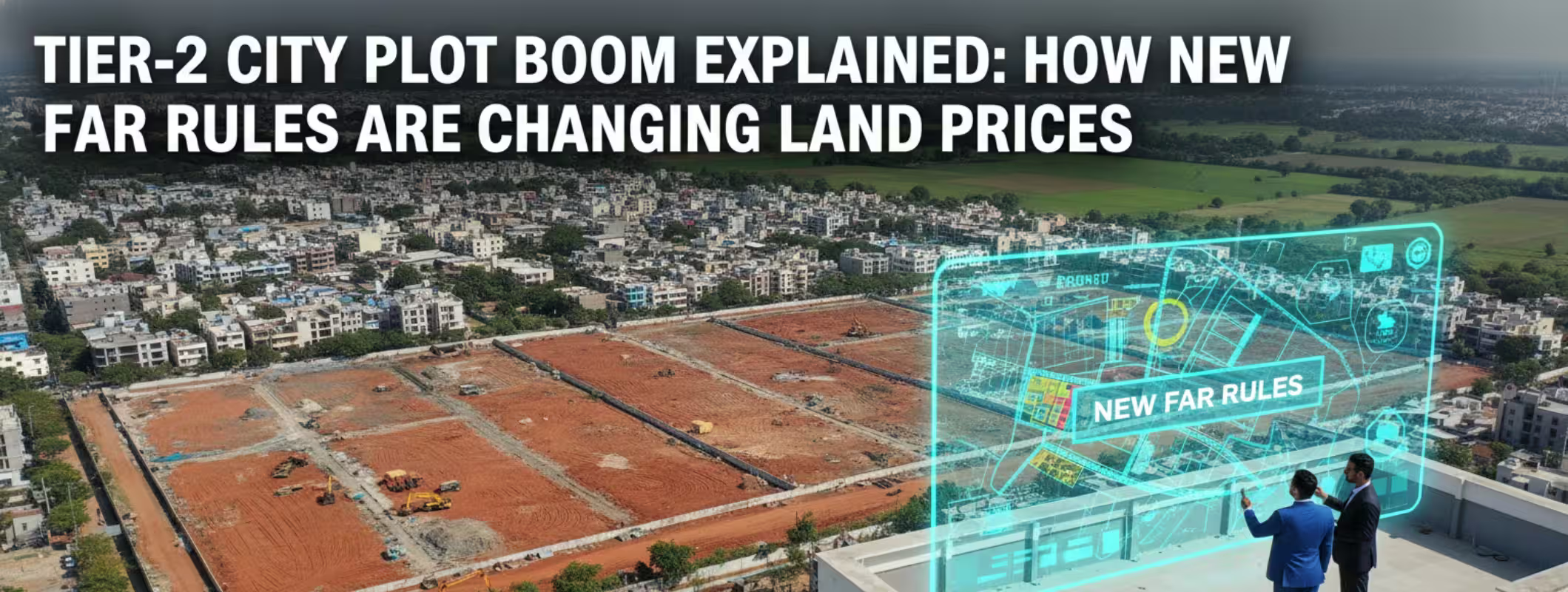
If you’ve been tracking land for sale listings lately, you’ve probably noticed something: in many Tier-2 markets, plot prices are moving faster than people expected. FAR (Floor Area Ratio) rules are changing, and that directly changes what a plot can “produce” in terms of built-up area.
In India, a plot is not priced only by location anymore. It’s priced by build potential. And FAR is the number that decides that potential.
So if you’re buying land in India, whether for your own home, a builder project, or long-term investment, this guide will help you understand what’s happening and how to make a smarter decision.
What is FAR?
FAR (Floor Area Ratio) tells you how much construction you’re allowed to build on a plot compared to the plot size.
Quick Example:
- Plot area = 100 sq. m
- FAR = 1.5
- Permitted built-up area = 100 × 1.5 = 150 sq. m
That 150 sq. m could be:
- one larger home, or
- multiple floors, or
- a small rental-friendly building (depending on height, setbacks, parking, and local bye-laws).
So when authorities increase FAR, they increase the “earning capacity” of that land. And markets usually price that in quickly.
Why are FAR rules changing in Tier-2 cities?
Across many Tier-2 cities, planning bodies revise development rules to:
- support urban expansion without spreading the city too wide
- encourage vertical growth near wide roads, transit corridors, and commercial zones
- unlock more housing supply (and sometimes collect revenue via premium FAR/FSI mechanisms)
- align with new master plans, infrastructure upgrades, and redevelopment needs
Tier-2 cities like Indore, Lucknow, Nagpur, Coimbatore, Surat, and Jaipur often see sharper price reactions because plotted development demand is already strong and supply is limited in prime pockets.
How higher FAR increase residential plot prices
1) A plot becomes “more productive”
When FAR goes up, the plot can legally support:
- more floor space
- more floors (subject to other limits)
- better rental yield potential
- larger saleable area for builders
And when a plot can generate more value, sellers raise prices fast.
Market reality: Buyers don’t just pay for land. They pay for permission to build more.
2) Builders start competing with end-users
Here’s what happens when FAR increases in a live micro-market:
- The end-user thinks: “I’ll build a ground+1 home.”
- The builder thinks: “I can build 3–4 floors (if allowed), add parking, sell multiple units.”
Even if the end-user doesn’t plan to use extra FAR, the builder will—and that builder demand pushes up rates for everyone. This is why residential land for sale in builder-friendly pockets jumps quickly after FAR revisions.
3) Premium FAR turns into a pricing benchmark
In several cities, authorities allow base FAR, and then offer additional FAR via:
- premium charges
- betterment levies
- impact fees
- special corridor rules
Once the market understands the “paid expansion” model, plot owners start quoting prices assuming:
- higher permissible built-up area, or
- future upgrade eligibility
So even plots not immediately eligible may see a “hope premium” in pricing, especially near wide roads, highways, and emerging commercial spines.
4) Small plots often see the biggest percentage jump
Smaller residential plots (like 50–120 sq. yards) can become more valuable per sq. yard when FAR increases, because:
- the buyer gets a clearer path to build multiple floors
- construction economics improve (more usable area per land cost)
- rental layouts become easier (1 unit per floor concept)
So don’t be surprised if “compact plots in strong neighborhoods” rise faster than large plots on the city edge.
FAR alone doesn’t decide value, these rules matter too
A FAR increase helps only if the plot can actually use it. In real life, these factors decide whether the added FAR converts into real value:
Road width & access
Many byelaws link higher FAR/height permission to:
- minimum road width
- corner plot conditions
- approach road setbacks
A plot on a narrow internal lane may technically have higher FAR on paper, but height permission and parking rules can block full usage.
Setbacks and ground coverage
Even with higher FAR, you still need:
- front/back/side setbacks
- ventilation and light compliance
- fire safety margins (for taller buildings)
If setbacks eat up buildable footprint, the “extra FAR benefit” reduces.
Parking norms
Parking rules quietly decide the economics.
If additional floors require:
- stilt parking
- extra parking area per unit
- ramp/driveway space
- then the usable sellable area changes, impacting what a builder will pay.
What this means for people searching “Land for sale” in Tier-2 cities
If you’re hunting for land for sale, FAR updates change how you should shortlist plots:
If you’re an end-user (building your home)
- You may not “need” extra FAR
- but you will still pay more because the market prices land based on maximum potential
- your best play is to buy in areas where FAR is stable but infrastructure is improving—so you get appreciation without peak speculation
If you’re a builder or small developer
- FAR upgrade can turn an average plot into a high-return project
- but you must check the full compliance stack: setbacks, height, parking, and zoning
- don’t overpay just because “FAR increased”—verify what’s practically buildable
If you’re an investor (plot + appreciation)
- FAR changes can create a short-term spike and medium-term compounding
- but price jumps can also be speculative right after announcements
- your safest investment is in plots with clean title + clear zoning + predictable permissions (not “maybe” approvals)
A simple way to judge if a plot price increase is justified
Step 1: Calculate “allowed built-up area”
Plot Area × FAR = permitted built-up area
Step 2: Estimate what that built-up area can realistically become
- floors allowed?
- setbacks feasible?
- Is parking workable?
- demand for that configuration in that locality?
Step 3: Compare against local selling price per sq. ft for built units
If extra FAR lets you create an extra sellable/rentable area, the plot price hike may be rational. If extra FAR exists only on paper due to other restrictions, the hike may be inflated.
Risks buyers should watch after FAR revisions
When FAR rules change, some sellers try to cash in without clarity. Watch out for:
- misquoted FAR eligibility (seller says higher FAR applies, but zoning doesn’t)
- road widening proposals (your plot area or setbacks may change later)
- unauthorised layouts marketed as residential plots
- title gaps (especially in fast-appreciating pockets)
- future infrastructure claims without official documentation
If you’re evaluating residential land for sale, treat “FAR benefit” like a technical feature, verify it like you’d verify a car’s mileage claim.
Checklist before buying residential land in a FAR-changing market
Before you pay token money, confirm:
- Zoning: Residential? Mixed-use? Special corridor?
- Permissible FAR: Base + premium provisions (if any)
- Road width & access: As per official records, not just visually
- Setbacks & height norms: Practical feasibility for your intended build
- Plot dimensions: Odd shapes reduce usable footprint
- Encumbrance & title: Search report + mutation + ownership chain
- Layout approvals: Approved plotting vs informal division
- Utilities & easements: drainage lines, high-tension, right-of-way issues
Also Read: Where to Invest in Hyderabad in 2026: Best Areas for Property Buyers
FAQs
1) Will higher FAR always increase plot prices?
Usually yes, because FAR boosts build potential. But the actual price jump depends on whether the plot can practically use that FAR (road width, setbacks, parking, zoning)
.
2) Is it a good time to buy residential plots right after FAR updates?
Not always. Immediately after policy changes, markets often show “announcement premiums.” If you’re buying for investment, prefer verified micro-markets where approvals are clear—not just trending.
3) Do end-users benefit from FAR increases?
Indirectly, yes. Even if you build only one house, higher FAR can help future expansion, resale value, or adding a rental floor later—subject to other byelaws.
4) What’s the biggest mistake buyers make when searching a land for sale in Tier-2 cities?
They assume FAR alone decides construction. In reality, setbacks, height permission, parking norms, and zoning decide what you can actually build.
5) How do I confirm the correct FAR for a plot?
Check the local development authority/master plan zoning documents or get written confirmation through a qualified architect/town planner who regularly deals with approvals in that city.
Final take: FAR changes are pricing land like an “income asset”
In Tier-2 India, residential plots are increasingly valued like mini real-estate businesses: “How much built-up area can this plot legally generate?” That’s why FAR updates don’t just change construction rules, they reshape residential land for sale pricing, demand, and negotiation power.