Key Takeaways
- Jaipur is better for investors who want stronger liquidity, faster resale demand, organized township growth, and long-term capital appreciation.
- Ajmer is better for investors who want comparatively affordable entry points, religious tourism-driven demand, and patient long-term growth around Ajmer-Kishangarh, Pushkar, Kishangarh, and highway-connected pockets.
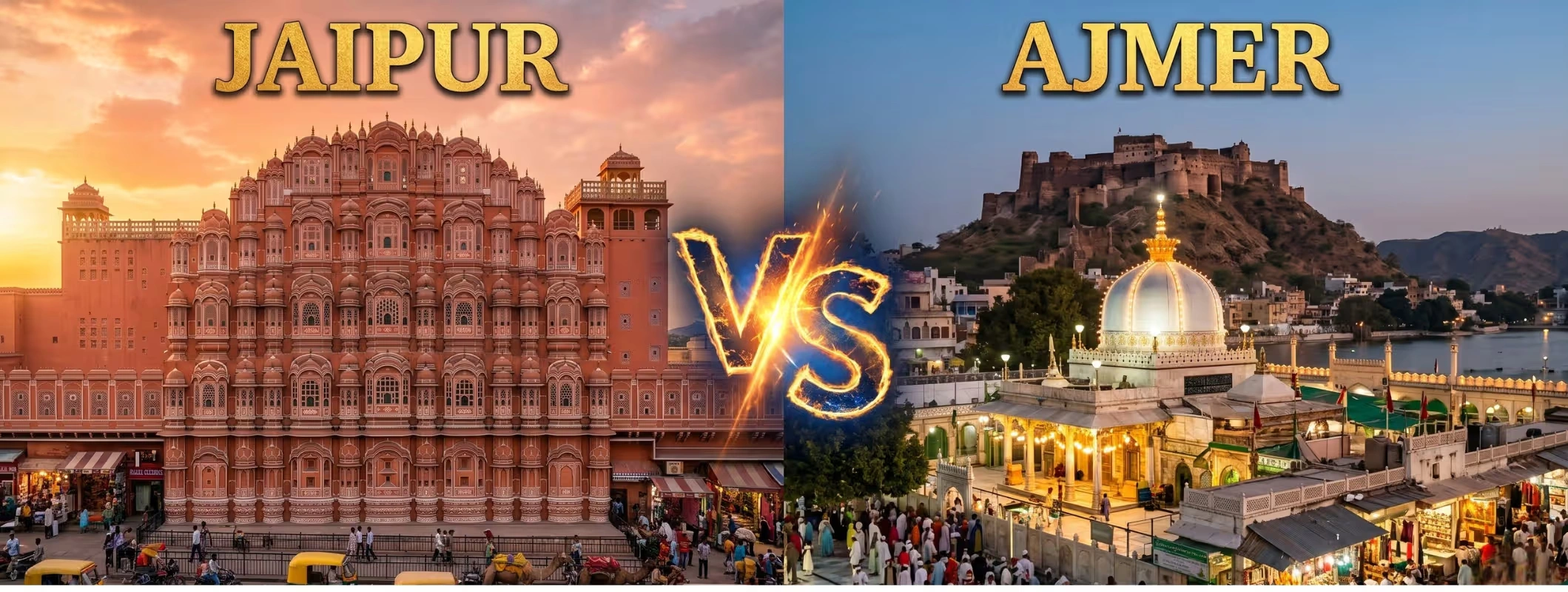
- For most buyers comparing Jaipur vs Ajmer land investment, Jaipur offers a more mature real estate market, while Ajmer offers a lower-cost opportunity with selective upside.
- The best strategy is not “Jaipur or Ajmer” blindly. The smarter approach is to compare location, road access, land use, title clarity, master plan zoning, nearby development, and resale demand before buying.
- Platforms like 2Bigha can help buyers and sellers explore land options through map-based listings, compare nearby locations, check land area visually on the map, and connect with verified land opportunities. For agents, builders, and landowners, a 2Bigha subscription plan can support better property visibility and lead generation.
Why Jaipur vs Ajmer is a Serious Land Investment Question
Rajasthan is no longer seen only as a tourism-driven state. It is becoming a multi-city real estate market where highways, industrial corridors, tourism, logistics, warehousing, education, and second-home demand are shaping land values—making it an ideal time to purchase land in Rajasthan.
That is why investors often ask: Jaipur or Ajmer, which is better for property investment?
Both cities have strong advantages.
Jaipur is the capital of Rajasthan, an important center of administration and commerce, and one of the most dynamic Tier-2 cities of North India in terms of real estate. It is more favorable than Ajmer in terms of job mobility, airport connection, educational facilities, healthcare, residential townships, and planned development—making it a top choice to purchase land in Rajasthan for long-term growth.
On the contrary, Ajmer has its own advantages. It is a spiritual, tourism, educational, and transit city. The association of Ajmer with Pushkar, Kishangarh, Jaipur, Beawar, and Nagaur provides strategic significance. Moreover, lower land prices in certain areas offer a lucrative opportunity for those looking to purchase land in Rajasthan at an affordable entry point.
Thus, the choice of Jaipur or Ajmer for property investment varies depending upon several factors.
Jaipur vs Ajmer Land Investment: Quick Comparison Table
| Factor | Jaipur | Ajmer |
| Market maturity | Highly developed and active | Developing and selective |
| Investment entry cost | Higher in prime and growth corridors | Lower in many outer and emerging areas |
| Resale liquidity | Stronger | Moderate, location-dependent |
| Demand drivers | Jobs, tourism, education, government, townships, commercial growth | Religious tourism, education, highway connectivity, Kishangarh marble/industrial belt, Pushkar tourism |
| Best for | Medium to high-budget investors, faster resale, residential plots, township land | Budget investors, long-term land banking, farmhouse plots, tourism-linked land |
| Risk level | Lower in approved areas, higher in speculative outskirts | Higher if due diligence is weak; good upside in selected pockets |
| Buyer profile | End-users, investors, NRIs, developers, professionals | Local buyers, long-term investors, tourism-linked buyers, land bankers |
| Growth style | Organized and broad-based | Corridor-based and pocket-specific |
| Better for short to medium term | Jaipur | Jaipur |
| Better for affordable long-term holding | Ajmer | Ajmer |
Why Jaipur is a Strong Land Investment Market
Jaipur has several factors that make it one of the strongest choices for land investment in Jaipur.
It is the capital of Rajasthan, which automatically gives it better administrative importance, public infrastructure, job creation, and urban planning focus. Jaipur also has a wider real estate buyer base compared to Ajmer. Buyers include local families, investors from Delhi NCR, NRIs, business owners, government employees, students’ families, and developers.
Jaipur is also part of the Smart City Mission. Jaipur Smart City states that its focus includes improving quality of life, heritage, tourism, and inclusive urban solutions. The city has also implemented smart infrastructure such as smart lighting, surveillance, parking, Wi-Fi, environmental sensors, and an integrated city operation centre under Jaipur Smart City initiatives.
This matters for land investors because smart infrastructure and organized urban services usually improve liveability. When liveability improves, residential and commercial demand also improves.
Major Growth Drivers in Jaipur
Demand for land in Jaipur is driven by several factors:
Connectivity of the city is good by virtue of roads, railways, and airports. Residential and investment demand has already started coming into areas adjacent to Ajmer Road, Tonk Road, Sirsi Road, Jagatpura, Sanganer, Kalwar Road, Vaishali Nagar Extension, Mahindra SEZ belt, and areas affected by Ring Road.
There are also some recent initiatives that reinforce this. For instance, NHAI has tendered work for construction of flyovers and underpasses at 200 feet bypass junction of NH-48 in Jaipur, which connects Jaipur with Ajmer, Delhi and also highly congested area like Mansarovar, Shyam Nagar, Vaishali Nagar, and Ajmer Road.
JDA has also floated fresh land pooling schemes in Mahal Road, Agra Road, Kalwar Road, Tonk Road/Sanganer side, and Muhana Mandi belt. Land pools include allocation of residential, industrial, mixed use, and semi-public lands, thus demonstrating Jaipur's growth from different sides.
For buyers searching to buy land in Jaipur, these developments matter because planned expansion usually creates more confidence than random plotting in unapproved areas.
Jaipur Real Estate Market 2026: What Investors Should Understand
The Jaipur real estate market 2026 is not uniform. Some pockets are already expensive, while others still offer entry opportunities.
Prime and semi-prime Jaipur locations have higher land values because they offer better access to schools, hospitals, markets, transport, and employment zones. But outer-growth corridors offer more affordable options, especially for buyers looking at plotted investment or future township development.
Online property platforms show that property rates in Ajmer Road, Jaipur vary significantly depending on exact location, approval status, frontage, nearby development, and property type. 99acres lists land rates around Ajmer Road, Jaipur in the range of roughly ₹2,650–₹5,000 per sq. ft., while Housing.com shows a broad average property price trend for Ajmer Road with notable variation across listings. These figures should be treated as market indicators, not fixed values, because land pricing changes by plot size, approval, road width, and negotiation.
This is why investors should never compare Jaipur and Ajmer only by headline rates. A JDA-approved plot in a high-demand Jaipur corridor cannot be compared directly with agricultural land or an unapproved plot outside Ajmer city limits.
Best Locations for Land Investment in Jaipur
Jaipur offers multiple land investment zones. Each has a different buyer profile.
1. Ajmer Road, Jaipur
Ajmer Road is one of the most discussed investment corridors in Jaipur. It benefits from connectivity toward Ajmer, Delhi-Mumbai corridor movement, Jaipur city access, and nearby residential expansion.
This belt attracts buyers looking for residential plots, gated communities, farmhouses, weekend homes, and long-term land banking. It also benefits from the movement between Jaipur and Ajmer, making it relevant in any land price comparison Jaipur Ajmer discussion.
2. Jagatpura
Jagatpura is popular because of education institutions, residential societies, hospitals, coaching/student movement, and airport-side connectivity. It is better for investors who want residential demand and rental-linked growth.
3. Tonk Road and Sanganer Belt
This belt benefits from airport connectivity, industrial and institutional movement, and expansion toward Sitapura and nearby zones. It suits buyers looking for mixed residential and future commercial potential.
4. Sirsi Road and Vaishali Extension
These areas attract end-users and plotted development buyers. They are suitable for investors who want a balance between livability and future appreciation.
5. Kalwar Road
Kalwar Road has grown as an affordable residential and plotted development zone. With land pooling and urban expansion plans, it remains relevant for long-term investors.
6. Ring Road-Connected Areas
Ring Road connectivity can influence land prices over time, especially where access, road width, zoning, and nearby development improve.
Why Ajmer is also Becoming Attractive for Land Investors
Ajmer may not match Jaipur’s market depth, but it has a different investment story.
Ajmer has a rich religious, tourism, educational, and transportation importance. This city draws visitors because of Ajmer Sharif Dargah, Pushkar, other sites of heritage in the area, and connectivity. Tourism is among the major factors that influence property demand in Ajmer city, particularly hotel properties, guest houses, commercial lands, farmhouses, and second home plots.
Ajmer is also associated with the Smart City project. According to the District Administration of Ajmer, the Ajmer Smart City project consists of the reformation and reorganization of the water supply system, as well as city infrastructure.
The significance of such initiatives lies in infrastructure upgrading which can help sustain property demand in the future. At the same time, potential investors should not ignore controversies around Ajmer smart city projects that have surfaced recently. That means investors should check on-ground progress instead of relying only on future promises.
This is where Ajmer becomes a selective market. Good locations can perform well, but weak locations may stay slow for years.
Land Investment in Ajmer: Growth Drivers
1. Religious Tourism
Ajmer gets steady religious tourism due to Ajmer Sharif Dargah. Nearby Pushkar also attracts spiritual, cultural, and international tourism. This demand supports hospitality, rental rooms, commercial activity, roadside land, and farmhouse-style investments.
2. Ajmer-Kishangarh Belt
Kishangarh is known for marble, logistics, and industrial activity. The Ajmer-Kishangarh belt has long-term potential because industrial and logistics-driven areas often create land demand around highways, warehousing, worker housing, transport nodes, and commercial services.
3. Highway Connectivity
Ajmer sits on important road networks connecting Jaipur, Beawar, Kishangarh, Nagaur, Pushkar, and other parts of Rajasthan. Connectivity directly impacts land prices because better movement improves residential, commercial, and logistics use.
4. Lower Entry Cost
In many areas, land investment in Ajmer requires a lower budget compared to prime Jaipur corridors. This attracts buyers who want to hold land for 5–10 years.
5. Education and Institutional Demand
Ajmer has schools, colleges, coaching movement, and institutional presence. This creates stable residential demand in selected pockets.
Best Locations for Land Investment in Ajmer
1. Kishangarh Road / Ajmer-Kishangarh Belt
This is one of the most important corridors for long-term investors because of industrial, marble, logistics, and highway movement.
2. Pushkar Road
Pushkar Road has tourism and second-home appeal. It may suit investors interested in farmhouses, boutique stays, resorts, and lifestyle land.
3. Jaipur Road Side
The Jaipur-Ajmer connection keeps this belt important. Land near accessible and legally clear pockets can attract buyers looking between both cities.
4. Beawar Road
Beawar Road may attract commercial and highway-linked demand. Investors should check zoning, access, road width, and nearby development.
5. Outer Ajmer Villages
Outer village land can be affordable, but it carries higher due diligence risk. Buyers must check title, conversion status, agricultural restrictions, approach road, water access, and future master plan use.
Jaipur vs Ajmer Property Investment: Which Has Better Appreciation Potential
Jaipur generally has stronger appreciation potential because it has more demand drivers. It has employment movement, administrative importance, better infrastructure, larger population growth, airport access, townships, institutional growth, and better resale liquidity.
Ajmer’s appreciation potential is more location-specific. If you buy in the right corridor near tourism, highway, Kishangarh, Pushkar, or future development zones, returns can be attractive over the long term. But random land buying in Ajmer can trap capital if there is no buyer demand.
So, in simple terms:
- Jaipur is better for safer and broader appreciation.
- Ajmer is better for lower-entry, selective, long-term appreciation.
Land Price Comparison: Jaipur vs Ajmer
A proper land price comparison Jaipur Ajmer should not only compare per sq. ft. rates. It should compare:
- Location quality
- Approval status
- Road width
- Nearby development
- Water and electricity access
- Distance from city centre
- Master plan zoning
- Land use type
- Resale demand
- Legal title clarity
- Future infrastructure impact
Jaipur’s land prices are generally higher in active corridors because demand is deeper. Investors pay a premium for liquidity and development visibility.
Ajmer’s land prices are usually more affordable in many outer and semi-urban pockets, but the appreciation timeline may be longer. Investors should not buy only because the rate is low. Cheap land is not always profitable land.
A ₹15 lakh plot in a poor location can stay stuck for years, while a ₹35 lakh plot in a better corridor may appreciate faster and sell more easily.
Infrastructure Development Jaipur Ajmer: Why Connectivity Matters
Connectivity is one of the biggest factors behind land appreciation.
Both Jaipur and Ajmer derive advantages due to their location in the network of highways and industrial corridors of Rajasthan. The development of the Delhi-Mumbai Industrial Corridor is going to happen along the Western Dedicated Freight Corridor from Delhi to Mumbai, crossing Rajasthan and other states.
The government and industry sources refer to Ajmer-Kishangarh as another node for manufacturing/ investment within the DMIC planning framework.
In terms of long-term significance, it is worth noting that industrial corridors tend to generate demand for warehousing facilities, logistics centers, labor housing facilities, commercial land plots, transport services, and peripheral lands.
But investors need to be aware of one fact: a corridor announcement does not guarantee increased value for all the parcels of land in the neighborhood.
Tourism Impact on Real Estate in Jaipur and Ajmer
Tourism supports both cities, but in different ways.
Jaipur tourism is broad. It includes heritage tourism, luxury stays, destination weddings, shopping, business events, food culture, and weekend travel. This supports hospitality, short-stay rentals, commercial areas, villa plots, and premium second-home demand.
Ajmer tourism is more religious and spiritual, supported by Ajmer Sharif and Pushkar. This creates demand for budget hotels, guest houses, small commercial spaces, restaurants, parking-linked land, and tourism-focused real estate.
For investors, Jaipur tourism creates a wider real estate impact. Ajmer tourism creates strong micro-location demand.
If you are buying tourism-linked land in Ajmer, proximity and access matter more than city-level growth. Land far from tourist movement may not benefit much.
Smart City Projects Jaipur Ajmer: Investment Relevance
Both Jaipur and Ajmer are connected to Smart City initiatives, but investors should not treat “Smart City” as a guaranteed return certificate.
Jaipur’s smart city focus includes quality of life, tourism, heritage, and technology-backed city management.
Ajmer’s smart city work includes water distribution and infrastructure renewal, but some projects have also faced public criticism and execution concerns.
So, the practical investor view is simple:
Smart city work can improve infrastructure.
But you should still verify actual road condition, drainage, water supply, encroachment risk, zoning, and resale demand before buying land.
Jaipur or Ajmer: Which is Better for Different Investor Types
- For First-Time Land Buyers: Jaipur is usually safer because the market is more active and resale demand is stronger. Choose approved plotted areas, JDA/RERA-compliant projects, or locations with clear documentation.
- For Budget Investors: Ajmer may be more practical because entry costs can be lower. But avoid isolated land unless you are ready for a long holding period.
- For Long-Term Land Banking: Both cities can work. Jaipur offers stronger city expansion, while Ajmer offers affordable land banking opportunities around selected corridors.
- For Farmhouse Buyers: Ajmer, Pushkar Road, and Jaipur-Ajmer belt can be attractive. Jaipur outskirts also have farmhouse demand, but prices may be higher.
- For Commercial Land Buyers: Jaipur is stronger because of larger population, tourism, business, and institutional demand. Ajmer can work near religious tourism, highway points, and hospitality pockets.
- For Agricultural Land Buyers: Both Jaipur and Ajmer have agricultural land opportunities, but legal due diligence is critical. Check land title, khata, khasra, mutation, access road, land ceiling rules, conversion rules, and buyer eligibility.
- For Quick Resale: Jaipur is better. Ajmer is more suitable when you can wait.
Jaipur vs Ajmer: Investment Scorecard
| Investment Parameter | Jaipur Score | Ajmer Score | Better Option |
| Resale liquidity | 9/10 | 6.5/10 | Jaipur |
| Entry affordability | 6/10 | 8.5/10 | Ajmer |
| Infrastructure depth | 8.5/10 | 7/10 | Jaipur |
| Tourism demand | 9/10 | 8/10 | Jaipur, but Ajmer is strong in religious tourism |
| Industrial/logistics potential | 8/10 | 7.5/10 | Jaipur slightly ahead, Ajmer-Kishangarh is promising |
| Long-term land banking | 8/10 | 8/10 | Both |
| Risk level | Lower in approved zones | Higher in weak locations | Jaipur |
| Best for beginners | 8.5/10 | 6.5/10 | Jaipur |
| Best for low-budget investors | 6.5/10 | 8/10 | Ajmer |
Legal Checklist Before Buying Land in Jaipur or Ajmer
Before you buy land in Jaipur or buy land in Ajmer, complete this checklist.
- Check the title deed and ownership history.
- Verify khasra, khata, jamabandi, and mutation records.
- Confirm whether the land is agricultural, residential, commercial, industrial, or converted.
- Check if the land falls under JDA, ADA, municipal, gram panchayat, RIICO, forest, eco-sensitive, or restricted zone.
- Verify road access on paper and on-site.
- Check for encroachment, disputes, loans, court cases, family claims, or pending acquisition.
- Confirm conversion status if you plan to build.
- Check RERA registration if buying in a plotted project that falls under RERA applicability.
- Verify layout approval, road width, drainage, water, electricity, and possession status.
- Do not pay only on the basis of WhatsApp photos, broker promises, or future development claims.
- Use platforms like 2Bigha to explore map-based land listings and compare location surroundings before shortlisting.
Common Mistakes Investors Make in Jaipur and Ajmer
Many buyers lose money not because Jaipur or Ajmer is a bad market, but because they buy the wrong land.
The first mistake is buying land only because it is cheap. Low price without access, demand, or legal clarity is not an opportunity; it is a liability.
The second mistake is trusting verbal promises. Brokers may say, “Ring Road aa raha hai,” “industrial zone banega,” or “rates double ho jayenge.” Always verify plans through official sources and local authorities.
The third mistake is ignoring resale demand. A plot should not only look good today; it should be sellable tomorrow.
The fourth mistake is buying agricultural land without understanding conversion rules. If you want to build a farmhouse, resort, or commercial property, check whether conversion is allowed.
The fifth mistake is not checking the exact location on a map. A land parcel may sound close to Jaipur or Ajmer, but the actual approach road may be poor.
This is where 2Bigha’s map-based listing feature becomes useful. Buyers can view the land area on the map, understand the surroundings, and compare nearby options before visiting the site.
How 2Bigha Helps Buyers and Sellers in Jaipur-Ajmer Land Investment
2Bigha is useful for buyers, sellers, agents, and landowners who want better visibility and smarter land discovery.
For buyers, 2Bigha helps in exploring land through map-based listings. You can check the land area visually on the map, understand nearby roads and surroundings, and compare multiple land options before making a site visit.
For sellers, 2Bigha helps improve listing visibility among serious land buyers. Instead of depending only on local brokers, sellers can present their land with better details, location clarity, and buyer-focused information.
For agents and property consultants, the 2Bigha subscription plan can help promote listings, reach more interested buyers, and build a stronger digital presence in land-focused markets like Jaipur, Ajmer, Pushkar, Kishangarh, and nearby Rajasthan corridors.
For investors comparing buy land Jaipur Ajmer, 2Bigha can make the search process more transparent, especially when dealing with agricultural land, farmhouse land, residential plots, and investment land.
Jaipur vs Ajmer: Which City is Better for Land Investment
If your goal is safety, liquidity, organized growth, and stronger resale demand, Jaipur is better.
If your goal is affordable land banking, tourism-linked opportunities, and long-term upside in selected corridors, Ajmer is worth considering.
For most investors, Jaipur is the stronger overall market. It has deeper demand, better infrastructure visibility, broader buyer interest, and more organized expansion. Ajmer is promising, but it requires sharper location selection and stronger due diligence.
So the final answer is:
Jaipur is better for stable and growth-oriented land investment. Ajmer is better for affordable, selective, long-term land investment.
The smartest investor can also build a balanced strategy: choose Jaipur for safer appreciation and Ajmer for low-entry long-term land banking.
Final Investment Recommendation
Choose Jaipur if you want:
- Better resale liquidity
- Stronger residential demand
- More organized plotted development
- Better city infrastructure
- Higher buyer confidence
- Medium-term appreciation potential
- A safer choice for first-time land investors
Choose Ajmer if you want:
- Lower entry cost
- Long-term land banking
- Tourism-linked investment
- Farmhouse or second-home land
- Exposure to Ajmer-Kishangarh and Pushkar growth
- Affordable investment plots Rajasthan buyers can hold patiently
Avoid both markets if the land has unclear title, no road access, no approval clarity, unrealistic pricing, or only speculative future claims.
FAQs - Jaipur vs Ajmer Land Investment
1. Jaipur or Ajmer, which is better for property investment?
Jaipur is generally better for property investment because it has stronger infrastructure, higher resale demand, better employment movement, airport access, township development, and wider buyer interest. Ajmer is also good, but mainly for investors who want affordable long-term land banking in selected corridors.
2. Is land investment in Jaipur profitable in 2026?
Yes, land investment in Jaipur can be profitable if you choose the right location and verify approvals. Growth corridors such as Ajmer Road, Jagatpura, Tonk Road, Sirsi Road, Kalwar Road, and Ring Road-connected areas continue to attract buyer interest. However, avoid overpriced or legally unclear plots.
3. Is land investment in Ajmer a good idea?
Land investment in Ajmer can be a good idea for long-term investors. Ajmer benefits from religious tourism, Pushkar tourism, highway connectivity, and the Ajmer-Kishangarh belt. But the market is more selective than Jaipur, so location and legal due diligence are very important.
4. Which city has better resale value: Jaipur or Ajmer?
Jaipur usually has better resale value because it has a larger buyer base and more active real estate demand. Ajmer resale depends heavily on the location, road access, and nearby development.
5. Which is cheaper for land buying: Jaipur or Ajmer?
Ajmer is generally more affordable than Jaipur in many locations. Jaipur land prices are higher in active corridors because the city has stronger demand and better market maturity.
6. What are the best areas to buy land in Jaipur?
Popular areas include Ajmer Road, Jagatpura, Tonk Road, Sanganer, Sirsi Road, Kalwar Road, Vaishali extension, Mahindra SEZ belt, and Ring Road-connected locations. The best area depends on your budget and purpose.
7. What are the best areas to buy land in Ajmer?
Promising areas include Ajmer-Kishangarh Road, Pushkar Road, Jaipur Road side, Beawar Road, and selected outer villages with proper road access and clear title.
8. Can I buy agricultural land near Jaipur or Ajmer?
Yes, buyers can explore agricultural land near Jaipur and Ajmer, but they must check state rules, buyer eligibility, land ceiling, title records, khata, khasra, mutation, conversion rules, and intended land use before purchase.
9. How does tourism affect real estate in Jaipur and Ajmer?
Tourism increases demand for hotels, guest houses, restaurants, commercial land, second homes, and short-stay properties. Jaipur has broader tourism demand, while Ajmer has strong religious tourism and Pushkar-linked demand.
10. How can 2Bigha help in buying land in Jaipur or Ajmer?
2Bigha helps buyers explore land through map-based listings, compare nearby areas, check land surroundings, and shortlist properties more transparently. Sellers, agents, and landowners can use 2Bigha and its subscription plan to improve property visibility and reach serious land buyers.