Buying or selling land in India can feel easy on paper, until the day you hear: “Boundary yahin tak hai?” or “Area kam nikla.” That’s where most land disputes start.
A land survey and proper demarcation are not “extra formalities.” They are the fastest way to confirm where your land actually starts and ends, how much area you truly own, and whether anyone has encroached on it. If you’re dealing with Agricultural land, this becomes even more critical because boundaries often depend on old revenue maps, field markers, and local understanding.
This guide breaks it down in simple language, with real-life use cases and clear steps, so you can make safe land decisions, whether you want to buy, sell, fence, or build.
What Is a Land Survey?
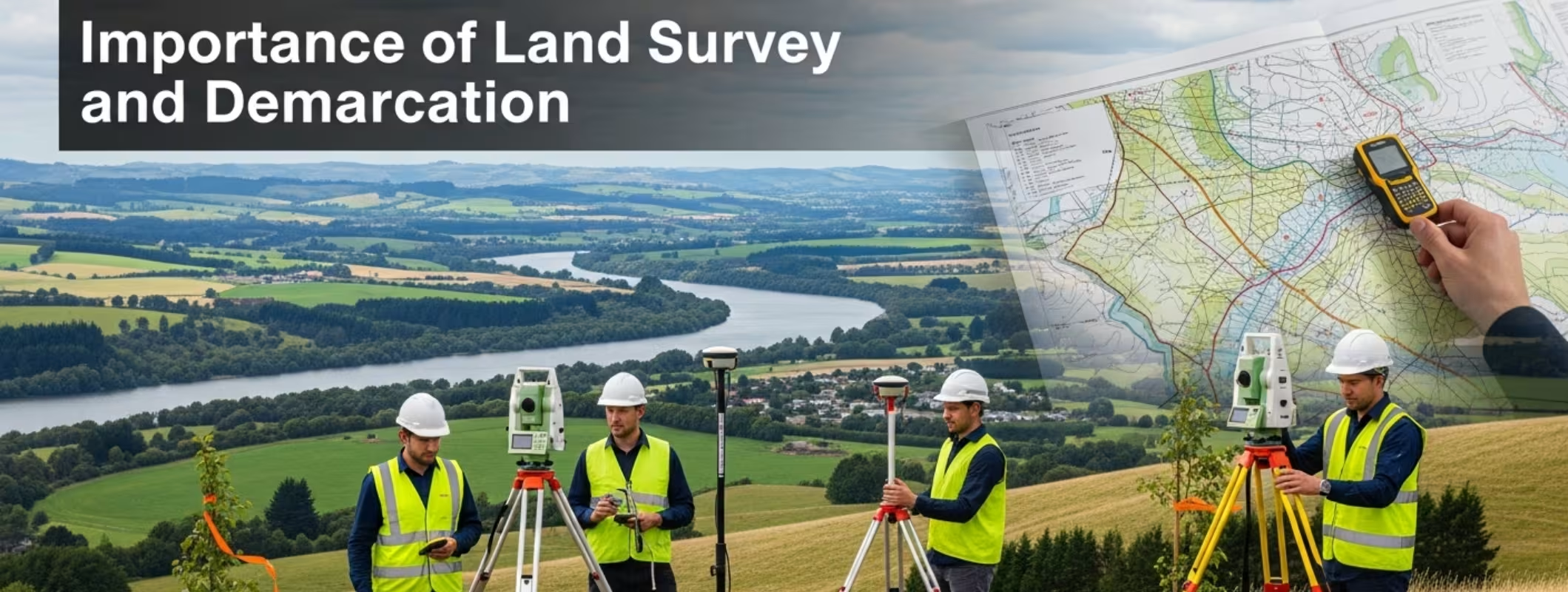
A land survey is the process of measuring land to confirm:
- Exact area (size)
- Shape and dimensions
- Boundary lines
- Plot corners
- Location features like roads, canals, poles, trees, nallah, slope, etc.
In India, surveys often match land measurements with revenue records like:
- Khasra / Khatauni / Jamabandi
- Shajra / village map / cadastral map
- Mutation (Intkal) records
- Registry details (sale deed)
A proper survey gives you a survey sketch / map, sometimes with coordinates, and a clear view of what you are actually paying for—or selling.
What Is Demarcation?
Demarcation means marking the boundaries physically on the ground based on official records.
So instead of guessing, you get boundaries marked using:
- Boundary pillars / pegs
- Line marking
- On-site identification of corners
- Sometimes panchanama-style documentation (depends on state process)
Why Land Survey and Demarcation Matter So Much
1) You stop boundary disputes before they start
Most land fights in India are not about ownership on paper, they’re about boundaries on site. A survey + demarcation reduces “he said / she said” arguments.
2) You confirm the real land area (and avoid overpaying)
Sometimes the registry says one area, but ground reality says another due to:
- Old measurement errors
- Encroachment
- Wrong khasra mapping
- Natural changes in field edges
Even a small mismatch can mean lakhs of rupees difference in land value.
3) You protect yourself from encroachment
Encroachment often happens slowly:
- Someone extends fencing by 2–3 feet
- A neighbour plants trees inside your plot line
- A pathway quietly becomes “public” on your boundary
Demarcation makes your boundary clear and defensible.
4) It helps in fencing, farmhouse planning, and utilities
If you’re planning:
- Fencing / boundary wall
- Farmhouse construction
- Borewell, drip irrigation, solar setup
- Access road layout
You need exact corners and boundary lines. Otherwise, you risk building on disputed land.
5) You get smoother sale and faster buyer trust
When you want to list your property for sale, buyers ask the same things:
- “Exact area kitna hai?”
- “Boundary clear hai?”
- “Road access ka proof?”
- “Map hai kya?”
A demarcated plot sells faster because it looks clean, verified, and low-risk.
6) It’s extra important for Agricultural land
Agricultural land transactions often face:
- Khasra-level confusion
- Shared boundaries without fencing
- Irrigation channel disputes
- Inherited land partitions
- Village map mismatch
Survey + demarcation gives clarity and prevents future legal trouble.
When Should You Do a Survey and Demarcation?
- You are buying land (before final payment)
- You are selling land (before listing)
- You want to fence or build
- There’s a neighbour dispute
- The land is inherited or partitioned
- The plot is irregular or large
- You want a loan / valuation
- You are doing Farm Search and shortlisting multiple options (survey becomes your “final check”)
Common Survey Methods You’ll Hear In India
Traditional measurement (chain/tape)
- Low cost
- Works for small, clear plots
- Less accurate for big/irregular lands
Total Station survey
- High accuracy
- Good for plotted land, layouts, large sites
- Creates clean mapping
GPS / DGPS survey
- Useful for large land parcels
- Gives coordinates and better precision
Drone survey (where available)
- Fast for large farms
- Good visibility and mapping
- Still needs record matching for legal strength
Simple truth: Choose the method based on land size, budget, and purpose, but always match results with official records.
How Demarcation Usually Works (Practical Flow)
While the process varies by state, the ground reality usually looks like this:
- Collect land records (khasra map, khatauni/jamabandi, registry, mutation)
- Apply for demarcation (often through local revenue office/tehsil system)
- Site visit by official/authorized team
- Boundary identification as per records
- Corner marking and boundary pillars
- Demarcation report / sketch issued (in many cases)
If there is a dispute, the process may require notice to neighbours or further verification.
Documents You Should Keep Ready
For smoother survey/demarcation and for safer transactions, keep:
- Sale deed / registry copy
- Khasra / Khatauni / Jamabandi
- Mutation / Intkal record (if updated)
- Shajra / village map extract (if available)
- Property tax receipt (where applicable)
- ID proof of owner
- Any partition deed / inheritance documents (if relevant)
Real Problems a Survey Often Reveals (And Why That’s Good)
A good survey doesn’t just “confirm.” It also exposes hidden issues early:
- Encroachment by neighbour
- Wrong boundary assumption for years
- Area mismatch vs registry
- No proper access road on ground
- Overlap between khasra numbers
- Easements/right of way crossing your land
- High-tension line corridor, drain, or nallah inside plot
- Government land / common land edge confusion
Finding these issues before purchase is a win. Finding them after purchase is a headache.
How to Use Survey + Demarcation to Sell Land Faster
If your goal is to sell, here’s the smart move:
- Get your plot surveyed and demarcated
- Keep the sketch/report ready
- Mention clear boundaries and verified area in your listing
- Add details like: road-side width, approach road, corner points
This builds trust and saves time during negotiation.
If you’re targeting serious buyers doing Farmland Search, verified boundary clarity becomes your strongest selling point—especially for Agricultural land.
FAQs: Land Survey and Demarcation in India
1) Is land survey compulsory before buying?
Not legally compulsory in all cases, but practically, yes—if you want to avoid overpaying or boundary disputes. A survey is one of the best “safety checks” before paying full amount.
2) What is the difference between survey and demarcation?
Survey = measurement + mapping.
Demarcation = marking those boundaries on the ground physically.
3) Who can do a land survey?
A licensed surveyor / civil survey team can do measurement mapping.
For official demarcation, many states rely on the revenue process through local authorities or authorized channels.
4) How much time does it take?
It depends on land size, location, and local process. Small plots can be measured quickly, but official demarcation timelines vary by district workload.
5) What if the neighbour disagrees during demarcation?
That’s exactly why demarcation is valuable. If a dispute exists, the process can involve notices, record verification, and a documented outcome that helps resolve conflicts.
6) Can I survey agricultural land without fencing?
Yes. In fact, most farms are surveyed without fencing by using corner identification and reference points, then marking pillars/pegs.
7) Will surveys help in mutation and registration?
The survey itself doesn’t replace mutation/registration, but it supports clean documentation and reduces objections. It’s also useful for valuation and loan processing.
8) Should I survey land even if it’s inside a colony/layout?
Yes, because ground changes happen. Corner plots, road widening, or neighbouring extensions can shift practical boundaries over time.
How 2bigha.ai Helps You in Land (Buying + Selling + Farm Search)
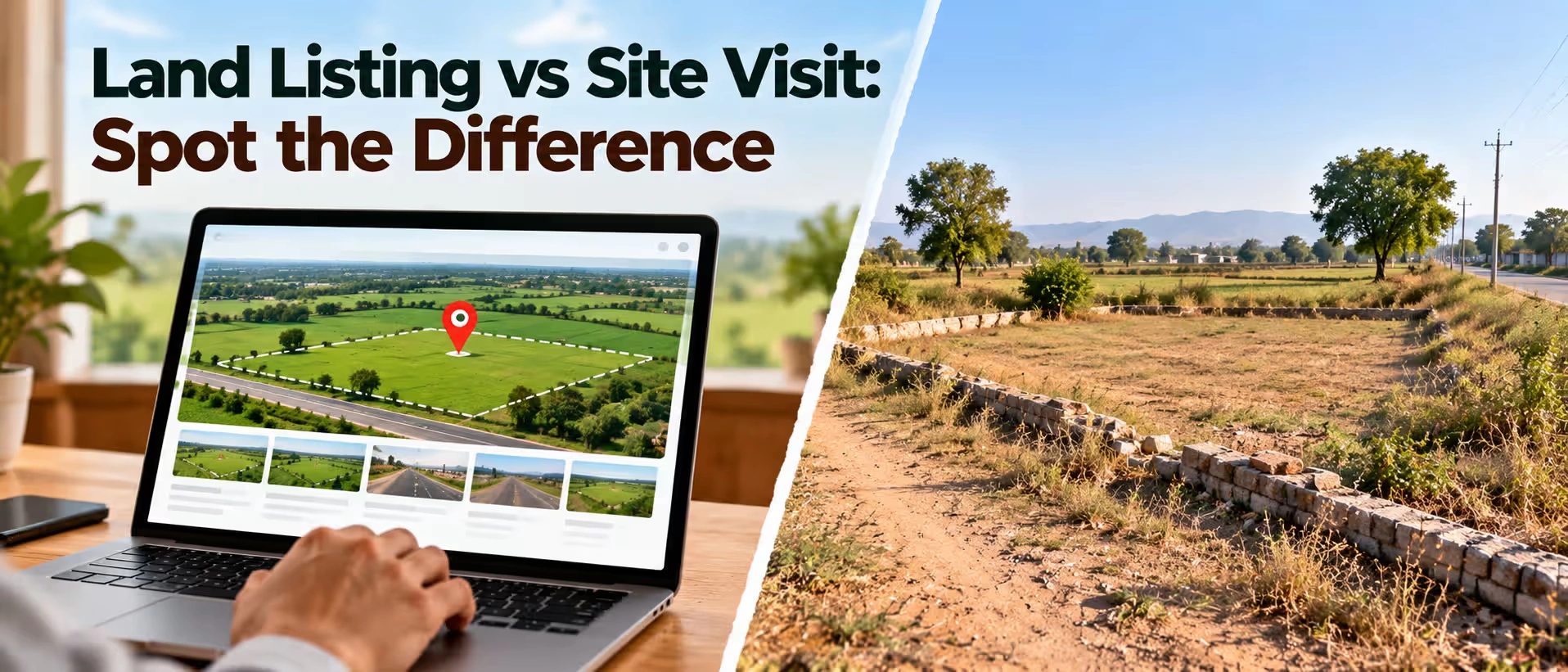
The most land problems happen because people rely on photos, talk, and assumptions instead of verified details.
That’s where 2bigha.ai becomes useful, especially if you want to buy/sell Agricultural land without running into boundary confusion.
Here’s how it helps:
1) Easier Farm Search with better clarity
Instead of random leads, you can use Farm Search to shortlist land options faster and compare locations, access, and suitability, without wasting days on irrelevant sites.
2) Sell faster with a clean listing flow
If you want to List your property for sale, 2Bigha helps you present your land properly, so buyers take you seriously. A clear, structured listing reduces back-and-forth and attracts genuine inquiries.
3) Better decision-making with land-focused support
Land is not like selling a flat. Agricultural land needs boundary clarity, access clarity, and document clarity. Platforms built for land make the buyer journey more practical, especially when you’re comparing multiple farms across districts.
4) Trust-building for buyers (and fewer “timepass” calls for sellers)
When listings are presented with better land details, buyers ask smarter questions, and sellers get fewer low-intent calls. That’s a real productivity win.
Bottom line: Whether you’re buying or selling, land survey number and demarcation give you ground truth and 2bigha.ai helps you take that truth to the market in a more organised and buyer-friendly way.