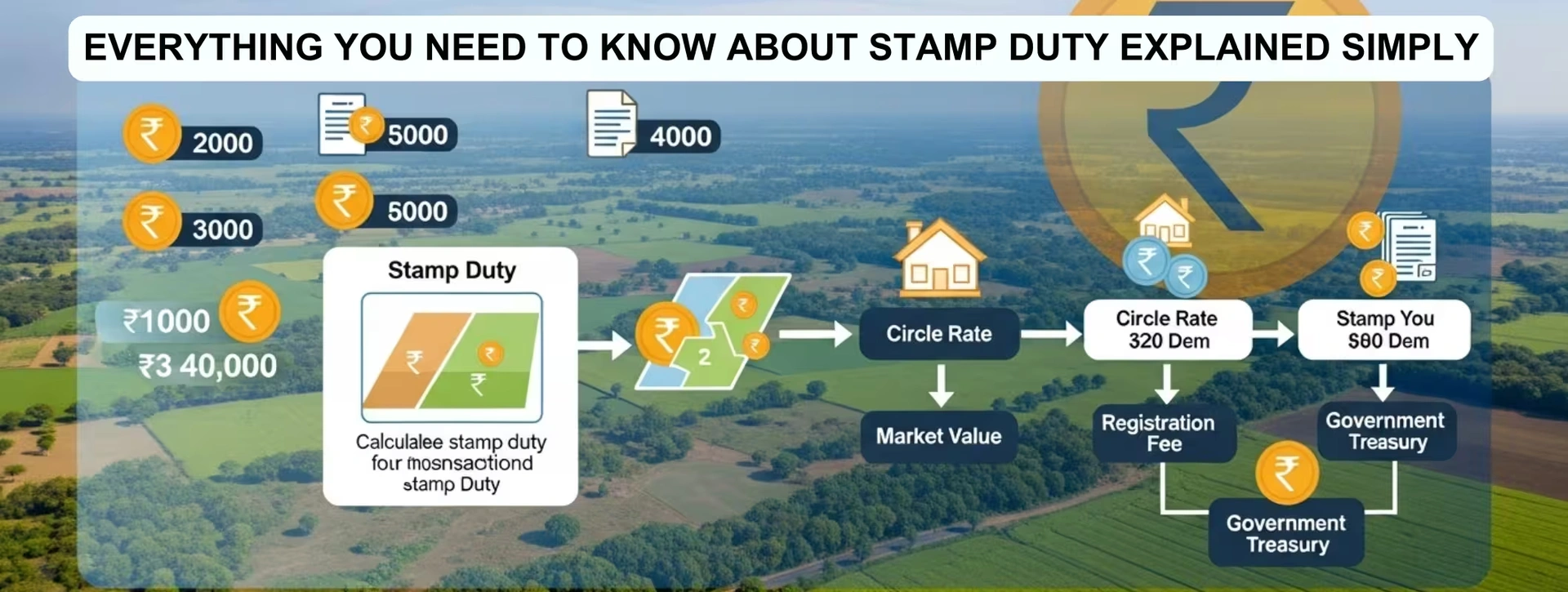
One of the major expenses you'll face while making land investments is stamp duty. Whether purchasing agriculture land, land for future investment, or agricultural land in an emerging area such as Rajasthan, Gujarat, or Maharashtra, stamp duty knowledge will make you a wiser and more informed decision-maker.
Let's discuss what stamp duty is, why it's important, and how sites such as 2Bigha can make your land investment process seamless.
What Is Stamp Duty?
Stamp duty is a government tax paid on property transactions, including land purchases. It serves as legal proof that you have bought the property and now hold ownership rights. Once paid, the government officially records your property in your name.
In simple words, paying stamp duty makes your land ownership legal and valid in the eyes of the law.
Why Stamp Duty Matter in Land Investment?
When you are investing in land, particularly in rapidly growing states like Karnataka or Rajasthan, you may pay most attention to plot and land price. But stamp duty is equally crucial it guarantees that your investment is safe and acceptable to government agencies.
If you fail to pay stamp duty, your property sale is not legally enforceable. What that means is if there are disagreements, you might have issues establishing ownership.
Therefore, understanding stamp duty is not merely about compliance; it's about defending your land investment.
Step-by-Step Process to Understand and Pay Stamp Duty
Let’s look at how the stamp duty process works and what every land investor should know before buying property.
Step 1: Determine the Market Value of the Land
The first step in calculating stamp duty is knowing the market value and circle rate of your land.
Each state government sets a minimum rate for property transactions, known as the guideline value.
If your purchase price is lower than this official rate, the stamp duty will be calculated on the higher value (the government rate), not the deal price.
Example: If you buy land in Rajasthan for ₹20 lakh but the circle rate is ₹25 lakh, the stamp duty will be based on ₹25 lakh.
Step 2: Know the Applicable Stamp Duty Rate in Your State
Stamp duty rates differ from state to state. For instance:
- Rajasthan: Around 6%–8%, depending on location and gender of buyer.
- Maharashtra: 5%, plus 1% registration fee.
- Karnataka: Around 5%–6%, depending on the property type.
Some states also offer discounts for women buyers or rural land investments to promote agricultural growth and empower individuals to invest in land.
Step 3: Calculate the Total Stamp Duty Payable
You can calculate the stamp duty using this simple formula:
Stamp Duty = (Property Value × Stamp Duty Rate) / 100
For example, if your land value is ₹20 lakh and the rate is 6%,
then Stamp Duty = ₹1,20,000.
Many states also charge registration fees (usually around 1%) in addition to stamp duty.
Step 4: Choose the Payment Method
Most states now allow you to pay stamp duty both online and offline.
- Online Payment: Through your state’s official property registration portal using net banking or debit card.
- Offline Payment: By visiting the sub-registrar’s office and purchasing stamp papers or using franking.
Online payments are now preferred as they are faster, transparent, and easier to track.
Step 5: Register Your Property
Once the stamp duty is paid, the final step is property registration.
You’ll need to visit the local sub-registrar office with:
- The sale deed (signed by buyer and seller)
- Proof of stamp duty payment
- Identity proof of both parties
- Two witnesses
After verification, the registrar officially records your name as the legal owner of the land.
Factors That Influence Stamp Duty
When investing in land, keep in mind that the stamp duty amount can vary based on several factors:
- Property Location – Urban land usually attracts higher stamp duty than rural areas.
- Property Type – Agricultural land may have different rates compared to commercial or residential plots.
- Gender of Buyer – Some states offer reduced rates for women buyers.
- Age of Property – New properties often have higher valuation.
- Purpose of Purchase – For example, farmland investments may have special incentives.
Understanding these details can help you plan your land investment budget more efficiently.
How Stamp Duty Affects Land Investment Planning?
When calculating your total land investment cost, you should always include:
- Land cost
- Stamp duty
- Registration fees
- Maintenance or development costs (if applicable)
Many investors overlook stamp duty initially, which can lead to budget overruns later. Properly understanding and planning for it ensures your investment remains transparent and predictable.
2Bigha: Simplifying Land Investment for Modern Buyers
With so many rules, rates, and state-wise variations, managing land investment can feel complex. That’s where 2Bigha plays a role in simplifying your journey.
2Bigha helps you:
- Explore and compare land opportunities across India.
- Access detailed property insights to make informed investment choices.
- Understand key factors like location, land type, and nearby development potential
- Plan your investment better by helping you estimate costs like stamp duty and other charges.
By offering a transparent digital platform for land discovery, 2Bigha connects investors with the right opportunities, helping them take confident steps in their land ownership journey.
Why Understanding Stamp Duty Matters for Long-Term Investors?
For long-term investors, stamp duty plays a vital role in:
- Legal Security – Ensures your ownership is protected.
- Resale Value – Properly registered properties have higher resale potential.
- Government Records – Makes your land officially traceable and recognized.
- Loan Eligibility – Registered properties with paid stamp duty are eligible for land loans.
Essentially, paying stamp duty is not just a legal formality—it’s your proof of secure ownership.
Conclusion: Be Smart, Be Informed, Be Invested
Land purchase is the most satisfying investment, yet it is a responsible one. Keeping up with stamp duty makes your land investment valid, ready for the future, and profitable.
With the real estate and property investment market expanding ever larger, particularly in states such as Rajasthan, Gujarat, and Tamil Nadu, investors familiar with these finer aspects are in a better position to avail themselves of genuine opportunities.
With 2Bigha, you can view, compare and analyze land for agriculture and investment plots in India with clarity and confidence.
Whether you’re a first-time buyer or a seasoned investor, understanding stamp duty ensures your journey toward land ownership starts the right way secure, smart, and future-focused.