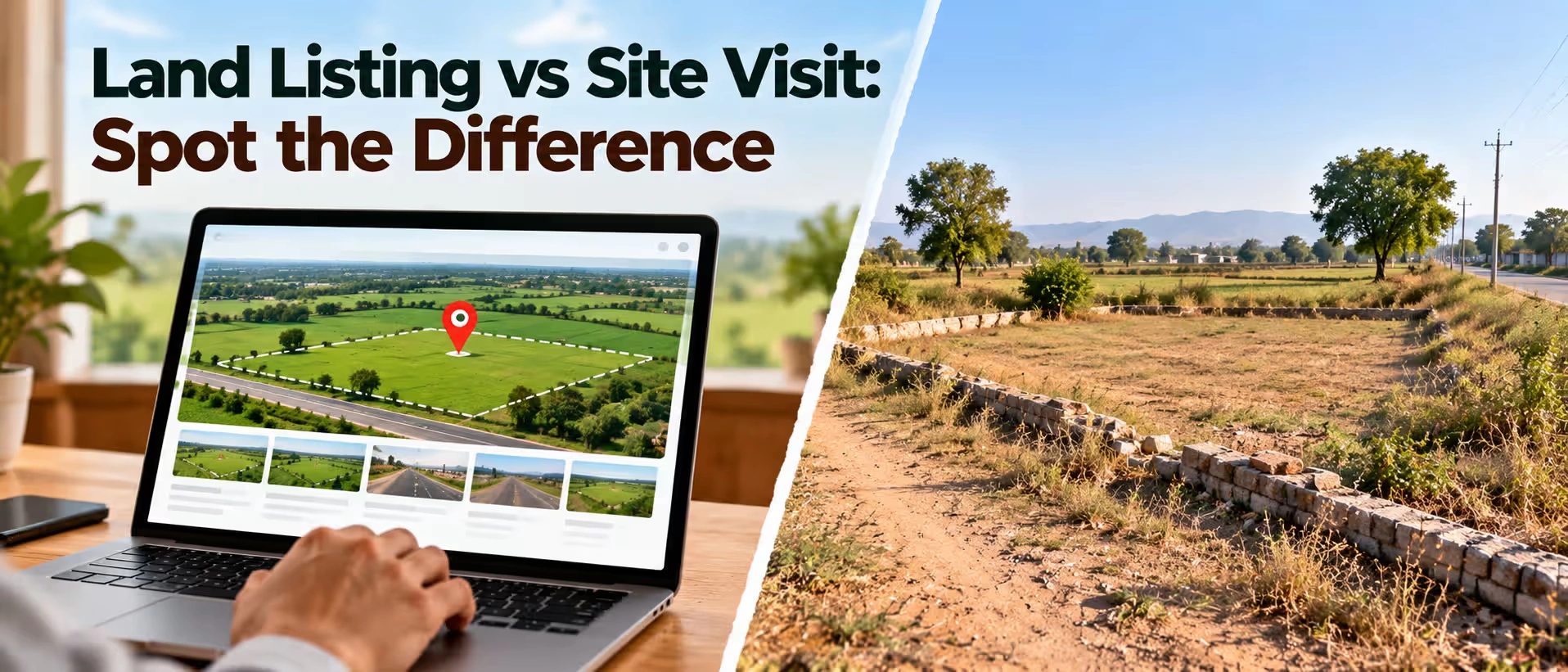
Buying agricultural land in Tripura is not a routine plot purchase. The legal result depends on who owns the land, where the land is located, whether it falls in a protected tribal-transfer framework, whether the title and mutation are clean, and whether you plan to keep the land agricultural or convert its use later. Tripura’s land law, registration system, and eJami land-record portals make these checks visible enough for careful buyers, but only if you do the homework before paying token money.
Key Takeaways
- There is no one-line answer to “who can buy agricultural land in Tripura.” Legality depends heavily on the seller’s status, the land category, and whether the plot falls in an area governed by special tribal-transfer protections.
- If the land belongs to a member of a Scheduled Tribe, transfer to a non-tribal buyer is not valid unless prior written permission of the Collector is obtained. The transfer must also be through a registered instrument.
- If the land is in a village or tehsil listed in the Second Schedule, even transfer by a non-tribal seller follows a special notice and preference process. Co-sharers and certain Scheduled Tribe landholders get purchase priority first.
- Do not assume you can buy farmland and then freely build on it. Tripura’s 2025 diversion rules require prior approval before diverting land from one purpose to another, and the application must be supported by ownership or lease proof and land-record documents.
- Online records matter. Tripura’s eJami/NLRMP systems allow buyers to check Khatian and plot records, mutation status, maps, deed status, fee details, and registration calculators before and after the transaction.
Why Buying Agricultural Land in Tripura needs Extra Legal Attention
If you want to buy land in Tripura, you need to stop thinking only like an investor and start thinking like a title examiner. The Tripura Land Revenue and Land Reforms Act, 1960 does not treat every agricultural parcel the same. It creates special rules for transfers involving Scheduled Tribe land and separate restrictions for land situated in certain notified areas under Chapter IXA. That is why two parcels in the same district can carry very different legal risks even if both are being advertised as farmland for sale in Tripura.
This is also why many buyers get confused when they search phrases like buy agricultural land in Tripura, who can buy land in Tripura, or Tripura agricultural land rules. The law is not framed as a simple “local versus outsider” test. Instead, the real questions are these: Is the seller a Scheduled Tribe landholder? Is the land inside a protected Second Schedule area? Is the title chain clean? Is the land recorded correctly in the RoR? Has mutation happened properly? And will the intended use remain agricultural?
Who can Buy Agricultural Land in Tripura
The practical answer is: some buyers can buy some agricultural land, but not every buyer can buy every parcel. That is the cleanest way to understand Tripura land eligibility criteria. The law does not create a blanket “anyone can buy anything” rule, and it also does not reduce everything to a blanket ban. The transferability of the specific land parcel is what matters.
1. If the land belongs to a Scheduled Tribe owner
Section 187 is the first major checkpoint. It says a transfer of land belonging to a person who is a member of the Scheduled Tribes is valid only if the transfer is to another Scheduled Tribe member, or if the transfer to a non-tribal person has previous written permission of the Collector, or if it is a mortgage to specified institutions such as a co-operative society or bank. The same section also says such transfer must be through a registered instrument, and transfers made in violation of the section are not to be recognized as valid.
The risk is real, not theoretical. The law further provides for restoration or ejectment where tribal land is transferred in contravention of section 187. In plain language, if a buyer acquires tribal land without the legally required permission, the transaction can unravel badly. That is why any buyer looking at agricultural land investment in Tripura must identify the seller’s land status before discussing price.
2. If the land is in a Second Schedule village or tehsil
This is the second major checkpoint, and many buyers ignore it. Under sections 107C to 107E, if a non-tribal person wants to transfer agricultural land situated in a village or tehsil specified in the Second Schedule, the process is not a simple private deal. The transferor must issue notice through the competent authority. Co-sharers and Scheduled Tribe owners of adjoining land get a chance to purchase first. If they do not, the authority may select a landless Scheduled Tribe member in that village or tehsil. If the process is violated, the transfer can be treated as void, and enforcement action can follow.
That means a buyer should never assume that a plot advertised online is freely transferable just because the seller is ready. Before paying advance money, verify whether the parcel falls in a Second Schedule area. If it does, the transaction must follow the statutory route. Skipping this step is one of the fastest ways to turn a seemingly cheap deal into a legal mess.
What Khas Land means in Tripura
The term khas land appears often in local land discussions. Tripura’s Revenue Department describes khas land as Government land distributed through district administration under the Tripura Land Revenue & Land Reforms Act and the Allotment of Land Rules. So if someone claims to be selling “khas land” through a normal private deal, you should slow down immediately and verify what exactly they hold: allotment rights, possession rights, transferable title, or something far weaker.
For a buyer, this matters because agricultural property documents in Tripura are not just about the present seller’s name. You also need to understand how that seller got the land. Was it inherited, purchased through a registered deed, allotted, or otherwise regularised? The official Tripura sale deed format itself refers to the vendor’s prior acquisition document number and assumes the buyer has scrutinized the seller’s title before purchase.
Can you Buy Farmland and later use it for a Farmhouse, Resort, Warehouse, or Commercial Purpose
Do not assume that buying farmland automatically gives you freedom to use it any way you like. Tripura’s Diversion of Land Rules, 2025 say that diversion of land from one purpose to another cannot be done without prior approval of the competent authority. The rules also state that the application for diversion must be supported by documents such as proof of ownership or lease or a certified copy of the Record of Rights.
This point is critical for people searching Tripura farmland investment with an eye on future commercial use. If your real plan is not agriculture but a farmhouse project, tourism use, storage, plotting, or another non-agricultural purpose, then you are not just buying land. You are buying into a second legal process as well. Price negotiation without clarity on diversion is sloppy buying.
How to Buy Land in Tripura Legally
A legal purchase in Tripura usually works best when you follow a strict sequence rather than jumping straight to deed execution.
Start with land records. Tripura’s eJami/NLRMP portal offers Khatian/plot-based search, map viewing, and mutation-status access. That gives you the first layer of due diligence before any money moves.
Then check whether the transfer is even permissible. If the parcel involves a Scheduled Tribe owner, section 187 must be satisfied. If the land falls in a Second Schedule area, Chapter IXA procedure must be respected. This is where many transactions fail quietly.
Next, review the deed and valuation side. Tripura’s online registration system provides fee details and a calculator for stamp fee and registration fee by deed type, including sale deeds. The Revenue Department’s registration workflow also shows that land valuation is checked, deeds are verified, parties are heard by the Sub-Registrar, photographs and fingerprints are captured, and the registered deed is scanned and tracked through the system.
After registration, focus on mutation and record update. Tripura’s rules say that before sanctioning mutation, the authority must satisfy itself that the acquisition is not in contravention of the Act. The eJami FAQ and reform pages also show the state’s effort to integrate registration with land-record updating and automatic mutation workflows. In simple words, registration is essential, but clean post-sale mutation is also necessary.
Documents Required to Buy Agricultural Land in Tripura
There is no single one-page public checklist that answers every transaction type, but a smart buyer should not move ahead without a minimum legal file. At the very least, collect and verify the current RoR/Khatian, plot details, map, mutation records, seller’s prior title document, proposed sale deed, and any permission or compliance required under section 187 or Chapter IXA. The official sale deed format also assumes that the buyer has examined the vendor’s title, prior acquisition document, possession, dues, encumbrance certificate status, and previous title documents.
If the buyer plans to change the land use later, keep the diversion permission track in mind from day one. Waiting until after purchase to ask whether conversion is possible is backwards.
Registration Fees and Tripura Land Registration Process
The official Tripura registration system lets users calculate stamp fee and registration fee by deed type, and the published fee sheet states that for sale transactions the registration fee is calculated on consideration under a slab-based formula. Because these figures can interact with deed type, valuation, and system updates, the safest approach is to use the live official calculator instead of relying on hearsay from brokers or old WhatsApp charts.
The registration workflow itself is clear on the government site: land valuation is checked, deeds are compared and verified, registration fees are assessed and collected, the deed is placed for registration, parties are heard by the Sub-Registrar, biometrics and photographs are captured, and then the deed is endorsed, scanned, and made ready for delivery. For a buyer, this means the formal process is not just paperwork; it creates the official trail that protects your position later.
Online Tools Every Serious Buyer should use
Tripura has made enough land information available online that skipping verification is simply careless. A buyer can use the eJami/NLRMP system for Khatian/plot search, mutation status, map viewing, tehsil and mouja details, while the registration portal gives access to deed status, fee details, online payment, and fee calculators.
This does not eliminate the need for local legal review. But it does make it harder to justify blind buying. If a seller or middleman refuses to share enough information for Khatian, plot, mouja, or mutation verification, take that as a red flag, not as a minor inconvenience.
Where 2Bigha Fits in
If your goal is to discover agricultural land for sale in Tripura without drowning in random broker calls, a platform like 2Bigha can help at the discovery stage. 2Bigha positions itself around land search, map-led exploration, farmland and farmhouse listings, and property insights that can help buyers compare options faster. That makes it useful for shortlisting opportunities and managing a cleaner search journey, especially if you prefer a more organised platform flow or even a subscription-led alert habit for tracking new opportunities.
But keep the hierarchy straight: platform discovery comes first, legal verification comes next, and registration compliance comes last. No portal, including 2Bigha or any other listing site, replaces RoR checking, mutation review, Second Schedule scrutiny, or Collector permission where required. Use 2Bigha to find and compare; use the official Tripura systems to verify and close.
Buyer Checklist Before you Pay Token Money
- Ask for district, subdivision, revenue circle, tehsil, mouja, Khatian number, and plot number first. Without that, proper verification cannot begin.
- Check the RoR/Khatian and the map on the official portal.
- Check mutation status and do not treat mere possession as ownership proof.
- Confirm whether the seller is a Scheduled Tribe landholder or whether the plot falls in a Second Schedule village/tehsil.
- Verify the seller’s prior title document, possession, dues, and encumbrance position.
- Use the official fee and valuation tools before agreeing to final consideration.
- If future non-agricultural use is planned, check diversion approval feasibility before purchase.
- Register properly and follow through on mutation.
Conclusion
So, can you buy agricultural land in Tripura? Yes, in many cases you can. But whether you can buy that specific plot depends on a much tighter legal filter than many buyers expect. The biggest issues are not fancy legal theory. They are practical: tribal land restrictions, Second Schedule transfer rules, title chain quality, mutation, land-use plans, and clean registration. Ignore any one of them and the deal can become expensive for all the wrong reasons.
The smart Tripura land buying guide is simple: first verify the land, then verify the seller, then verify transfer eligibility, then check valuation and fees, then register, then confirm mutation. If you want a better search experience, use a platform such as 2Bigha to discover options and organise leads, but let the official Tripura record and registration systems decide whether the transaction is actually safe. That is how you buy farmland with confidence instead of buying a dispute with a boundary.
FAQs - Buy Agricultural Land in Tripura
1. Can outsiders buy agricultural land in Tripura?
There is no reliable one-word answer. The legal position depends on the status of the seller, the category of the land, and the location of the plot. If the land belongs to a Scheduled Tribe member, transfer to a non-tribal buyer requires prior written permission of the Collector. If the land lies in a Second Schedule area, special statutory transfer procedures apply.
2. Who can buy tribal land in Tripura?
A Scheduled Tribe buyer can buy tribal land directly. A non-tribal buyer can only buy such land if the transfer is made with previous permission of the Collector in writing, and the transfer must also be through a registered instrument.
3. Is mutation enough to prove ownership in Tripura?
Mutation is important, but it is not a shortcut around legality. Tripura’s rules explicitly say that before sanctioning mutation, the authority must satisfy itself that the acquisition is not in contravention of the Act. That means mutation follows valid acquisition; it does not magically legalise an invalid transfer.
4. Can I buy agricultural land in Tripura and later build a farmhouse?
Not automatically. If your use changes from agricultural to another purpose, Tripura’s 2025 diversion rules require prior approval of the competent authority. So farmhouse dreams should be checked against land-use rules before the purchase, not after.
5. How do I check land records in Tripura?
Use the official eJami/NLRMP portal for Khatian/plot-based search, map access, and mutation status. Use the Tripura registration portal for deed status, fee details, and fee calculation.
6. Can khas land be bought through a simple private sale?
Be careful. Tripura Revenue describes khas land as Government land distributed under the state’s land-reform and allotment framework. So a buyer should not treat “khas land” like an ordinary private freehold parcel without first checking the seller’s allotment history and transferability.