Key Takeaways
- In Himachal Pradesh, the biggest legal filter is Section 118 of the Himachal Pradesh Tenancy and Land Reforms Act, 1972. It broadly bars transfer of land to a person who is not an agriculturist, unless the case falls within a specific exception or the State Government grants permission for a prescribed purpose.
- The Act defines an “agriculturist” as a landowner who personally cultivates land in an estate situated in Himachal Pradesh, so casual claims like “my family is connected to farming” are not enough by themselves.
- A buyer should not confuse an Agriculturist Certificate with a Bonafide Himachali Certificate. Himachal’s e-District portal lists them as separate services, which is a practical reminder that local identity and agriculturist status are not the same thing.
- Before registration, official systems in Himachal already let buyers check Jamabandi / Record of Rights, circle rates, online mutation, and online property registration.
- The official property registration manual for Himachal lists core sale-deed documents such as Nakal of Jamabandi, circle rate, agriculture certificate or Section 118 permission, whichever applies, ID proofs, and Tatima where applicable.
- If a transfer is found to violate Section 118, the law provides for inquiry by revenue authorities and, after the prescribed process, the transfer can be treated as void and the land can vest in the State Government.
Himachal Pradesh is one of those states where buyers make costly mistakes because they start with the listing and only later ask about legality. That is the wrong order. If you want to buy agricultural land in Himachal Pradesh, you need to begin with the law, then the land records, then the registration paperwork, and only after that the price negotiation.
The reason is simple. Himachal land rules are not as open-ended as buyers assume. The state has a legal framework that controls who can purchase land, under what conditions, and for what purpose. If you ignore that framework, even a beautiful orchard plot, hillside parcel, or roadside farm listing can become a legal dead end.
This guide explains how to buy agricultural land in Himachal Pradesh, who is eligible, what Section 118 actually means, what documents matter, how the registration process works, and what practical steps serious buyers should follow before paying token money.
Why Buying Agricultural Land in Himachal Pradesh is Different
In many states, people mainly ask whether land has a clear title, road access, and reasonable price. In Himachal Pradesh, those checks still matter, but they come after a more basic question: is the proposed buyer legally allowed to buy this land at all? That is why the conversation around Himachal Pradesh land rules almost always comes back to Section 118.
The Act defines “land” quite broadly for its purposes. It covers land occupied or let for agricultural purposes or purposes subservient to agriculture, and the definition includes categories such as orchards, ghasnies, banjar land, and private forests. That matters because buyers often think only cultivated crop land is restricted. In reality, revenue classification and the statutory definition matter a lot.
Can Anyone Buy Agricultural Land in Himachal Pradesh
For most buyers, the blunt answer is no.
Section 118 says that no transfer of land by sale, gift, will, exchange, lease, mortgage with possession, creation of tenancy, or in any other manner is valid in favour of a person who is not an agriculturist, unless the case is saved by the chapter’s exceptions. The same provision also says a Registrar or Sub-Registrar should not register a transfer that contravenes sub-section (1).
That is why “I found agricultural land for sale in Himachal Pradesh online” is never enough. A live listing does not automatically mean the land is legally purchasable by you. Listings tell you availability. The law tells you eligibility.
Who is treated as an agriculturist in Himachal Pradesh?
Under the Himachal Pradesh Tenancy and Land Reforms Act, an agriculturist means a landowner who cultivates land personally in an estate situated in Himachal Pradesh. The same definition section explains that personal cultivation includes cultivation on one’s own account, by one’s own labour, by family labour, or under personal supervision through hired labour or servants paid in cash.
This definition is important because many buyers use the word “farmer” loosely. The statute does not work on loose language. It works on legal status, records, and evidence.
Another practical point matters here. Himachal’s e-District portal separately lists services for Agriculturist Certificate, Bonafide Himachali Certificate, Domicile Certificate, and Land Holding Certificate. That separation is a useful reality check: being a resident, being a bonafide Himachali, and being an agriculturist are not identical legal ideas.
Quick Answer Table: who can usually buy and who cannot
Buyer Profile | Can Buy Agricultural Land Directly? | Practical Position |
| Agriculturist in terms of the Act | Usually, subject to title, records, and registration compliance | Strongest legal position |
| Non-agriculturist outsider | Generally no | Direct purchase is usually barred unless a specific exception or permission applies |
| Non-agriculturist with State Government permission under Section 118 | Possibly, but only for the approved purpose | Not a blanket right to buy any farm parcel |
| Legal heir receiving land by inheritance | Different treatment | Inheritance is specifically carved out from “transfer” for this purpose |
| Buyer relying only on a local contact, broker assurance, or verbal promise | No legal protection | High-risk approach |
The legal logic behind this table comes directly from Section 118 and its explanation/exceptions.
What Section 118 really means for buyers
Section 118 is widely discussed, but many people misunderstand it. It does not simply say “outsiders cannot buy land.” What it actually does is create a legal bar on transfer of land to non-agriculturists, subject to exceptions and permission routes laid down in the chapter.
The law also carves out some situations from the expression “transfer of land” for this purpose. These include inheritance, gift or will in favour of legal heirs, and lease of land or building in a municipal area. That means buyers should never rely on half-knowledge like “gift is always okay” or “lease is always unrestricted.” The exact structure of the transaction still matters.
Section 118(2) then lists categories where transfer is not prohibited, including certain landless persons, specified categories in municipal areas, government and statutory bodies, persons who became non-agriculturists due to acquisition or vesting, certain authority-based housing purchases, and non-agriculturists who obtain State Government permission for prescribed purposes. For ordinary investors looking to buy farmland online in Himachal Pradesh, this means one thing: do not assume your case falls inside an exception just because a seller or broker says so.
Can a non-resident or outsider buy farmland in Himachal Pradesh?
In ordinary cases, a non-agriculturist outsider cannot directly buy agricultural land in Himachal Pradesh just because they have money, local contacts, or an online agreement. The governing question is whether the buyer is an agriculturist under the law or qualifies under a valid exception or permission route.
This is also why the phrase “non resident land purchase Himachal” creates confusion online. Non-resident status by itself is not the main legal test. The core legal test is the Section 118 framework.
Even if the Himachal NGDRS portal allows citizen registration for Indian and NRI user types, that portal access should not be mistaken for substantive eligibility to buy agricultural land. Registration on a portal helps you transact digitally; it does not override land law. That is an inference based on the portal structure and the statutory bar under Section 118.
Can Section 118 permission solve everything?
No. This is where many land deals go wrong.
Section 118 allows a route for a non-agriculturist with the permission of the State Government for prescribed purposes. But the same provision also says that the buyer remains a non-agriculturist for the purposes of the Act. It further says the land must be put to the permitted use within two years, extendable by up to one more year, and if the buyer fails to use it for the approved purpose or diverts the use without permission, the land can vest in the State Government.
So the real answer is this: Section 118 permission is not a shortcut to unrestricted farmland ownership. It is a tightly purpose-linked legal route.
Step-by-step process to buy agricultural land in Himachal Pradesh
1. Start with your own eligibility
Before you visit the site, confirm whether you are buying as an agriculturist or whether your case would require a permission-based route. If your status is unclear, do not pay a token amount first and “sort it later.” In Himachal, that sequence is upside down.
2. Pull the land records first
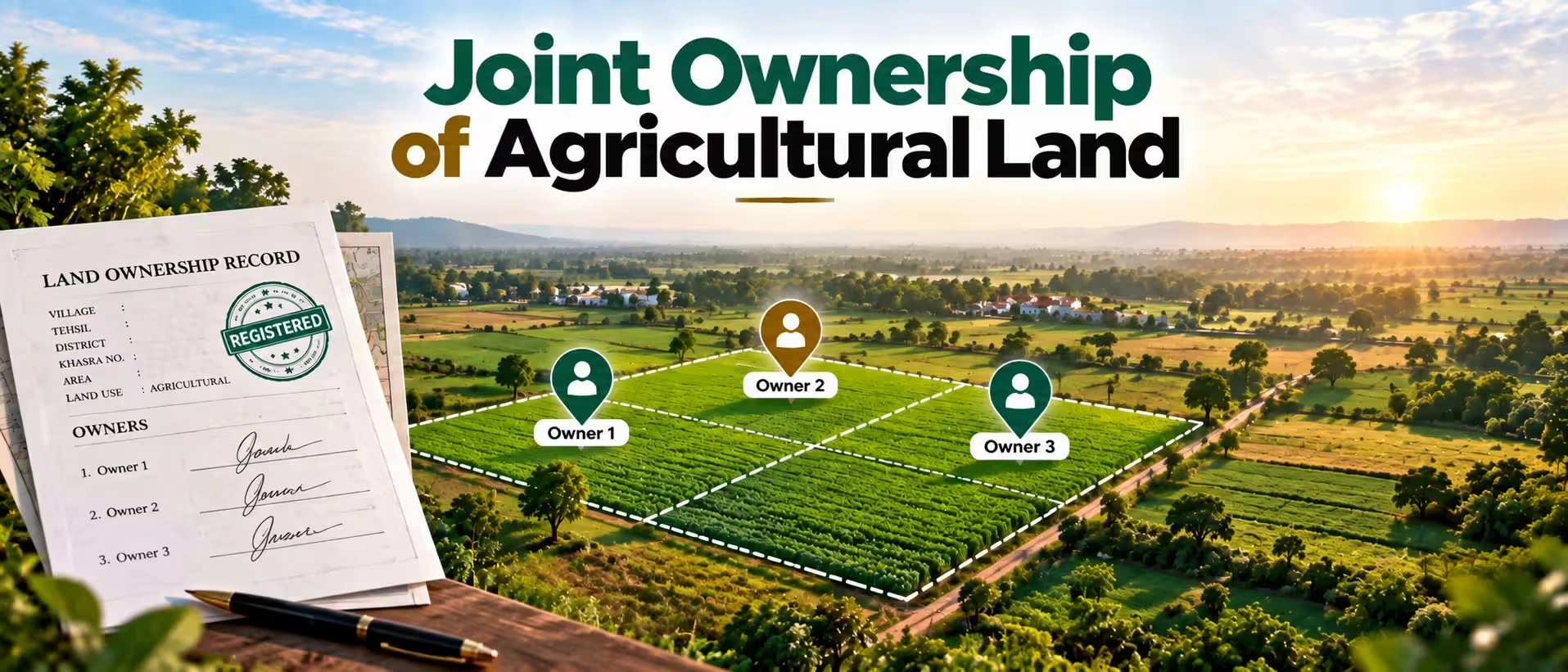
Himachal’s Revenue Department states that copies of RoR / Jamabandi and Shajra Nasb can be viewed online, and its public systems also provide circle rates and tools related to duties. The e-District system additionally offers Copy of Land Records / Nakal Jamabandi, Copy of Record of Rights with Digitized Map, and Online Mutation Request.
At this stage, review:
- ownership name,
- land classification,
- area,
- mutation status,
- access description,
- any mismatch between the seller's claim and the revenue record.
3. Match the buyer-side certificate or permission route
The official Himachal property registration manual clearly says that for a sale deed, one of the important supporting documents is “Agriculture Certificate or Permission U/s 118 of HPTRA whichever is applicable.” That one line alone tells serious buyers how the state expects the legality to be framed at registration stage.
4. Check circle rate before price discussion
The Revenue Department says buyers can view village circle rates and calculate duties with reference to those rates. That does not mean the circle rate is the final market price, but it is the official baseline you should not ignore.
5. Prepare sale-deed documentation
The official registration manual lists the core sale-deed requirements as:
- Nakal of Jamabandi,
- circle rate,
- agriculture certificate or Section 118 permission, whichever applies,
- affidavit/self-declaration of seller and purchaser regarding distance of land from the road,
- ID proofs,
- PAN details,
- valuation of built-up structure if the sale includes built-up area,
- approved map if built-up area is within municipal limits,
- Tatima, where applicable.
6. Use the official online registration system
Himachal uses the NGDRS platform for registration workflows, and the official user manual says the process includes online submission of information, stamp-duty calculator access, fee payment, and appointment generation.
7. Register only after legal comfort, not before
If there is any eligibility doubt under Section 118, sort that out before signing a final conveyance path. A registered document in a legally defective case is not a safety shield where the statute itself bars the transfer. The law provides an inquiry mechanism, appeal, revision, and eventual vesting consequences where contravention is finally established.
Documents required for land purchase in Himachal Pradesh
Here is the practical checklist buyers should keep ready:
Document / Item | Why it matters |
| Jamabandi / RoR copy | Confirms ownership and record details |
| Circle rate | Helps assess official valuation baseline |
| Agriculturist Certificate or Section 118 permission | Core eligibility document |
| ID proof of seller and buyer | Basic registration compliance |
| PAN details | Supporting identity/tax record |
| Tatima | Important where parcel mapping or Tatima registry applies |
| Built-up valuation report, if applicable | Needed when sale includes structure |
| Approved map, if within municipal limits and applicable | Useful where built-up area is involved |
This summary is drawn from the official Himachal property registration manual for sale-deed requirements.
Common mistakes buyers make in Himachal Pradesh land deals
The first mistake is trusting the broker’s sentence, “registry ho jayegi,” without checking whether the buyer qualifies as an agriculturist or needs permission.
The second mistake is assuming that because a parcel is described as orchard land, farmhouse land, or rural plot on a portal, it is automatically safe for purchase. Revenue classification and statutory restrictions matter more than marketing language.
The third mistake is treating local status documents as interchangeable. They are not. Agriculturist certificate, domicile, land holding certificate, and bonafide Himachali certificate are separately recognized services in the state’s own digital system.
The fourth mistake is thinking that a permission-based purchase gives freedom to change use later. Section 118 itself warns against diversion from the permitted purpose without approval.
Is farmland investment in Himachal Pradesh still attractive
Yes, but only for buyers who combine legal discipline with commercial patience.
Real estate platforms continue to show active agricultural land inventory across Himachal Pradesh, including areas in Kangra / Palampur, Solan / Kumarhatti, Kullu / Naggar / Banjar, Sirmaur, Shimla outskirts, Bilaspur, and other rural pockets. The asking values shown on these platforms vary sharply based on road approach, tourism pull, topography, parcel size, and district-level demand.
That tells you something important. Himachal Pradesh land prices are not uniform, and there is no honest “one rate per acre” answer for the whole state. A buyer should compare:
- official circle rate,
- live asking price in the micro-location,
- access and slope conditions,
- water feasibility,
- legal eligibility to buy.
That is how serious farmland investment decisions should be made in Himachal Pradesh.
Where 2Bigha Fits into the Journey
When you want to buy and sell agricultural land in Himachal Pradesh, discovery and due diligence should work together. A practical buyer does not jump from one random broker call to another. Instead, the better approach is to build a shortlist, track options, revisit documents, compare micro-locations, and keep the search organized.
That is where a platform like 2Bigha can be positioned smartly in the buyer journey. Use it to explore opportunities, compare land options, and maintain a more disciplined search workflow. In fact, the smartest way to handle Himachal farmland hunting is to treat it almost like a subscription process: keep monitoring fresh opportunities, re-check documents as they arrive, and only move to site visits and negotiations when the legal path looks clean.
In plain words, let the platform help you find land. Let the law decide whether you should buy it.
Final Word
If you want to buy agricultural land in Himachal Pradesh, do not begin with emotion. Begin with eligibility.
The state’s legal structure is clear enough on the big issue. A non-agriculturist cannot assume a free right to buy agricultural land. Section 118 remains the controlling framework, the registration system expects either an agriculture certificate or valid permission where applicable, and the state’s own digital platforms give buyers a practical way to verify records, circle rates, mutation, and registration steps before money changes hands.
So if your goal is safe farmland investment in Himachal Pradesh, remember this formula:
listing first is risky, records first is smart, and legal eligibility first is non-negotiable.
FAQs - Buy Agricultural Land in Himachal Pradesh
1) Can I buy agricultural land in Himachal Pradesh if I am not an agriculturist?
Generally, no. Section 118 bars transfer of land to a non-agriculturist unless the case falls within a statutory exception or a permission route recognized by the law.
2) Is Section 118 only for outsiders from other states?
Not exactly. The legal test is not simply “outsider versus local.” The real question is whether the transferee is an agriculturist under the Act or otherwise covered by an exception or valid permission.
3) Is a Bonafide Himachali Certificate enough to buy farmland?
You should not assume that. Himachal’s e-District system lists Bonafide Himachali Certificate and Agriculturist Certificate as separate services, which signals that they are not the same legal document.
4) What documents are required for land purchase in Himachal Pradesh?
The official sale-deed checklist includes Jamabandi, circle rate, agriculture certificate or Section 118 permission as applicable, ID proofs, and Tatima where applicable, among other supporting items.
5) Can an NRI buy agricultural land in Himachal Pradesh?
Portal access alone does not answer that question. The NGDRS system supports Indian and NRI registration types, but land purchase eligibility still depends on the governing land law, especially Section 118. That means an NRI who is not otherwise eligible cannot treat portal registration as legal clearance.
6) Can I convert agricultural land to another use after purchase?
Not automatically. Where land is purchased through a permission-based route for a specific purpose, Section 118 requires the buyer to use it for that permitted purpose within the prescribed period and warns against diversion without permission.
7) How do I verify land records in Himachal Pradesh?
The Revenue Department and associated public systems provide access to RoR / Jamabandi, digitized map-related records, circle rates, and mutation-related services online.
8) Does online availability on a property portal mean I can legally buy the land?
No. A listing only shows that someone wants to sell. Your legal right to buy depends on Section 118 compliance, records, and registration requirements.